Wyoming abortion restrictions defended as path to population growth
Wyoming’s new abortion ban is being sold as a population fix, but the state’s own demographic data points to aging, outmigration and low fertility as the real drivers.
Wyoming lawmakers have framed tight new abortion restrictions as a way to keep the state from shrinking, but the numbers behind the debate point elsewhere. House Bill 126, the Human Heartbeat Act, says the legislature has a compelling interest in “support[ing] and encourag[ing] childbirth as an essential element in the future stability of our societal and economic structures” and in protecting the state’s “future population and societal and economic security.” Gov. Mark Gordon signed the measure on March 9, 2026, after lawmakers pushed it through months after the Wyoming Supreme Court ruled in State v. Johnson that the state constitution protects the right of competent adults to make their own health care decisions.
The new law bans abortions once fetal cardiac activity is detectable, generally around six weeks of pregnancy, with limited exceptions. Supporters cast that as a necessary step to preserve Wyoming’s future. Republican state Sen. Evie Brennan put the case bluntly: “Without an up and coming population that grows up here that wants to stay here, then we just become a stagnant or an aging slash dying state.” Her argument reflects a broader post-Roe fight in Cheyenne, where lawmakers also failed earlier in 2026 to advance a constitutional amendment that would have tried to clear the way for future abortion bans.
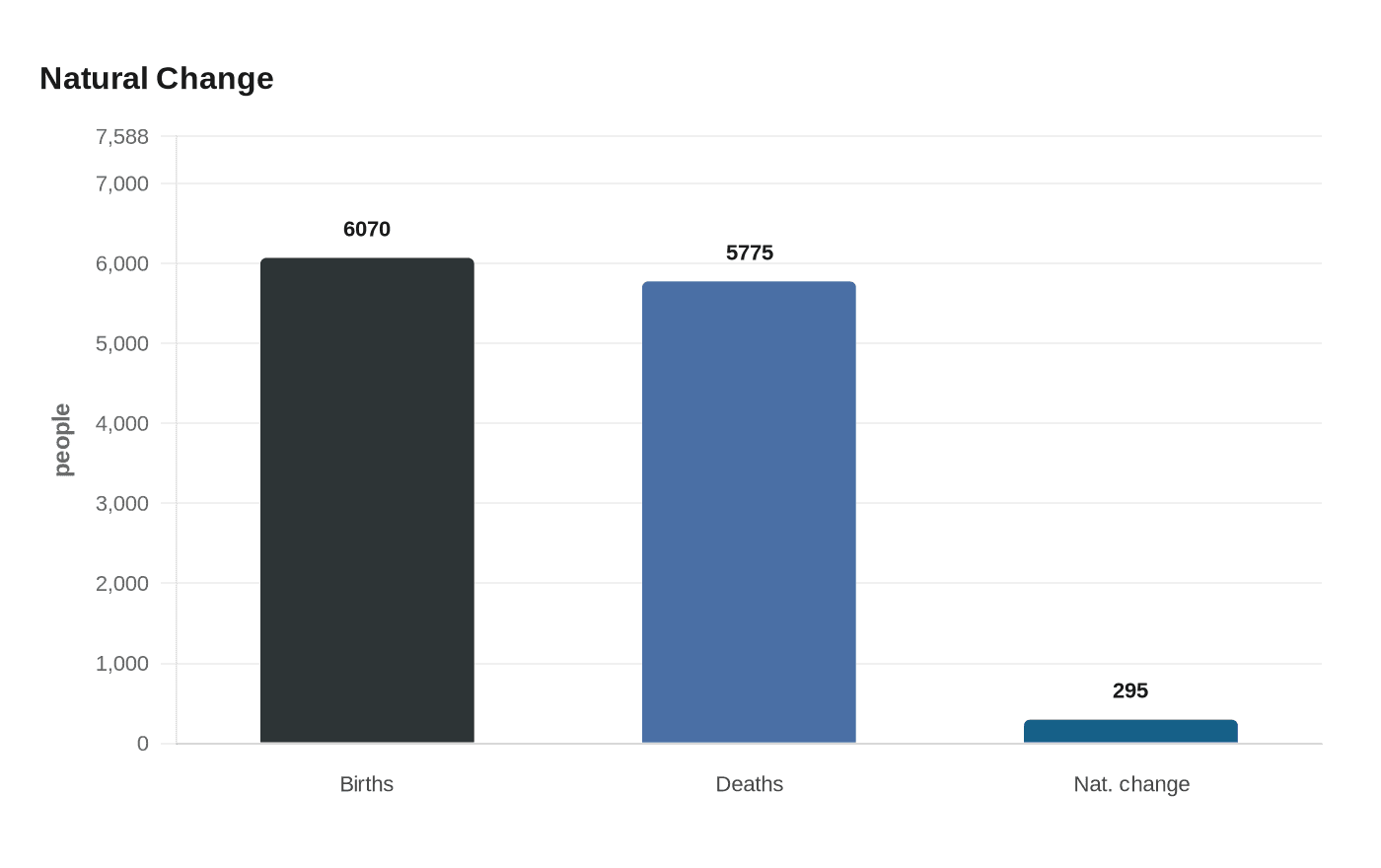
But Wyoming’s own demographic data suggests abortion access is not the main force shaping population trends. The state’s population reached 588,753 in July 2025, up just 0.3% from the year before. Natural change added only 295 people, based on 6,070 births and 5,775 deaths. Wyoming’s Economic Analysis Division said the bigger pressures were aging Baby Boomers, youth outmigration and declining fertility. Wenlin Liu, the division’s chief economist, has said those forces together are driving the state’s demographic shift.
That matters because abortion restrictions do not address why young adults leave Wyoming in the first place. Housing costs, limited job pathways, sparse child care and access to health services all shape whether people stay, return or start families there. A law that limits reproductive choice may fit a pro-natalist ideology, but the state’s population problem is more complicated than childbirth alone. If lawmakers want growth, the data suggest they will need policies that make it easier for young people to build a life in Wyoming, not just to have one there.
This article was produced by Prism’s automated news system from verified source data, official records, and press releases, then run through automated quality and moderation checks before publishing. The system is built and supervised by the people who set the standards it runs under. Read our full AI policy.
Did this article answer your question?

