Alibaba Qwen AI to power voice services in Chinese cars
Alibaba put Qwen into Chinese car dashboards so drivers can order food, book hotels and track packages by voice, turning the cabin into a commerce platform.
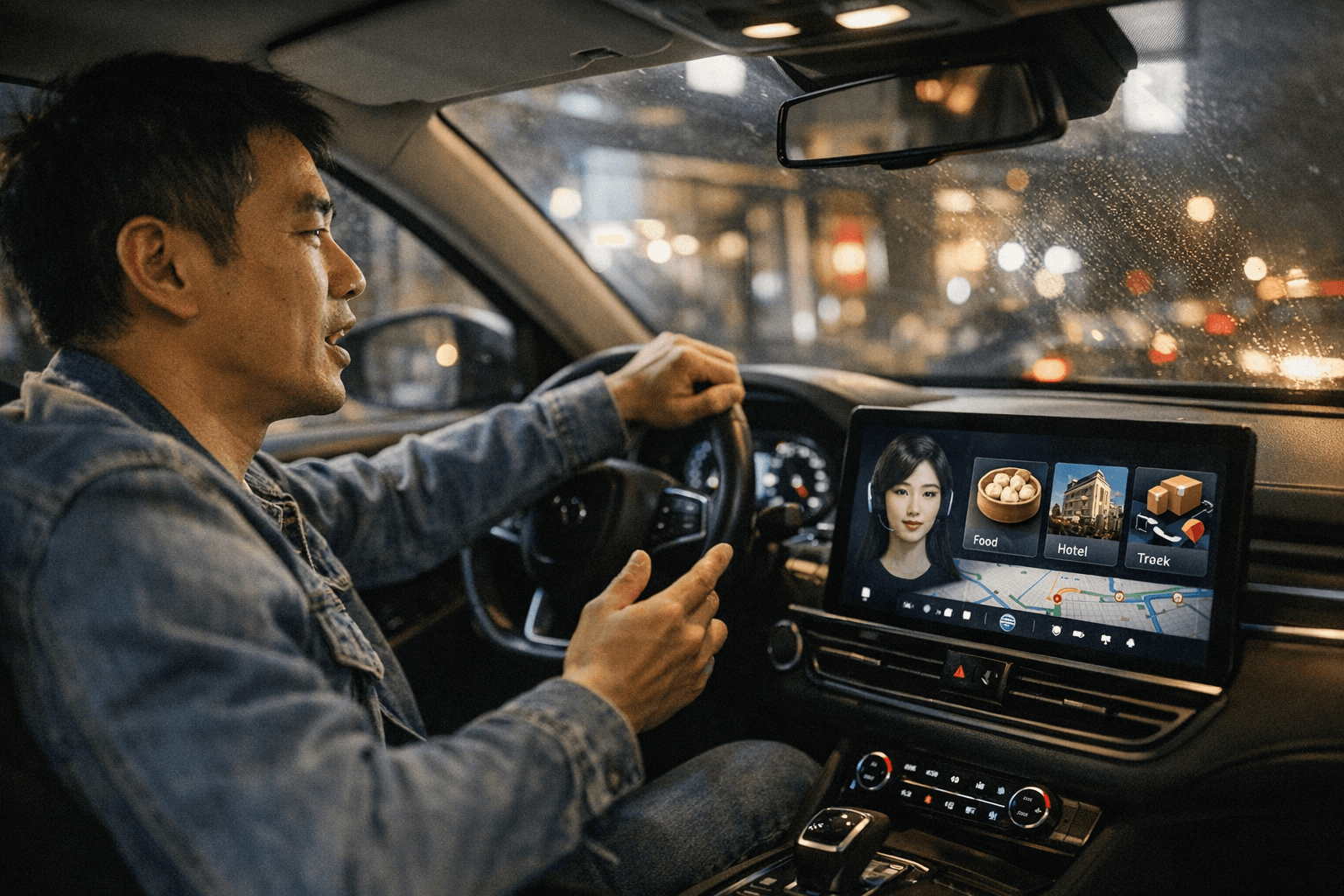
Alibaba widened the fight for drivers’ attention at the Beijing Auto Show by putting its Qwen artificial-intelligence model into vehicles from BYD, Geely, Li Auto, Changan Automobile, Dongfeng Motor, BAIC, Great Wall Motor, SAIC Volkswagen and SAIC IM Motors. The pitch went far beyond voice navigation. Drivers will be able to order food delivery, book hotels, buy attraction tickets and track packages without leaving the cabin, a sign that the dashboard is becoming a retail gateway as much as a control panel.
The system was designed to keep working even when network access is limited, combining on-device processing with cloud computing to interpret instructions, plan steps and connect to services such as payments and navigation. Alibaba Cloud said Qwen-Omni runs on the NVIDIA DRIVE platform to improve the intelligent cockpit experience, underscoring how the software stack now reaches from the voice assistant down to the chip layer. CNBC also reported that the Alibaba system runs on Nvidia’s automotive chip stack.
That matters in a market where Chinese automakers are under pressure to differentiate as electric-vehicle growth cools. The software race is pushing carmakers to bundle digital services into ownership, not just sell horsepower and range. Reuters described the shift as China’s auto sector moving toward AI-heavy vehicles that look less like connected cars and more like self-reasoning machines running on Chinese chips and software. China’s recent five-year plan backs an AI Plus push across manufacturing, healthcare and the wider economy, giving the auto industry a policy tailwind.
The scale of the Beijing Auto Show showed why the announcement landed with force. Reuters reported 1,451 vehicles and 181 world premieres at the 2026 event, while the show itself has said it has run since 1990 and is now an A-class international auto show in China. In that crowded setting, software became the story as much as sheet metal.
The implications reach well beyond China. The more cars can process payments, bookings and deliveries through voice, the more questions rise about privacy, data collection and driver distraction. Audi’s China business is also planning AI features from ByteDance and iFlyTek for an electric SUV due to go on presale in May, showing that global automakers are being pulled into the same local software arms race. The next platform battle is no longer just for the phone screen or the home speaker. It is for the car itself, and for the consumer relationship inside it.
This article was produced by Prism’s automated news system from verified source data, official records, and press releases, then run through automated quality and moderation checks before publishing. The system is built and supervised by the people who set the standards it runs under. Read our full AI policy.
Did this article answer your question?


