Alice's origins and role in Jim Wells County explained
A concise history of Alice traces its origins, naming, location, and civic development. That context helps residents understand local identity, growth, and planning.
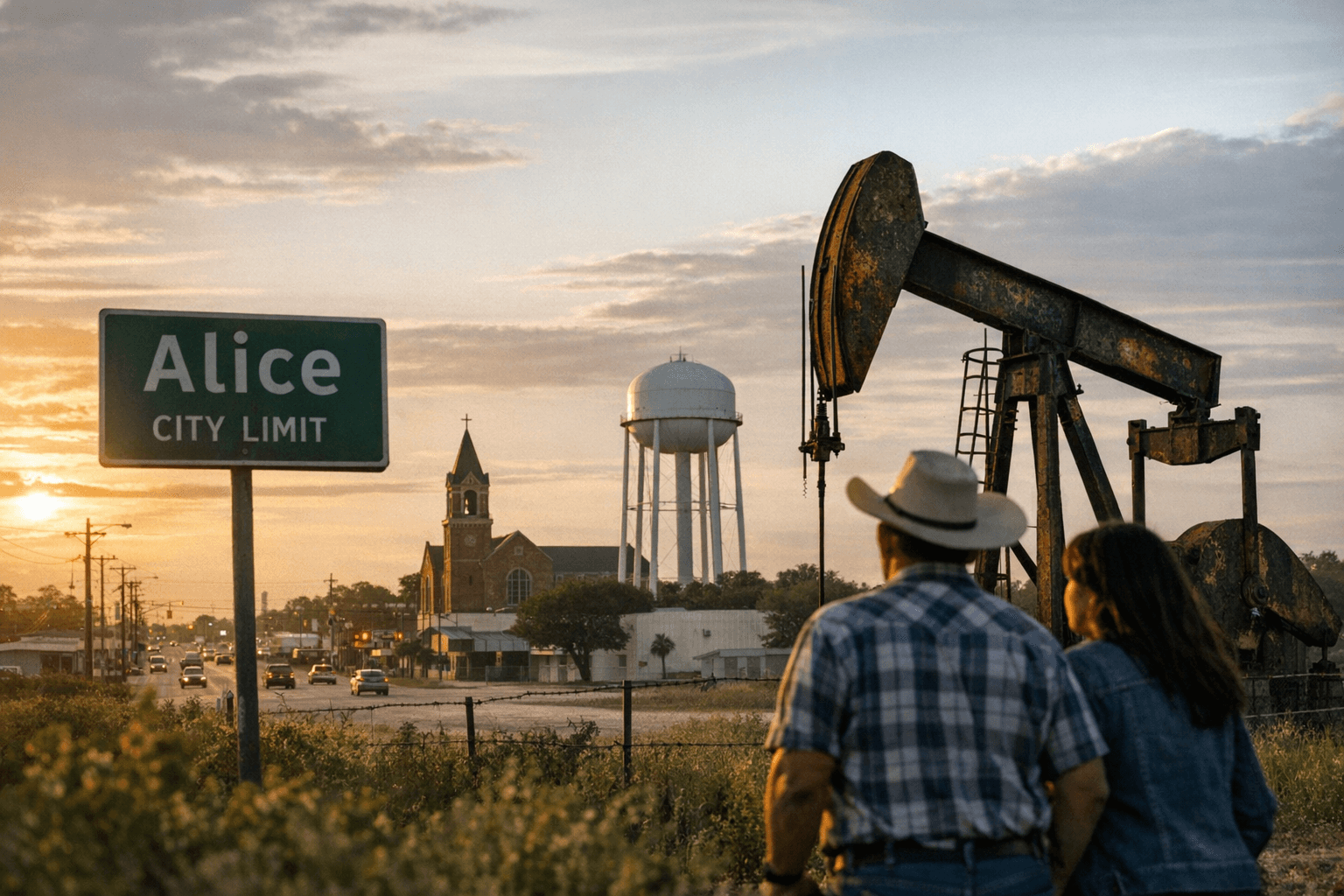
Alice, the county seat of Jim Wells County, began as the small settlement of Collins and later the community called Bandana before taking the name of Alice Gertrudis King Kleberg. The city sits at a regional crossroads where U.S. Highway 281 meets state highways 44 and 359, a location that has shaped its role as a hub for commerce, travel, and county government.
Local records chart decades of civic development and shifting population patterns that have defined Alice's municipal services and neighborhood character. Those historical patterns matter now for public health and community planning. Past growth and contractions influence where schools, clinics, and emergency services were located, and they affect present-day demand for primary care, behavioral health services, and emergency response along busy highway corridors.
For Jim Wells County residents, understanding Alice's origins is practical as well as cultural. The city's placement at key highway intersections concentrates traffic, economic activity, and infrastructure needs in ways that ripple into surrounding rural areas. Transportation routes determine ambulance travel times, commuter access to health jobs, and where mobile health outreach can most efficiently reach isolated residents. Civic development over time also leaves a footprint in housing stock, water and sanitation systems, and community spaces that intersect with health outcomes.
Policy decisions about clinic locations, public health outreach, and workforce recruitment benefit from this historical context. Planning that accounts for long-term population trends can target resources to neighborhoods and unincorporated areas that have been underserved as demographics shifted. In rural counties like Jim Wells, equity-focused strategies must address barriers that include distance to care and transportation costs, not only clinic capacity.
Community leaders and health providers in Alice and the broader county face choices about how to translate local history into future investments. Preserving the city’s role as a regional center will require coordinating land use, transportation, and health services so residents across the county share access to care and economic opportunity. Recognizing how past civic development shaped present needs can guide more equitable distribution of services.
Understanding Alice’s roots and regional position gives residents and officials a clearer map for action. That shared context can help Jim Wells County plan for resilient health systems, better emergency coverage along U.S. 281 and state highways 44 and 359, and policies that center equity as the community moves forward.
Sources:
Know something we missed? Have a correction or additional information?
Submit a Tip