Amazon Adds 3.5% Fuel Surcharge for Third-Party Sellers Starting April 17
Amazon confirmed a 3.5% fuel-and-logistics surcharge on FBA sellers starting April 17, citing Persian Gulf instability and surging diesel costs hitting the broader logistics industry.
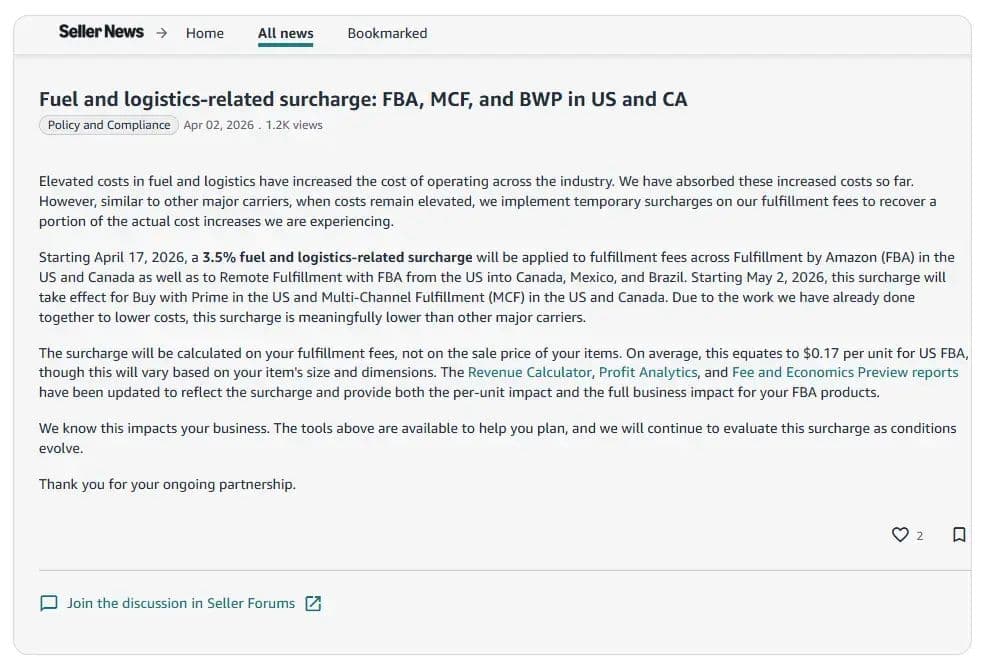
Amazon confirmed a 3.5% fuel-and-logistics surcharge on third-party sellers who use its fulfillment network, with fees set to begin April 17 for Fulfillment by Amazon merchants in the United States and Canada. Sellers using Buy with Prime and Multi-Channel Fulfillment, which routes orders from external websites through Amazon's logistics infrastructure, will face the same surcharge starting May 2.
The company attributed the fee to sharply higher energy and transportation costs tied to geopolitical instability in the Persian Gulf, including hostilities that escalated in late February 2026 and pushed crude and diesel prices higher across the industry. "Elevated costs in fuel and logistics have increased the cost of operating across the industry," Amazon said in an emailed statement to reporters Thursday.
Amazon framed the surcharge as both temporary and restrained, noting it had absorbed rising costs before deciding to act. The company said its 3.5% rate is "meaningfully" lower than surcharges imposed by other major carriers, positioning the fee as measured rather than opportunistic. UPS, FedEx, and USPS have all introduced or raised their own fuel surcharges in recent weeks.
The sellers most directly affected are the small and mid-size merchants that rely on Amazon's warehousing, picking-and-packing, and last-mile shipping to fulfill customer orders rather than managing their own logistics. For those operating on thin margins, a 3.5% surcharge can meaningfully erode profitability, particularly on low-price goods where pennies per unit determine whether a listing stays competitive.
Most merchants will face a binary choice: raise retail prices to preserve margins or absorb the fee and accept reduced profitability. Amazon's statement attempted to blunt concern about consumer-facing price increases, saying "We remain committed to our selling partners' success and to maintaining broad selection and low prices for customers." Whether sellers can honor that framing depends largely on how long elevated fuel costs persist.
The surcharge also introduces a strategic calculation for merchants that have built operations around Amazon's network. Industry observers say the added cost could accelerate interest in regional warehousing, direct-to-consumer shipping models, and greater presence on competing marketplaces. For Amazon, the fee is a careful balance: it cushions the company against rising logistics costs while risking the competitive pressure that comes with being seen as squeezing the sellers who stock its platform.
Investors and logistics providers are likely to treat the surcharge as a leading indicator of how sustained energy shocks ripple through the broader e-commerce supply chain.
This article was produced by Prism’s automated news system from verified source data, official records, and press releases, then run through automated quality and moderation checks before publishing. The system is built and supervised by the people who set the standards it runs under. Read our full AI policy.
Did this article answer your question?

