Amazon and Flipkart escalate credit push in India, targeting merchants and consumers
Reuters reported that Amazon is preparing to expand lending to merchants and small businesses in India while Flipkart is exploring buy now pay later and personal credit lines, moves that could reshape consumer finance and small business credit in the country. The expansion matters because it leverages platform data to underwrite loans, intensifies competition with banks and NBFCs, and may draw fresh regulatory scrutiny.
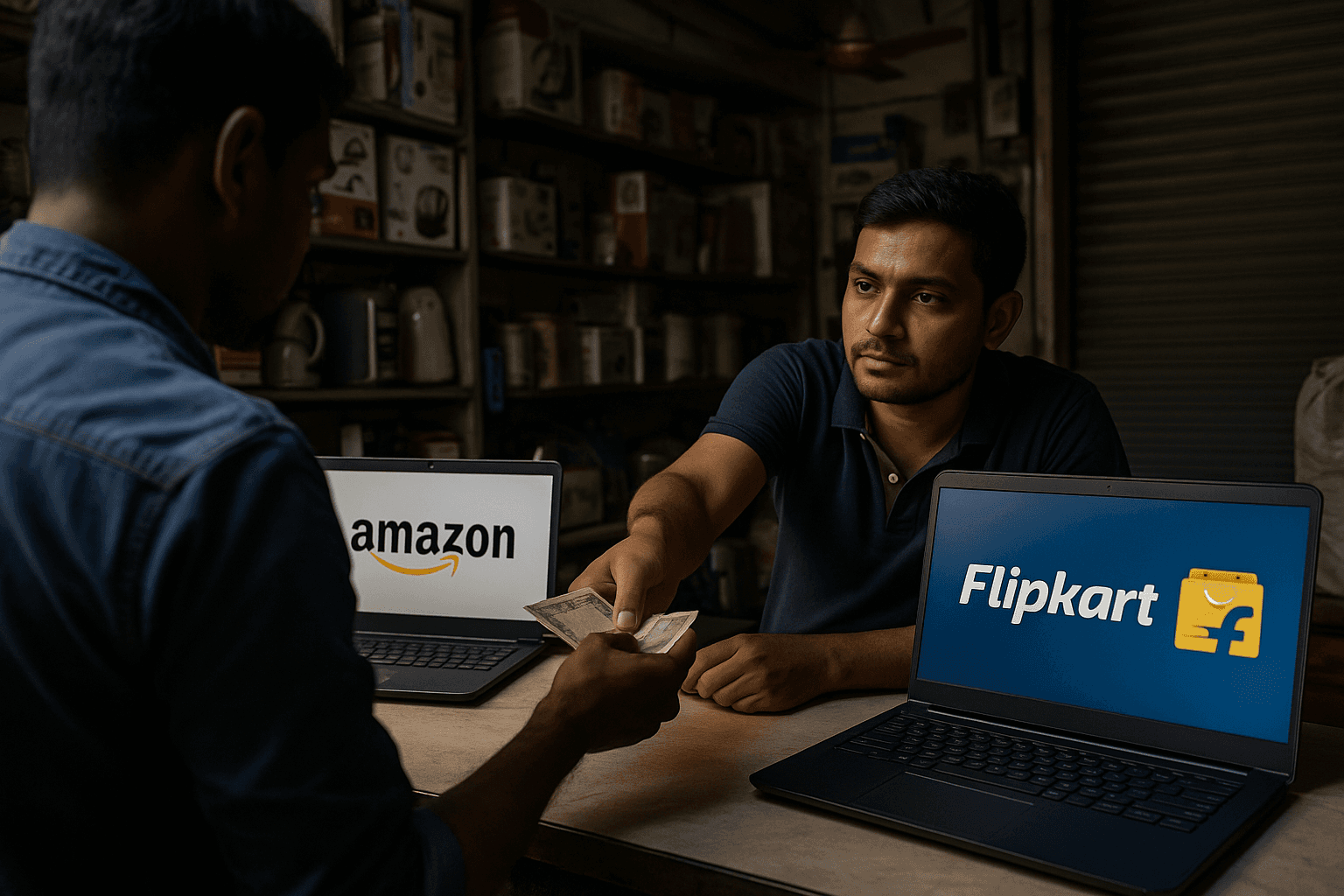
Reuters reported on November 28 that Amazon is preparing to broaden lending to merchants and small businesses in India after acquiring fintech and credit assets earlier in the year, while Flipkart is exploring an expansion of buy now pay later services and personal credit lines. The developments mark a sharper turn by the two largest e commerce platforms toward embedding finance in commerce, with implications for credit access, incumbent lenders, and regulators.
Amazon’s Bengaluru based non bank lender, Axio, is being repositioned to offer more small business lending and cash management tools for merchants outside the biggest cities, according to the reporting. Flipkart’s plans center on consumer facing products, with a push into BNPL and personal credit lines aimed at increasing checkout conversion and consumer spending on its platform. Both moves build on existing investments in payments and lending infrastructure by the platforms earlier this decade.
Platform led credit can expand access in parts of India where formal lending has traditionally lagged. E commerce marketplaces collect rich transaction and behavioral data on merchants and shoppers, which can be used to underwrite small ticket working capital loans and short term consumer finance more quickly than traditional credit underwriting cycles. Extending Axio’s remit to smaller cities and towns could lower borrowing costs and reduce reliance on informal credit for many merchants, while BNPL products can boost consumption among price sensitive customers.
The shift also raises competitive and systemic questions. Banks and non bank finance companies will face pressure on margins and market share as platforms cross sell credit alongside goods and payments. Platform lenders often operate at scale with low customer acquisition costs and large data troves, creating a business model advantage that may concentrate lending in a handful of digital ecosystems. That dynamic could compress spreads for incumbents, push some smaller NBFCs to specialize, and accelerate consolidation in the sector.
Regulatory oversight will be central. The Reserve Bank of India oversees NBFC licensing and has issued digital lending guidelines in recent years aimed at fair practices, transparency and borrower protection. Platform expansion into consumer and merchant credit could invite closer scrutiny from the RBI and competition authorities, particularly around data use, cross subsidization of finance by e commerce revenue, and disclosure standards for BNPL products.
Longer term, the moves by Amazon and Flipkart reflect a global trend of platformization of finance, where commerce firms embed financial services to increase lifetime value and control of customer relationships. For India, the potential upside is greater financial inclusion and efficiency in small business finance. The trade off will be the need for vigilant regulation to manage concentration risks and protect consumers from over extension of credit. As platform lenders scale, policymakers will have to balance innovation and inclusion with systemic safeguards for a credit market that is rapidly reconfiguring around digital ecosystems.
This article was produced by Prism’s automated news system from verified source data, official records, and press releases, then run through automated quality and moderation checks before publishing. The system is built and supervised by the people who set the standards it runs under. Read our full AI policy.
Did this article answer your question?

