Amazon cuts about 100 robotics roles as it pivots to AI efficiencies
Amazon eliminated roughly 100 white-collar robotics jobs, shelving the Blue Jay arm as it shifts resources toward AI-driven automation and modular warehouse designs.
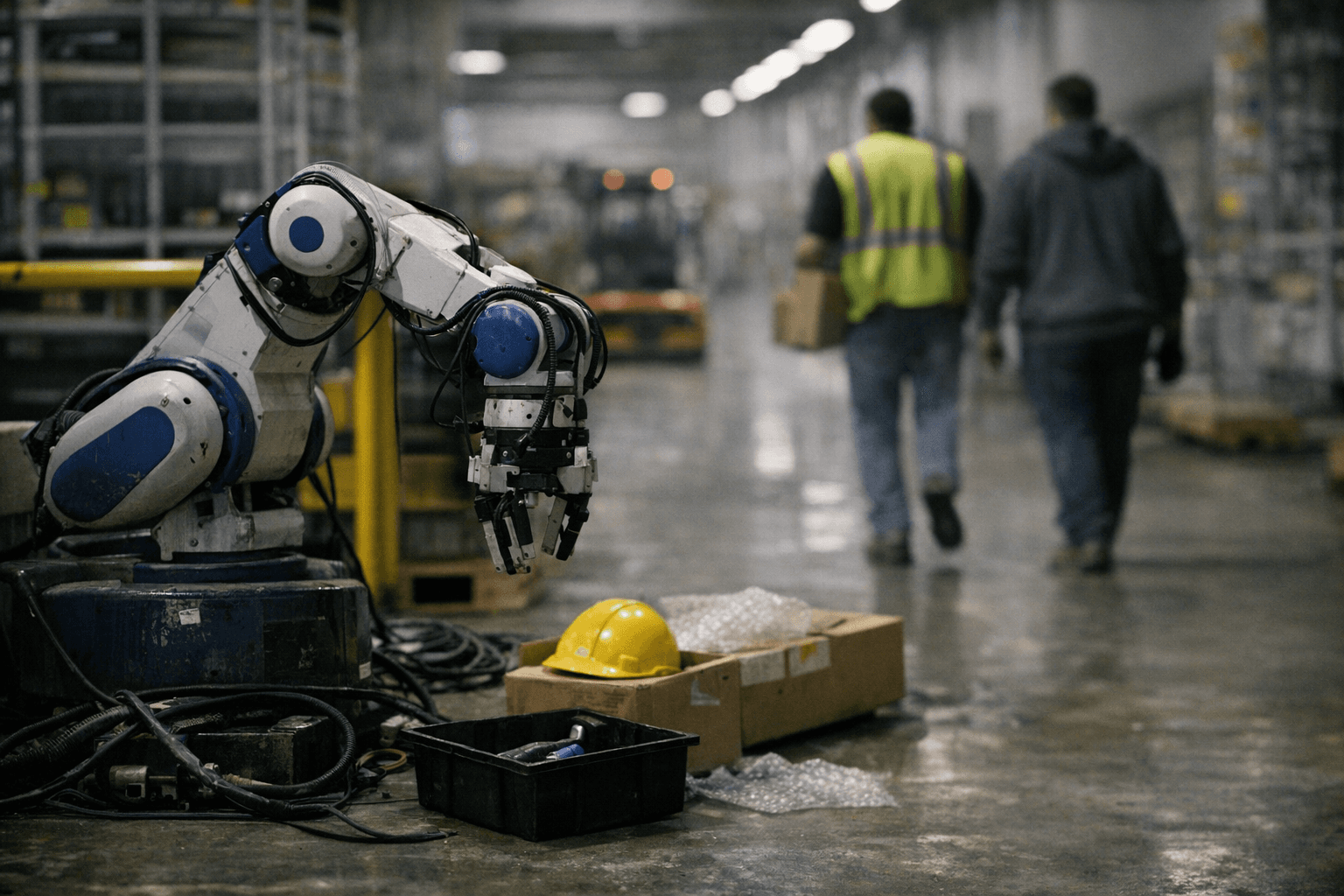
Amazon eliminated about 100 white-collar jobs in its robotics division in early March, part of a broader corporate restructuring that executives say is concentrating resources on AI-driven efficiencies. Two people familiar with the matter said the cuts affected at least 100 employees in the robotics unit, a figure also described by company spokespeople as a "relatively small number."
The reductions follow a series of earlier rounds that have significantly pared Amazon’s corporate ranks. Company accounting of the recent wave shows about 30,000 corporate roles trimmed since October, a span that includes an October round of roughly 14,000 white-collar layoffs and a January reduction of about 16,000. Other counts put the cumulative total of corporate cuts at more than 57,000 since late 2022. Amazon employs about 1.5 million people worldwide, and most of that workforce remains hourly warehouse and logistics staff; the recent moves have largely targeted corporate teams.
The robotics unit designs and builds automation systems used in fulfillment centers, from multi-armed manipulators to conveyor and autonomous systems. One high-profile hardware project, a multi-armed robotic system called Blue Jay that was demoed in October, was halted in January. Internal accounts say Blue Jay was shelved after months of development; one description said the program lasted less than six months. At the same time, Amazon is shifting toward different automation architectures, with internal planning naming a modular warehouse concept called Orbital as a follow-on focus.
Scott Dresser, vice president of Amazon Robotics, told staff the decision was "difficult but necessary" and emphasized that robotics remains a "strategic priority" for the company. In an external statement accompanying the restructuring, Amazon said, "We regularly review our organizations to make sure teams are best set up to innovate and deliver for our customers."
Amazon has committed to supporting affected workers with severance pay, extended health insurance and job placement assistance, the company said. Details on the size and duration of those packages were not disclosed publicly. The cuts also touched employees outside the U.S.; company sources said hundreds of corporate workers in India were impacted as part of the broader realignment.
The move underscores a shifting technology strategy at one of the largest corporate employers in the U.S. and globally: hardware-heavy bets on complex robotics can be costly to scale, and executives are increasingly reallocating engineering and product budgets toward software-defined automation and AI systems that promise incremental productivity gains with lower capital expenditure. Company leaders have additionally pushed to "flatten" organizational layers to speed decision-making, a cultural change CEO Andy Jassy has championed internally.
For investors and customers, the immediate implication is a reweighting of Amazon’s capital and engineering effort away from some bespoke robotic hardware toward AI and modular automation that can be deployed more incrementally across the company’s fulfillment network. Observers will be watching whether the shift accelerates adoption of AI-driven fulfillment tools and how quickly Amazon can translate those tools into lower operating costs or faster delivery metrics without the costly scaling challenges that stymied projects like Blue Jay.
This article was produced by Prism’s automated news system from verified source data, official records, and press releases, then run through automated quality and moderation checks before publishing. The system is built and supervised by the people who set the standards it runs under. Read our full AI policy.
Did this article answer your question?

