Amber Glenn Threepeats with Record Short Program, Eyes Olympics
Amber Glenn delivered a near-flawless free skate to capture a third consecutive U.S. senior title, cementing her place on the likely Olympic team and revitalizing a narrative of resilience at the heart of American figure skating. Her short program record and powerful free skate underscore a shift in the sport toward athletic daring and marketable drama just weeks before Milan-Cortina.
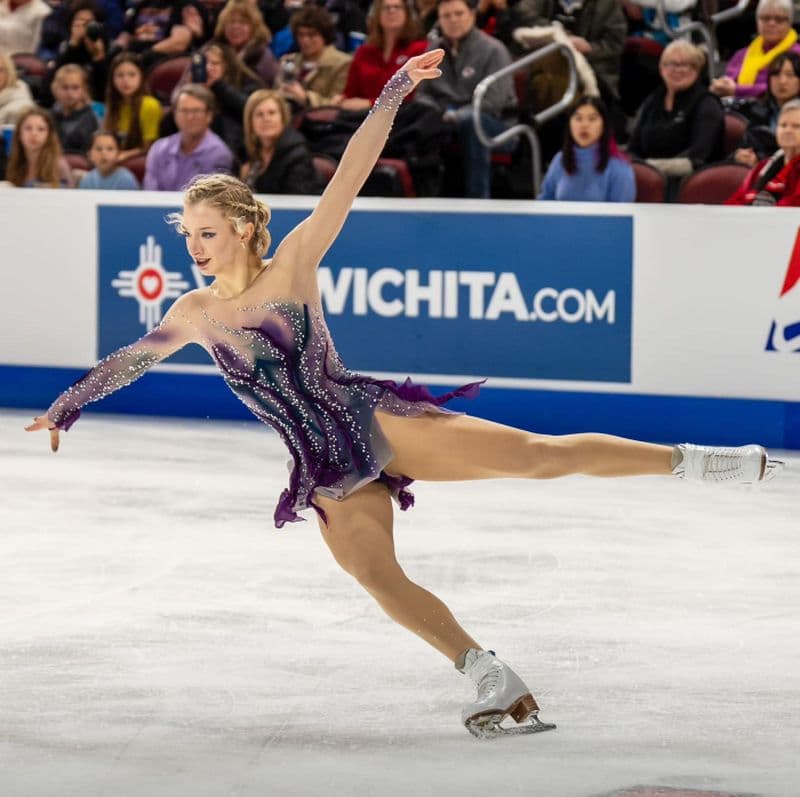
Amber Glenn closed the U.S. Figure Skating Championships at Enterprise Center in St. Louis with a commanding free skate on Friday, Jan. 9, securing her third straight national title and positioning herself for a long-awaited Olympic debut. The 26-year-old opened her free program with her signature triple Axel and completed a clean, emotionally charged skate that included a triple flip-triple toe loop and a triple loop, finishing with a combined total of 233.55.
Glenn’s victory was built on an historic short program two nights earlier, when she set a new U.S. short program record with an 83.05. That mark followed briefly after reigning world champion Alysa Liu posted an 81.11. Glenn’s free skate score of 150.50 brought the total to 233.55, leaving Liu second overall at 228.91 and Isabeau Levito third at 224.45. All three skaters are expected to be named to the U.S. Olympic team when selections are announced Sunday.
The technical content of Glenn’s programs matters in several ways. Her successful triple Axel, still a rarity among women, anchors a repertoire that blends raw jump power with charismatic presentation. Skaters increasingly need both elite technical content and distinctive artistry to stand out in an era of close scoring and global depth. Glenn’s short program record and the narrow margins among the top three signal a competitive domestic field that will sharpen American prospects in Milan-Cortina while raising the pressure on selection and team dynamics.
Glenn’s path to this moment carries cultural resonance beyond the numbers. She began skating at five, became U.S. junior women’s champion at 14 and later stepped away amid a mental health crisis before mounting a comeback that has been central to her public identity. After her free skate Glenn said, “I’m just so grateful. That was terrifying.” Reflecting on the incremental work that propelled her to the podium she added after the short program, “I knew that I came here to do my job,” and said she was “happy to see that scores were up, scores were good, and I was able to keep them going up.”
The podium itself reinforced a narrative of collegiality that has become a hallmark of this U.S. group. Liu, who finished second, celebrated the moment with warmth: “To share a podium with these girls, to get to spend more time with them, I love it.” USA Today described Liu as calling Glenn “such a big sister to me,” a phrase that underlines how camaraderie can coexist with fierce competition and may become a branding asset for U.S. Figure Skating as it seeks broader audience engagement.
The event also delivered other storylines. Alisa Efimova and Misha Mitrofanov repeated as U.S. pairs champions with 207.71. Ceremonial moments, including flowers presented by Olympic legend Jackie Joyner-Kersee and raucous fan reaction that sent plush toys onto the ice, highlighted the championships’ spectacle and commercial draw.
As the team selection looms, Glenn’s combination of high-risk technique, theatrical music choice and a comeback narrative gives her marketable momentum. For the sport, the championships signaled an evolution in American women’s skating toward sustained technical ambition married to compelling storytelling, with social conversations about mental health and athlete support amplified at a pivotal Olympic moment.
This article was produced by Prism’s automated news system from verified source data, official records, and press releases, then run through automated quality and moderation checks before publishing. The system is built and supervised by the people who set the standards it runs under. Read our full AI policy.
Did this article answer your question?

.jpg&w=1920&q=75)
