American accents reveal migration, identity and civil rights history
American accents are more than sound. They map migration, race, class and civil rights, and they hint at how U.S. identity is still changing.
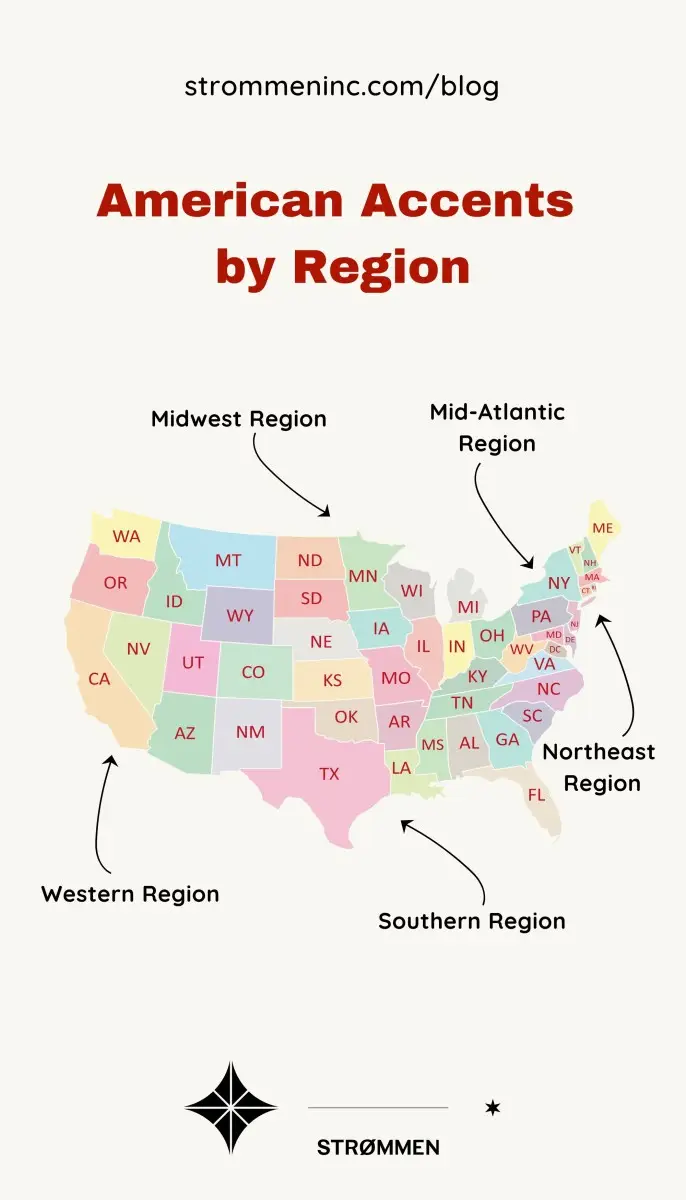
Across the United States, accents work like a moving archive. A person’s vowels can hint at where families settled, how communities mixed, which workers moved for opportunity, and where bias still shapes daily life. Linguists treat those patterns as living links to Americans’ ancestors, and the record reaches from early Spanish exploration to modern workplace discrimination.
Speech as a map of movement
The United States has no official language, yet it contains dozens of accents and dialects of English. That diversity is not random; it reflects migration, regional geography, class differences, and long patterns of settlement that turned speech into a marker of place and belonging. Spanish exploration of the present-day United States and Canada began in the 15th century and stretched from Florida to Labrador, a reminder that the language history of North America was never only an English story.
Those layers matter because accents often preserve older social and geographic ties long after people move. A dialect can carry traces of family origin, labor migration, urban growth, and neighborhood change. In that sense, speech does not simply describe identity. It records how identity was built.
What the national pronunciation record shows
The broadest snapshot of American and Canadian speech comes from *The Atlas of North American English*, published in 2005 by William Labov, Sharon Ash, and Charles Boberg. It offered the first overall view of pronunciation and vowel systems across the United States and Canada, drawing on a telephone survey of 762 local speakers in urbanized North America. A related University of Pennsylvania dialect project had data from 607 speakers as of June 1, 1997.
That scale matters because accents can look local while actually reflecting larger regional shifts. Mapping vowels across hundreds of speakers makes it possible to see where speech patterns converge, where they diverge, and where new dialect boundaries are forming. For linguists, those changes are evidence of how people move and how communities redraw themselves over time.
Why the archive matters
The historical record is not only in surveys and maps. The Library of Congress preserves 118 hours of American English dialect recordings, collected from linguists, dialectologists, folklorists, oral histories, conversations, speech samples, linguistic interviews, and excerpts from public speeches. That collection shows that dialect is not a niche curiosity; it is documentary evidence.
Those recordings capture voices that might otherwise vanish as speakers age, neighborhoods change, and younger generations adopt new speech habits. They also show that the study of accent depends on listening to ordinary speech, not just formal language. In a country where population movement has been constant, a voice archive can reveal continuity that census tables cannot.
Accent, race and civil rights
Accent is also a civil-rights issue. The U.S. Equal Employment Opportunity Commission says national-origin discrimination can include discrimination based on ethnicity or accent, and the agency has recently released new and updated educational materials on national-origin discrimination. That framing matters in hiring, customer-facing work, promotion decisions, and everyday treatment at work, where a person’s speech can be unfairly read as competence, status, or loyalty.
The American Psychological Association’s materials on inclusive language and prejudice reinforce the same point from another angle: words and speech are tied to identity, bias, and social treatment. Together, those frameworks show why accent is not only a cultural marker but also a potential trigger for exclusion. In practice, the issue is whether a voice is treated as evidence of belonging or as a reason to be judged.
African American speech and cultural resilience
The history of African American speech makes that tension especially visible. The Smithsonian’s National Museum of African American History and Culture says its mission is to capture and share the unvarnished truth of African American history and culture, and its collection now exceeds 45,000 objects, with more than half donated by the public. That scale of collection underscores how cultural memory is preserved not just in artifacts but in voices, stories, and oral traditions.
African American speech history reflects both oppression and creativity. Enslavement, segregation, migration, and urban concentration shaped the development and spread of Black speech communities, while music, church life, politics, and digital culture carried those patterns into the national mainstream. The result is that accents tied to African American life cannot be reduced to a single region or stereotype; they are part of the country’s broader story of adaptation under pressure.
What modern dialects reveal about the future
Linguists look at accents to understand where the country is headed, not just where it has been. New speech patterns emerge when families move, cities expand, schools mix children from different backgrounds, and online culture spreads phrases across state lines faster than previous generations could travel. That makes dialect a useful guide to demographic change because it shows how Americans absorb one another.
The clearest lesson is that accent is both personal and collective. It reflects ancestry, but it also responds to current conditions: who shares a neighborhood, who gets hired, who is welcomed, and whose speech is treated as standard. The American accent map is still being redrawn, and the lines on it tell the story of a country that keeps changing as it speaks.
This article was produced by Prism’s automated news system from verified source data, official records, and press releases, then run through automated quality and moderation checks before publishing. The system is built and supervised by the people who set the standards it runs under. Read our full AI policy.
Did this article answer your question?