Americans save less as inflation and Iran war costs squeeze budgets
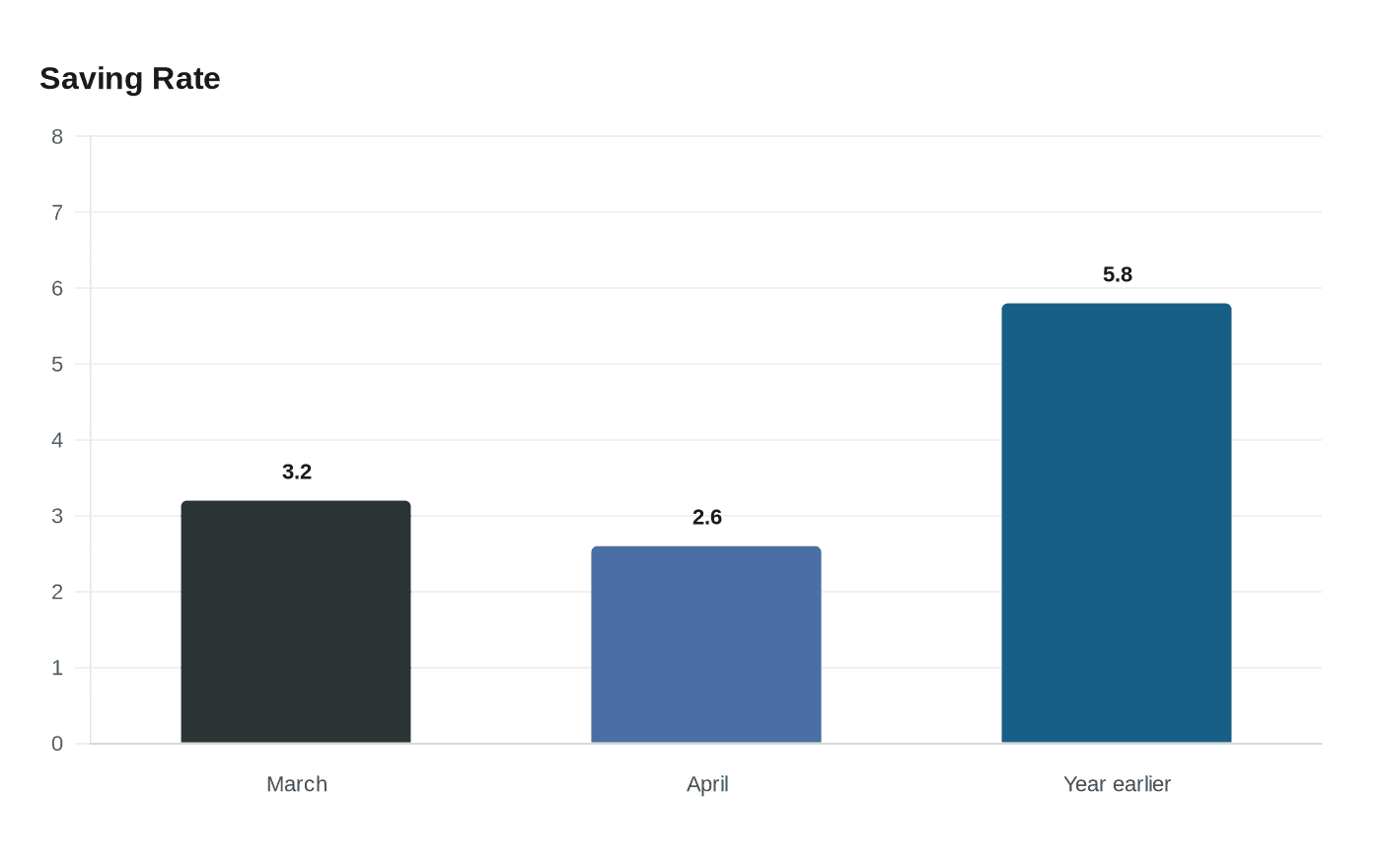
Americans’ savings cushion fell to 2.6% in April as spending rose and war-linked inflation pressures kept budgets tight.

Families are heading into summer with less room to absorb another shock. The U.S. personal saving rate fell to 2.6% in April, while personal saving slipped to $611.7 billion, leaving households more exposed just as inflation and higher costs tied to the Iran war continue to squeeze budgets.
The U.S. Bureau of Economic Analysis released the April 2026 Personal Income and Outlays report on Thursday, May 28, and the figures pointed to a widening strain on household cash flow. Disposable personal income fell 0.1% in April, while personal consumption expenditures rose 0.5%, a combination that pushed the saving rate down from 3.2% in March and 5.8% a year earlier. It was the lowest reading since June 2022. The BEA defines the personal saving rate as personal saving as a percentage of disposable personal income.
The decline comes while inflation remains stubbornly above the Federal Reserve’s target. April PCE inflation ran at 3.8% over the past 12 months, with core PCE at 3.3%, levels that have renewed pressure on household budgets and complicated the outlook for interest rates. A Dallas Federal Reserve analysis warned that a plausible 2026 Iran war scenario could lift fourth-quarter headline PCE inflation by 0.6 percentage points, underscoring how geopolitical shocks can feed directly into energy costs and broader consumer prices.
The weakest protection is falling hardest on households without much cash in reserve. Bankrate’s 2026 Emergency Savings Report found that only 47% of Americans said they had enough liquidity or access to cover a $1,000 emergency expense, and more than half said inflation was causing them to save less for emergencies. The Federal Reserve Board’s 2025 Survey of Household Economics and Decisionmaking, released May 13, also showed savings and financial fragility remain major concerns for U.S. households.
For consumers, the message is straightforward: a lower savings rate means less cushion if prices rise again, hours are cut or borrowing costs stay elevated. For the economy, it raises the risk that any further slowdown will hit spending faster, because more families are already operating with thin financial buffers.
This article was produced by Prism’s automated news system from verified source data, official records, and press releases, then run through automated quality and moderation checks before publishing. The system is built and supervised by the people who set the standards it runs under. Read our full AI policy.
Did this article answer your question?
%3Amax_bytes(150000)%3Astrip_icc()%2FCertificate-of-deposit-2301f2164ceb4e91b100cb92aa6f868a.jpg&w=1920&q=75)