Americans Turn Against Trump’s Iran Military Campaign, Poll Shows
Six in 10 Americans now oppose Trump’s Iran campaign, while 59% say it was the wrong choice and Republican patience in Congress is fraying.
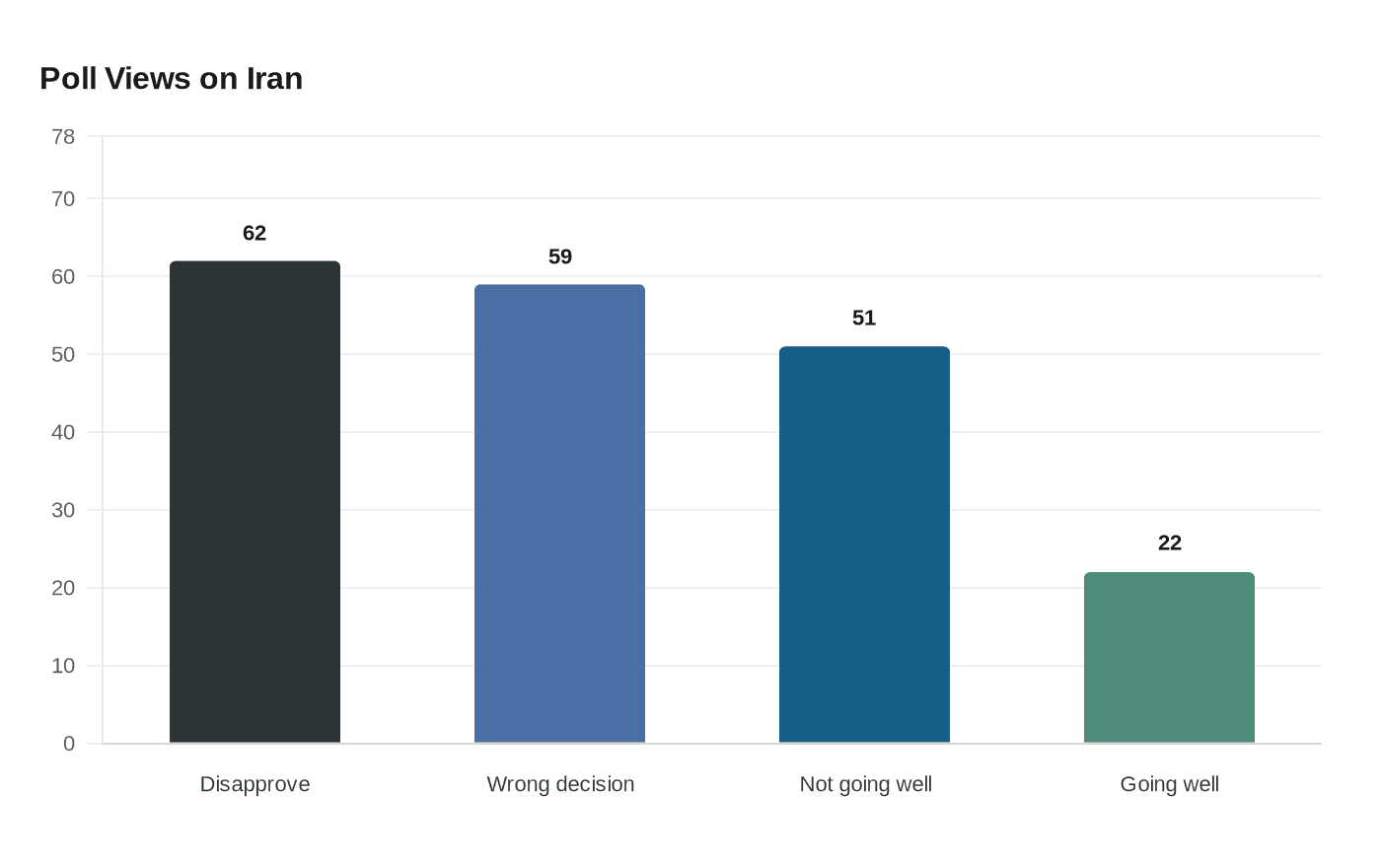
Public support for Donald Trump’s military campaign against Iran has eroded into clear majority opposition, with a new Pew Research Center survey showing 62% of Americans disapprove of his handling of the conflict and 59% saying the United States made the wrong decision in using military force.
The numbers point to a widening gap between Washington’s war footing and a public that is growing more doubtful as the fighting stretches on. Pew found that 51% now say the military action is going not too well or not at all well, up from 45% a month earlier, while only about two-in-ten, 22%, say it is going extremely or very well. The survey also shows how quickly the mood hardened after the campaign began in February 2026. In an earlier March 16-22 poll, 61% already disapproved of Trump’s handling of the conflict.
That skepticism is not confined to one pollster. The Washington Post-ABC News-Ipsos survey found 61% of U.S. adults said the use of military force against Iran was a mistake, and the Post likened the level of backlash to the political blowback seen during the Iraq and Vietnam eras. Politico reported that a majority of U.S. adults said Trump’s decision to strike Iran was wrong, even as gas prices edged higher, adding another layer of public pressure as the war continues.
The strain is starting to show inside Congress, too. After 60 days of hostilities, some Republican lawmakers were growing impatient with Trump and discussing ways to limit presidential war powers or set terms for ending the conflict, according to The New York Times. The 60-day mark has become a flash point because lawmakers from both parties are raising questions about action beyond the statutory limit under the War Powers Resolution.
Partisan divisions remain sharp, but the overall picture is increasingly unfavorable for the White House. Republicans have stayed strongly supportive, while Democrats have been overwhelmingly opposed. Still, the broader trend is moving against escalation, and Pew’s separate April 2026 foreign-policy reporting found Americans were already giving Trump’s early foreign-policy moves mixed or negative reviews. That leaves the administration with less political room to widen the conflict and more incentive to justify every additional step.
This article was produced by Prism’s automated news system from verified source data, official records, and press releases, then run through automated quality and moderation checks before publishing. The system is built and supervised by the people who set the standards it runs under. Read our full AI policy.
Did this article answer your question?

