Amy Sherald’s rise from obscurity to America’s most celebrated painters
A 2012 collapse and heart transplant reshaped Amy Sherald’s life, and her portraits of ordinary Black Americans carried her from obscurity to the Whitney Museum.
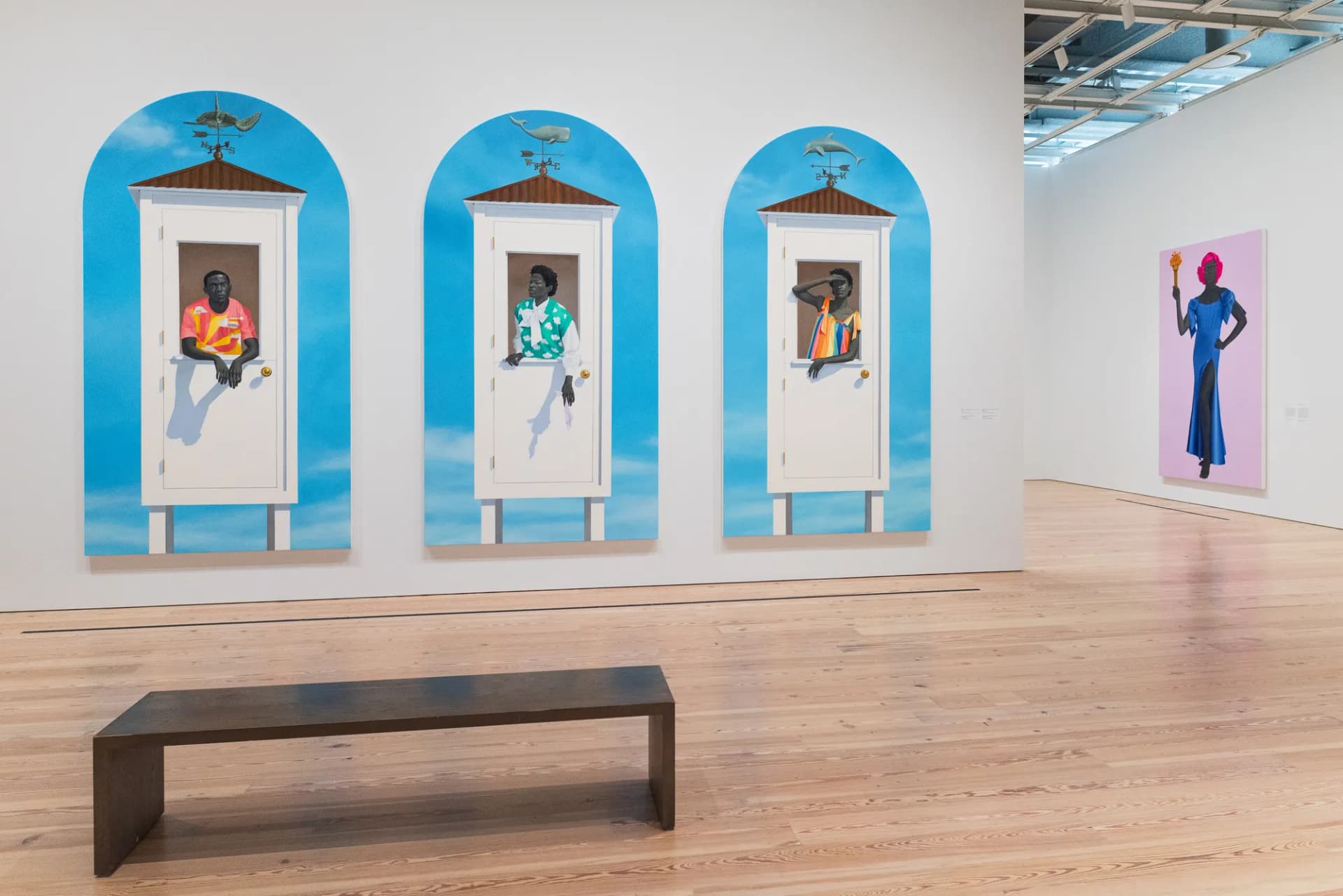
Amy Sherald: American Sublime, the Whitney Museum of American Art said, is her first major museum survey, bringing together about fifty paintings from 2007 to the present. The exhibition, which began at SFMOMA before traveling to New York, places Sherald’s portrait of Michelle Obama beside earlier and later works that made her a force in American portraiture. Her paintings gave Black subjects an uncommon stillness, trading cliché and spectacle for inwardness and dignity.
That visual approach sharpened after a medical crisis that nearly killed her. Sherald was diagnosed years earlier with idiopathic cardiomyopathy, and in 2012, when she was 39, she collapsed in a Baltimore Rite Aid. A campaign page says she received a new heart on December 18, 2012, and Sherald later marked her donor’s presence in her life and art. The collapse and transplant gave added force to the quiet attention she brings to posture, gaze, and private expression.
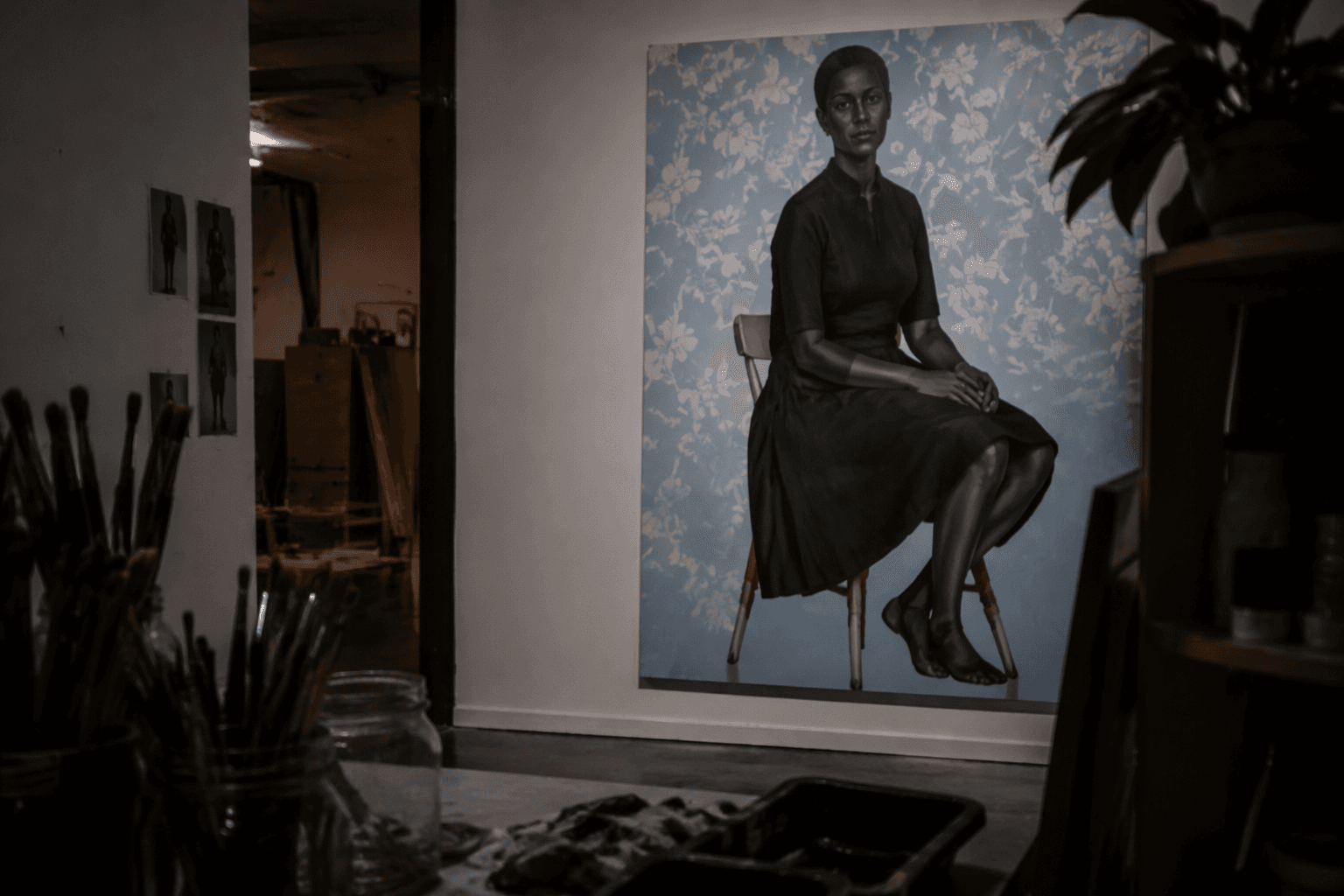
Her national breakthrough came on February 12, 2018, when the Smithsonian National Portrait Gallery unveiled the official portraits of Barack and Michelle Obama, with Barack Obama painted by Kehinde Wiley. Sherald’s portrait of the former first lady drew wide attention and mixed reactions for its stylized treatment, but it also made clear why the Smithsonian chose her. The Obama Foundation said it wanted the portraits to give future generations a more honest sense of who the Obamas were.
By the time 60 Minutes profiled her in 2025, Sherald was 52 and widely recognized as one of America’s most celebrated painters. The survey now tracing her career back to 2007 shows the scale of that ascent: from paintings of everyday Black Americans in muted tones to museum walls holding one of the defining portraits of the 21st century. That rise also shows how Sherald changed the visual language of American portraiture, making room for Black subjects who are not flattened into symbolism or spectacle, but rendered as fully present people.
This article was produced by Prism’s automated news system from verified source data, official records, and press releases, then run through automated quality and moderation checks before publishing. The system is built and supervised by the people who set the standards it runs under. Read our full AI policy.
Did this article answer your question?