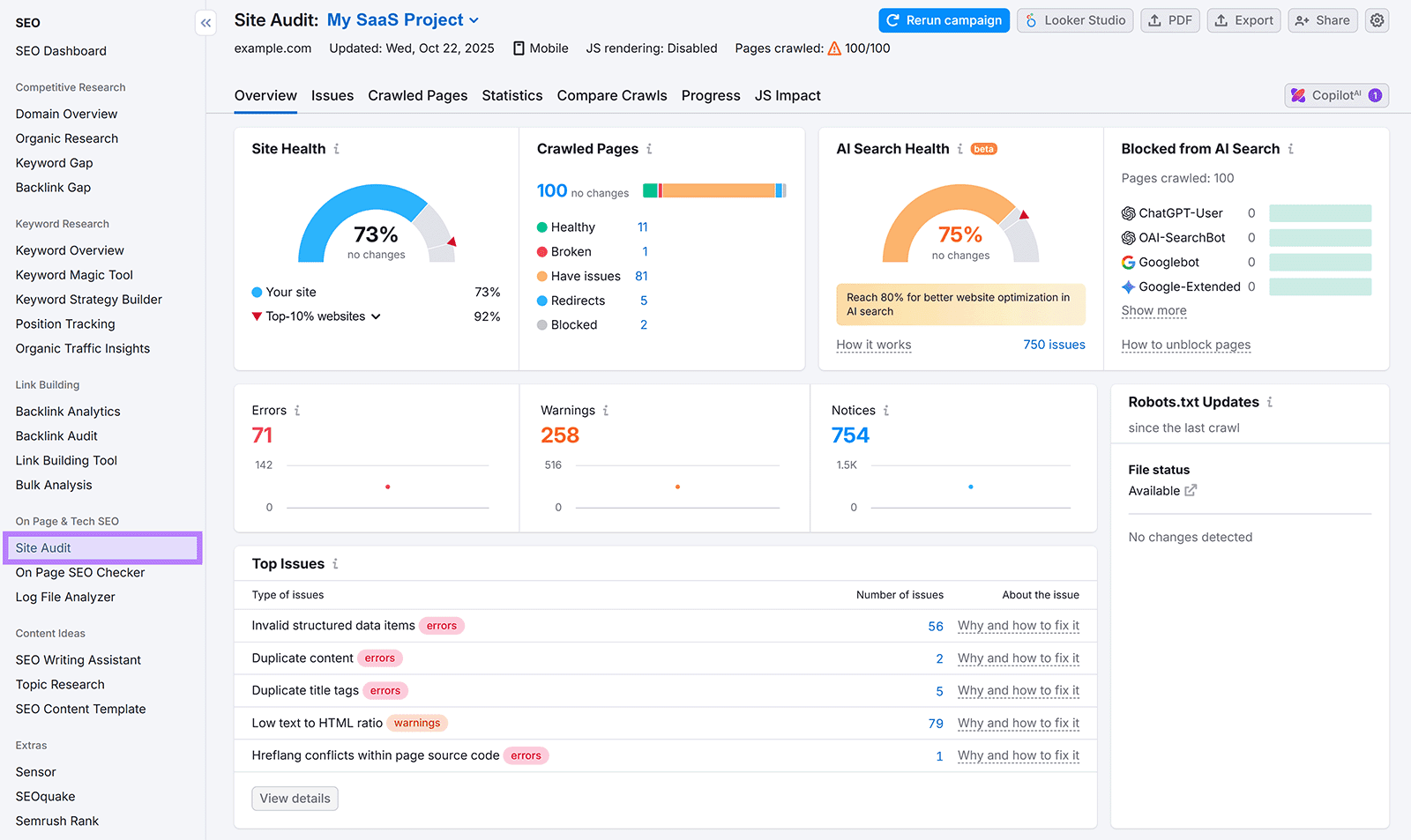
Andreessen Horowitz says AI search is replacing traditional SEO rankings
AI search is shifting value from page rankings to being quoted inside answers, and a16z says that breaks the old SEO market.

Andreessen Horowitz says generative engine optimization is not SEO with a fresh label. It is a different contest: not which page ranks highest, but which brand becomes recallable, quotable source material inside an LLM’s answer. In a16z’s framing, the foundation of the $80 billion-plus SEO market has cracked because language models, not page rank, are deciding what gets surfaced.
That argument is built on a paper that was first submitted on November 16, 2023 and revised on June 28, 2024. Titled “GEO: Generative Engine Optimization,” it formalized generative engines as systems that synthesize information from multiple sources, then introduced a black-box optimization framework and GEO-bench, a benchmark for measuring visibility in generative responses. The researchers found that certain textual enhancements could improve source visibility by up to 40%, and that citations and quotations could materially increase the chance of being surfaced, with results that varied by domain.
The timing matters because the search market has already started to move around the model. Google launched AI Overviews for U.S. users on May 14, 2024 after testing the feature in Search Labs, saying people had already used it billions of times in experiments. Google later expanded AI Overviews to more than 100 countries and said the product reached more than 1 billion monthly users globally. Perplexity has pushed a different model altogether, positioning itself as an answer engine that searches the internet in real time and returns answers with sources and citations attached.
Microsoft has also rewritten its marketer guidance around the same shift. In a February 11, 2026 update, Microsoft Advertising said visibility in AI-powered search is about being understood, trusted, and surfaced directly in AI-generated responses, not just ranking links. That language echoes a16z’s larger point: discovery now happens inside generated answers, where brands can be seen without ever earning a click.
a16z’s own follow-up search analysis goes further, arguing that agents will increasingly crawl the web more than people do and that AI-native search should target the most information-rich spans of text, with explicit controls for recency and length. For publishers and marketers, that changes the old playbook. SEO still matters for crawlability, structure, and authority, but it no longer guarantees presence. GEO raises a harder question: when an AI system summarizes the web for the user, will your brand be the one it remembers, cites, and repeats?
Sources:
Know something we missed? Have a correction or additional information?
Submit a Tip