Semrush guide outlines eight AI-search tactics for SaaS visibility
Semrush's SaaS playbook says AI search visibility now depends on machine-readable pricing, docs, and comparisons that models can cite before buyers ever visit your site.
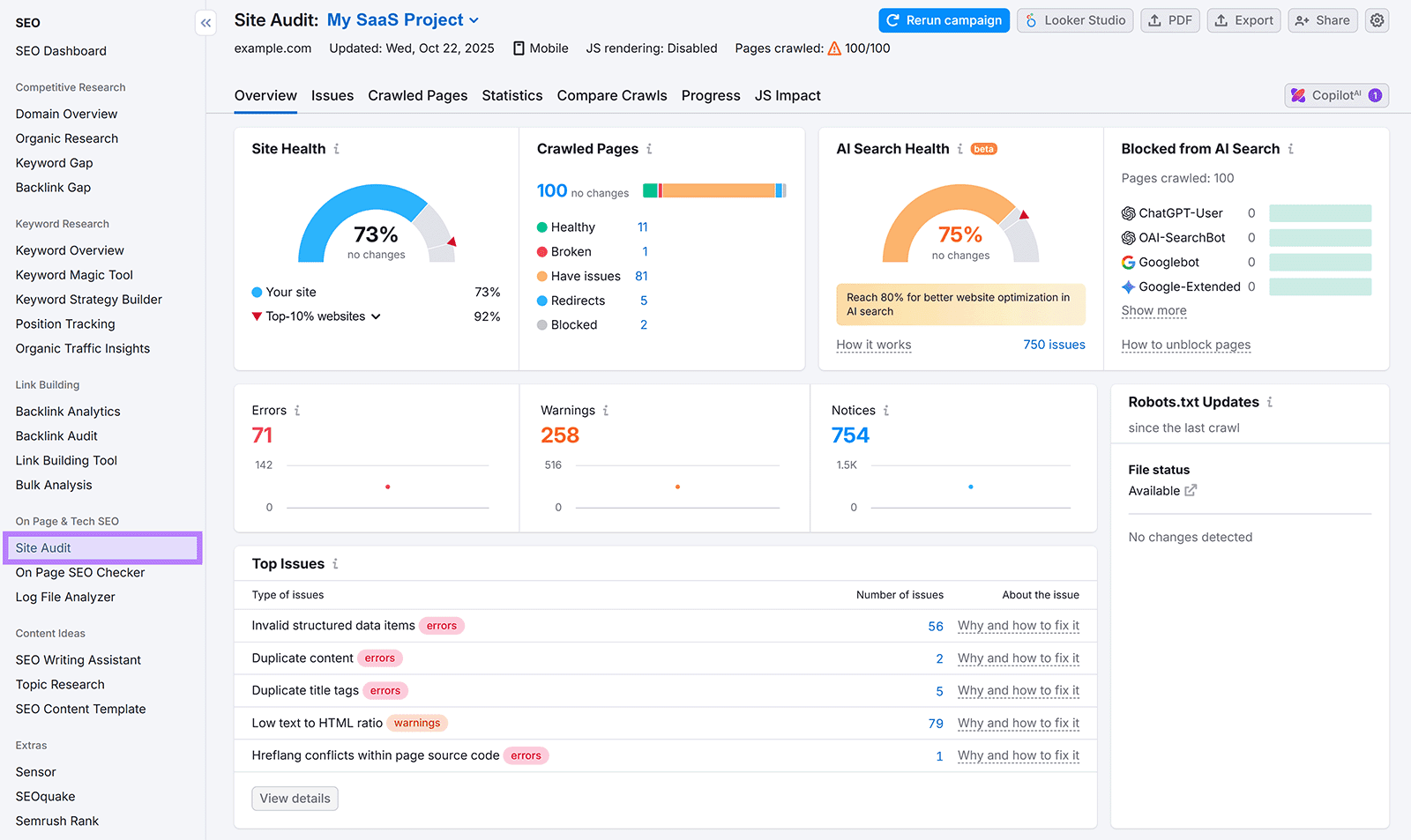
The shortlist is no longer built only on the results page. In SaaS, buyers are now asking AI tools layered questions about pricing tiers, integrations, compliance, documentation quality, use cases, and feature differences, and that means your brand can vanish before anyone reaches your site if the model cannot parse it cleanly.
That is the core shift Semrush is addressing with its AI-search playbook for SaaS. The company frames the work as a visibility problem at the earliest stage of the buyer journey, when prospects are evaluating options, comparing feature sets, checking implementation risk, and looking for signs that a vendor is trustworthy enough to invite into a serious procurement conversation. If your pricing, docs, and comparison pages are not machine-readable, the model may simply leave you out of the shortlist.
Why AI search changes the buying journey
This is bigger than keyword rankings. Semrush’s view of AI search optimization is about getting cited more often and showing up higher in AI-generated answers, not just winning classic blue-link visibility. That matters because B2B buyers have rapidly adopted generative AI, and Forrester says it has become one of the most important sources of self-guided information in the purchase process.
The buying behavior has already moved downstream into the model itself. Forrester’s 2026 predictions say 61% of purchase influencers reported that their organization has or will use a private genAI engine to support purchasing, and 30% of buyers in 2025 said genAI tools were a meaningful interaction type during the final commit stage. In other words, the model is not just helping with early research. It is entering the decision moments where trust, fit, and implementation confidence matter most.
That is also why traditional SEO success is no guarantee here. Ahrefs found that in a dataset of 15,000 prompts, only 12% of links cited by ChatGPT, Gemini, and Copilot appeared in Google’s top 10 results for the same prompt. If your team still assumes search and AI citations travel together, that number should cure the habit fast.
The eight-step playbook that makes your product legible
1. Keep product and feature names consistent
Start with naming discipline. If your homepage calls something one thing, your pricing page calls it something else, and your docs use a third label, the model has to guess whether those references are the same product or three different ones. That confusion is deadly when a buyer asks a multi-part question like whether a feature is included in a specific tier, how it compares with an enterprise add-on, and where the implementation docs live.
The practical fix is boring but powerful: use the same product names, feature names, and tier labels everywhere. That consistency helps AI systems connect the dots between your marketing site, help center, and support content without misreading the offer.
2. Clean up your URL structure
Clean URLs matter because they give models a map of the product. A SaaS site that buries pricing, integrations, or comparison content in messy, inconsistent paths makes it harder for AI systems to understand what belongs where. Clear structure also helps prospects who are moving quickly between evaluation and comparison, because they can tell at a glance whether they are on a pricing page, a feature page, or implementation documentation.
This is where a lot of brands sabotage themselves. If the page exists but the path is opaque, the content may still be too fragmented to use in a summarized answer. Good AI visibility starts with pages that are obviously about one thing each.
3. Put FAQ schema on help and feature pages
Google’s structured data documentation makes this one especially practical. Properly marked-up FAQ pages may be eligible for rich results in Search and an Action on Google Assistant, which means the content is more discoverable in the very format buyers are now using to ask questions. For SaaS, that is a direct fit for pages that answer implementation, security, migration, or billing questions.
FAQ markup works best when the questions are actually the ones buyers ask during evaluation: Does the starter tier include SSO? How does onboarding work? What integrations are supported? When those answers are structured clearly, the model has less room to improvise and more reason to quote your page accurately.
4. Use SoftwareApplication schema with current pricing
SoftwareApplication markup is equally important because Google says it can help display app details more effectively in Search results. For SaaS brands, that is the schema that makes pricing, platform details, and app information easier to recognize at a machine level. It is especially useful when a buyer is comparing plans and wants a fast answer on cost, deployment, or app category.
The big pitfall here is staleness. If pricing changes and the markup does not, the model learns to mistrust you. Current pricing is not a nice-to-have detail in AI search, it is part of the trust layer.
5. Build glossary and comparison pages as HTML tables
Semrush’s playbook leans hard on glossary and comparison pages, and for good reason: AI tools love structured, easy-to-parse content. HTML tables beat image-based charts every time because the model can read the data instead of guessing what is inside a graphic. That matters when a buyer wants to compare features, tiers, or implementation requirements across vendors.
For SaaS, these pages sit right in the comparison stage of the journey. A clean feature glossary helps buyers understand your terminology, while comparison tables help them decide whether your product is the better fit for a specific workflow, team size, or compliance requirement.
6. Write pages around real buyer questions
This is where the guide stops feeling like a technical checklist and starts sounding like pipeline strategy. Semrush’s approach is conversation-led: pages should answer layered prompts the way a real buyer asks them, not the way a brand deck talks. If someone asks about onboarding, API limits, and security controls in one breath, the page should answer in that order.
That structure helps AI systems summarize your product accurately because it mirrors the query shape. It also helps human buyers move faster from curiosity to confidence, which is exactly what you want when the deal is still fragile.
7. Earn off-site expert quotes and data-backed credibility
Semrush also points to off-site expert quotes backed by data and frameworks. That is a smart move because AI systems are more likely to trust content that is reinforced by outside authority, clear evidence, and repeatable logic. A SaaS brand that only talks about itself will always look weaker than one that is validated by expert commentary and specific proof points.
This is especially useful in trust-heavy categories such as security, finance, and infrastructure software. When the model is trying to answer whether your product is credible, the presence of outside signals can matter as much as the product page itself.
8. Monitor citations monthly and tie them to ROI
The last step is measurement, and it should not be vague. Semrush says brands should audit current AI citations first, then track changes monthly and connect those shifts to ROI. That is the right discipline because AI-search visibility is not static, and the surfaces themselves, ChatGPT, Perplexity, Google’s AI Overviews, and similar tools, are now separate places to watch.
The simplest model is straightforward: track how often your brand is cited for the prompts that matter, whether you are appearing in shortlist-style answers, and whether those citations correlate with demo traffic, pipeline influence, or closed-won deals. If the numbers do not move, the playbook is not working yet.
Why this matters for SaaS pipeline
The best brands will not wait for AI systems to guess what their product does. They will hand the model clean naming, readable pricing, structured FAQs, comparison tables, and proof it can trust. That is what Semrush is really arguing: AI search is now part of the earliest stage of the buyer journey, and the brands that win are the ones that are legible, citable, and comparable before the shortlist is even made.
Know something we missed? Have a correction or additional information?
Submit a Tip