Anker unveils Thus AI chip to power local intelligence in earbuds and devices
Anker is moving AI out of the cloud and into earbuds, starting with its Thus chip and a Clear Calls noise system in Soundcore earbuds due May 21 in New York.

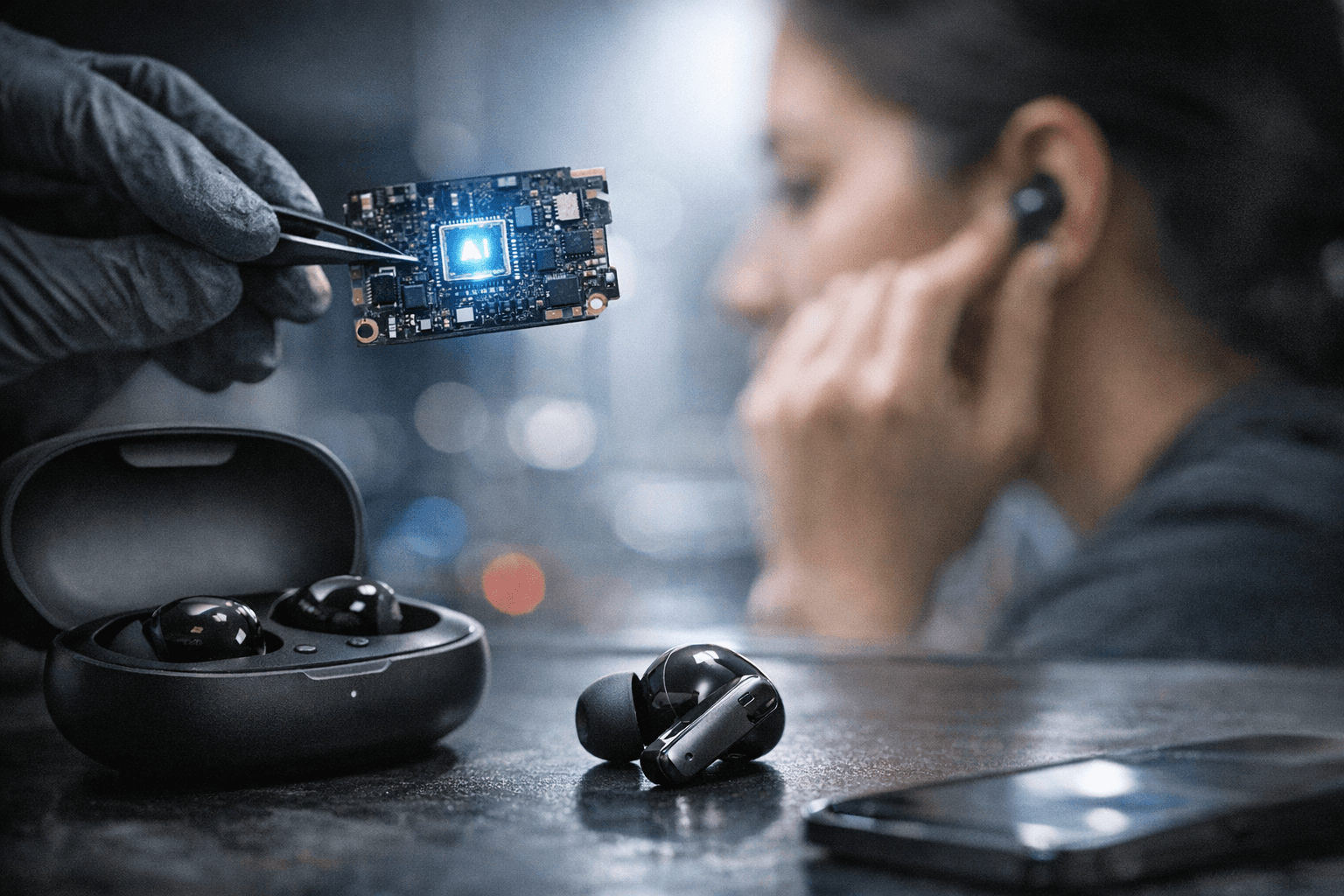
Anker is pushing AI out of the cloud and into the smallest hardware it sells, betting that a custom chip can make local intelligence practical in earbuds, mobile accessories and connected home devices. The company says its Thus processor is the world’s first neural-net compute-in-memory AI audio chip, a design built to cut the power penalties that come from shuttling data back and forth between memory and compute units.
That matters because battery life, heat and size are the hard limits in compact consumer devices. Anker says compute-in-memory lets processing happen where the data lives, which it argues is better suited to compact products than conventional AI chips that separate memory from computation. The company has framed the first generation of Thus-powered products as proof of concept for a broader rollout across its lineup, not just audio but also mobile accessories and IoT gear.
The first products to use the chip will be Soundcore earbuds, which Anker plans to unveil at Anker Day on May 21, 2026, in New York. One previewed feature, called Clear Calls, uses a large neural network-based Environmental Noise Cancellation system. The earbuds are expected to include eight MEMS microphones and two bone-conduction pickups, a hardware mix that suggests Anker is aiming squarely at voice clarity in noisy environments.
Anker founder and chief executive Steven Yang has cast Thus as a direct answer to the inefficiency of traditional AI hardware. He said other chips keep the model and the computation separate, forcing data to move repeatedly and wasting power. That critique aligns with the wider technical case for compute-in-memory, which academic and industry work has described as a way to reduce energy use and latency in edge devices.
The chip is fabricated in Germany as part of Anker’s global manufacturing network, another sign that the company is treating this as a serious hardware platform rather than a one-off feature add-on. Anker Innovations reported RMB 30.51 billion in revenue in 2025, giving the company enough scale to fund a longer silicon effort even as it broadens beyond charging accessories into audio, home energy and home security.
The bigger question is whether Thus marks a real new phase in on-device AI or simply a sharper branding push around trends already spreading through consumer electronics. The answer will depend on whether Anker can turn its chip strategy into devices that genuinely work better without cloud connectivity. If the earbuds deliver, local AI may become less of a marketing phrase and more of a default expectation for battery-powered hardware.
This article was produced by Prism’s automated news system from verified source data, official records, and press releases, then run through automated quality and moderation checks before publishing. The system is built and supervised by the people who set the standards it runs under. Read our full AI policy.
Did this article answer your question?