Appeals court lets Trump continue White House ballroom construction temporarily
A federal appeals court let Trump keep building a $400 million White House ballroom for now, with a June 5 hearing set over whether work must stop.
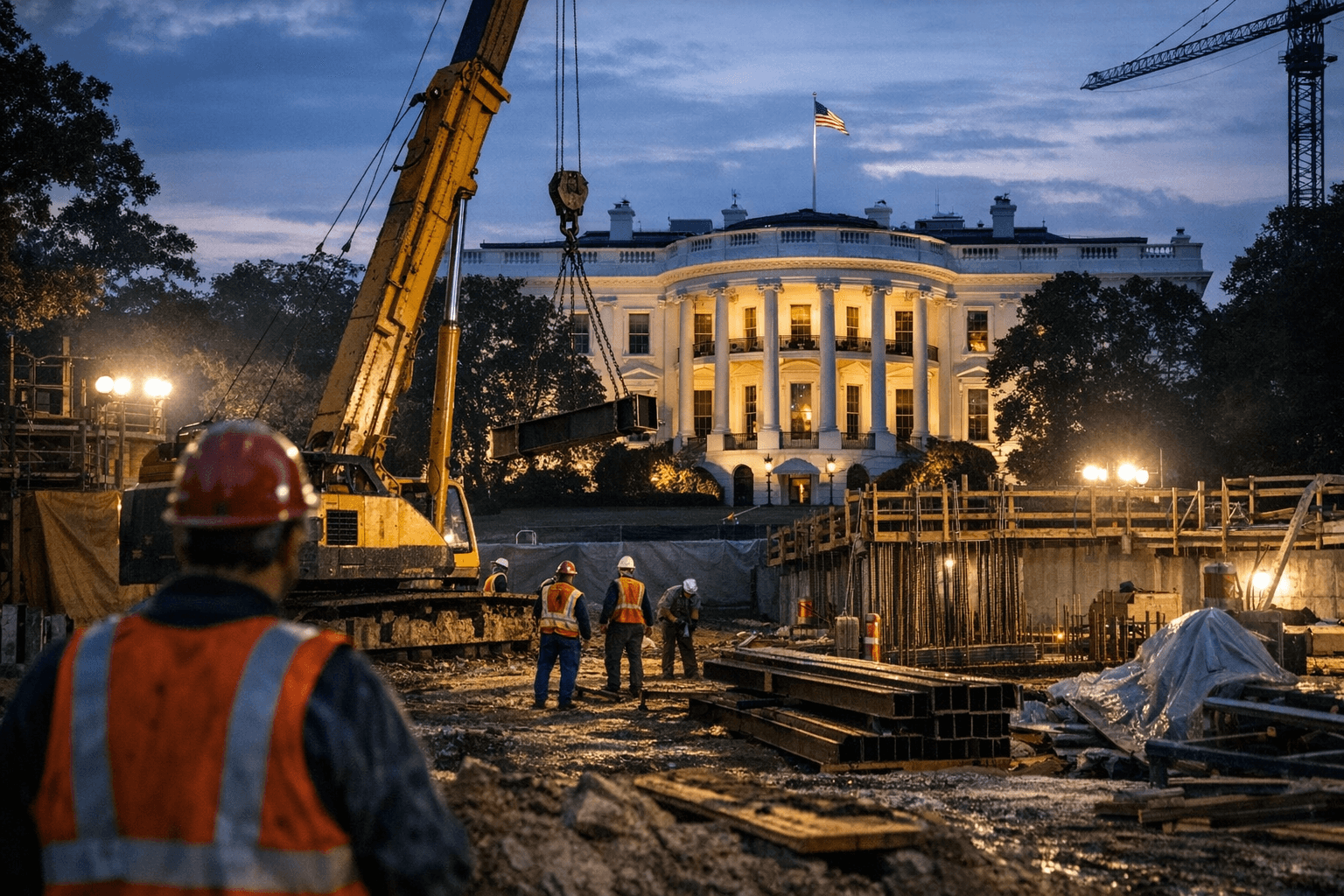
A federal appeals court gave President Donald Trump’s administration a temporary reprieve Friday, allowing construction to continue on the planned White House ballroom while judges weigh whether a lower court order should remain in place.
The U.S. Court of Appeals for the District of Columbia Circuit put on hold a preliminary injunction that had blocked most above-ground work on the project and set oral arguments for June 5. The panel did not rule on the merits of the underlying lawsuit, leaving the central dispute intact: whether the administration can substantially remake a nationally symbolic property without the approvals that preservation groups say the law requires.
U.S. District Judge Richard Leon had said the ballroom project was unlawful without approval from Congress. On April 16, he revised his order to allow only below-ground work, including national security-related facilities, while barring above-ground construction that would lock in the ballroom’s size and scale. The appeal partly turns on the administration’s argument that stopping excavation would disrupt security-related work already underway.
The project centers on a $400 million ballroom that Trump announced on July 31, 2025, describing it as a White House State Ballroom of about 90,000 square feet with a seated capacity of 650 people. White House materials said the room would provide a much-needed addition to the executive mansion. The White House has said the project will modernize infrastructure and bolster security, and Trump has emphasized that it is being funded entirely by private donors.
The East Wing was demolished in October 2025 to make room for the ballroom, a step that has sharpened scrutiny over how the project moved forward. By the time of the litigation, the administration said a massive excavation had already created a structurally completed site with bomb shelters, a hospital and medical area, protective partitioning, and top secret military installations built or ready to be built.
The National Trust for Historic Preservation filed suit in December 2025, arguing that the demolition and replacement plan moved ahead without the statutory authority needed for a privately funded addition. The group, chartered by Congress in 1949, also said required reviews by the National Capital Planning Commission and the Commission of Fine Arts were not completed before construction began. It further argued that Congress has not authorized construction in President’s Park.
The case has become a direct test of executive power over federal property, historic preservation rules, and the practical reach of White House control over one of the country’s most visible public spaces. With the appeals court allowing construction to continue temporarily, the next pivotal decision now shifts to June 5.
This article was produced by Prism’s automated news system from verified source data, official records, and press releases, then run through automated quality and moderation checks before publishing. The system is built and supervised by the people who set the standards it runs under. Read our full AI policy.
Did this article answer your question?

