Warming oceans put great white sharks at risk, study finds
Great white sharks are tightly tuned to cool water, and warming seas could strain their metabolism, shrink habitat and push them farther north.
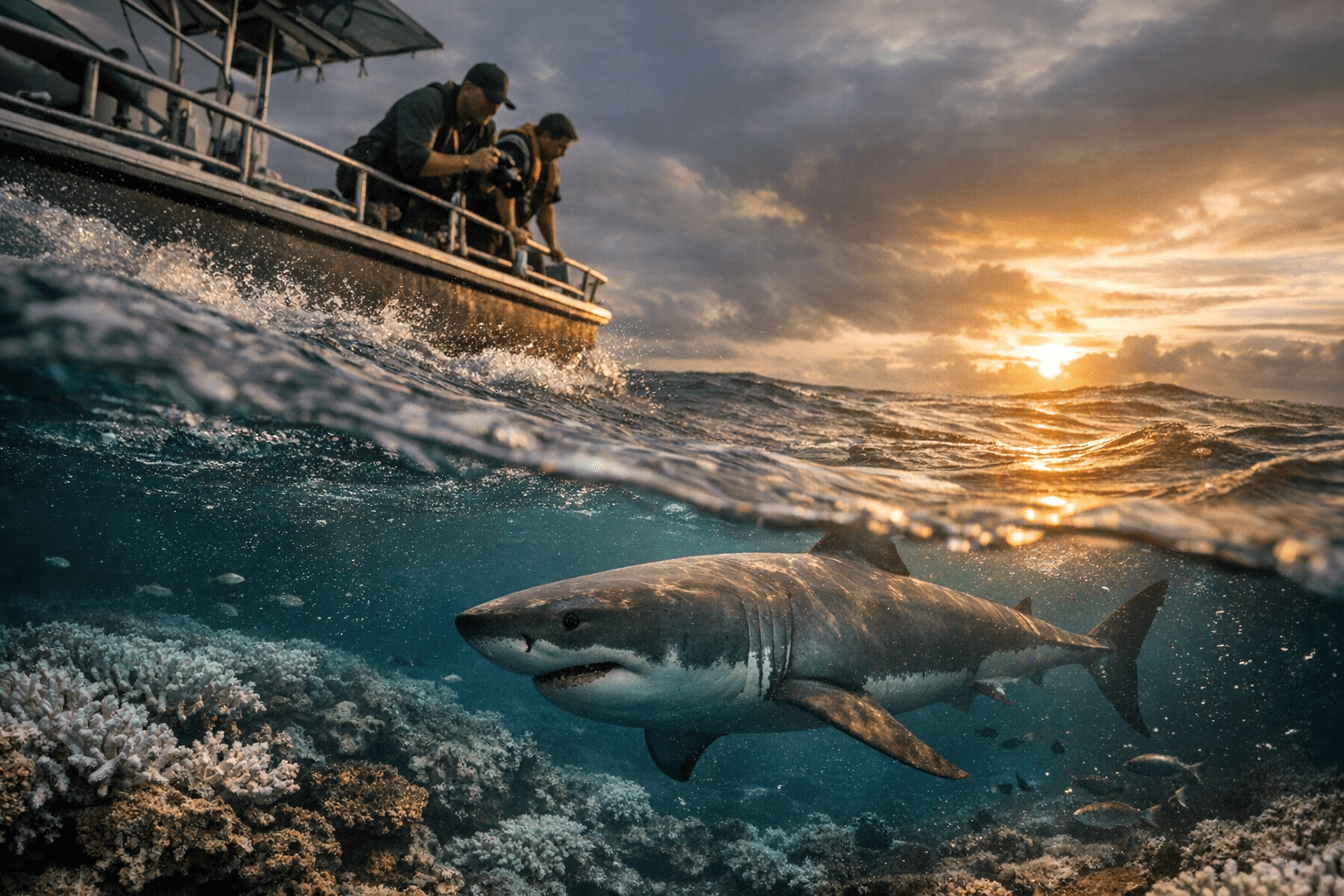
Great white sharks may be far less resilient to warming oceans than their reputation suggests. A Trinity College Dublin-led study published in Science found that warm-bodied sharks and tunas face a climate-change “double jeopardy”: their physiology demands far more fuel than that of cold-blooded fish, while hotter seas and thinner food supplies leave them with less room to adapt.
The numbers underline how narrow that margin is. Mesothermic fishes, a rare group that includes great white sharks and basking sharks, make up fewer than 0.1% of all fish species, yet they burn about 3.8 times more energy than similarly sized ectothermic fish. The study found that a 10 degree Celsius rise in body temperature more than doubles routine metabolic rate, a sharp reminder that even small shifts in ocean conditions can carry major energetic costs for large predators built for a specific thermal niche.
Great white sharks have already shown how closely their behavior tracks temperature. In one study of juvenile white sharks off central California, 16 tagged sharks began searching for warmer water within 10 to 12 hours after upwelling dropped temperatures below 14 C. In that 2022 work, the sharks were tracked across a 5.5 square kilometer area, and 11 of them traveled about 35 kilometers away before returning within 24 hours. A separate 2024 study found juvenile great white sharks selecting warm, shallow water within about 1 kilometer of shore and, when possible, staying between roughly 16 C and 22 C.
That temperature dependence helps explain why warming waters are already reshaping where the species appears. Researchers have documented juvenile great white sharks shifting north into Monterey Bay as marine heat waves expand their range. The ecological consequences extend beyond the sharks themselves. Scientists have warned that young great whites moving farther north could increase bites on sea otters, with potential knock-on effects for kelp-forest ecosystems, where otters help keep sea urchin populations in check.
The wider ocean backdrop is turning harsher, not easier. Global ocean temperatures reached a record high in 2024, and marine heat waves have become stronger, longer and more frequent since about 1980 under human-caused climate change. For warm-bodied predators, that means the challenge is not just overheating. It is the growing possibility that warming seas will push them toward their physiological limits at the same time that they must eat more, travel farther and compete in an ocean that is changing faster than their biology can easily absorb.
This article was produced by Prism’s automated news system from verified source data, official records, and press releases, then run through automated quality and moderation checks before publishing. The system is built and supervised by the people who set the standards it runs under. Read our full AI policy.
Did this article answer your question?