Appeals Court Rules Trump Can Deny Bond Hearings to Many Immigration Detainees
Two men who lived in the U.S. for over 15 years and had no criminal records became the faces of a ruling that could strip millions of immigrants of bond hearings.
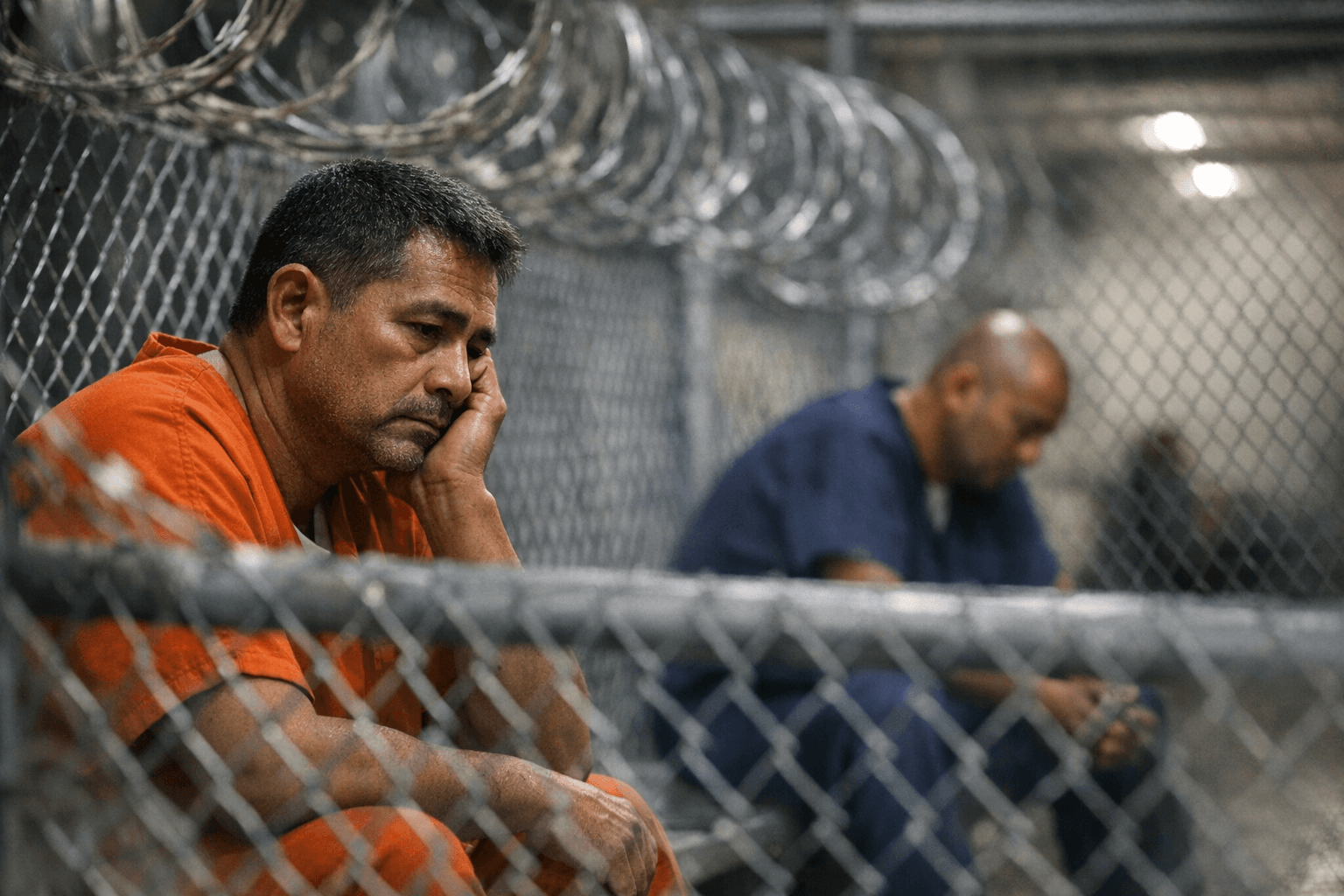
Victor Buenrostro-Mendez had lived in the United States since 2009. Jose Padron Covarrubias had been here since 2001. Neither man had a criminal record. Both were jailed for months in 2025 before Texas district courts ordered bond hearings and released them. Then the federal government appealed, and on February 6, a divided appeals court panel took that freedom back.
The decision by a conservative 2-1 panel of the New Orleans-based 5th U.S. Circuit Court of Appeals marked the first time an appeals court had upheld the policy, and it came despite hundreds of lower-court judges nationally declaring it unlawful. The ruling hands the Trump administration a major victory in its effort to detain broad categories of unauthorized immigrants without any opportunity to seek release before an immigration judge.
Circuit Judge Edith H. Jones concluded that a provision of the Immigration and Nationality Act authorizes the government to deny bond to noncitizens who have been living in the U.S., often for decades and frequently without criminal records, as they fight removal proceedings. Jones, an appointee of President Ronald Reagan, was joined by Judge Stuart Kyle Duncan, a President Trump appointee. Judge Dana M. Douglas, a President Joe Biden appointee, issued a dissent.
The legal pivot at the center of the ruling is the administration's reinterpretation of who qualifies as an "applicant for admission" under federal immigration law. For nearly 30 years, prior administrations had treated such individuals as subject to a separate provision that permits release on bond. The Trump White House reversed that policy in July 2025, with ICE releasing a memo saying the government reviewed its authority to arrest and detain people who immigrated without inspection — a form of mandatory detention that had previously been reserved for certain people arriving at the border, now extended to immigrants already living inside the U.S.
The Fifth Circuit decision aligns with a September 5, 2025 Board of Immigration Appeals ruling in the Matter of Yajure Hurtado, which concluded that many noncitizens who entered without inspection and have not been admitted are subject to mandatory detention. That BIA ruling triggered a cascade: immigration judges nationwide began denying bond hearings, and lawsuits flooded federal courts. Over 350 federal judges in over 2,400 cases found that the government's new interpretation contradicts a plain reading of the statute's language, as well as three decades of practice.
Judge Jones said the administration's reinterpretation of the Illegal Immigration Reform and Immigrant Responsibility Act of 1996 was correct, writing for the panel's majority: "The text says what it says, regardless of the decisions of prior administrations."
Attorney General Pam Bondi celebrated the outcome, calling it "a significant blow against activist judges who have been undermining our efforts to make America safe again at every turn."
The dissent was pointed. Judge Douglas said the lawmakers who wrote the statute "would be surprised to learn it had also required the detention without bond of two million people," adding that "for almost thirty years there was no sign anyone thought it had done so." Douglas also noted that the government sought a speedier decision in the Fifth Circuit but not in the less conservative Seventh Circuit, and called the unprecedented interpretation "based on little more than an apparent conviction that Congress must have wanted these noncitizens detained — some of them the spouses, mothers, fathers, and grandparents of American citizens."
The ruling applies to Texas, Louisiana, and Mississippi, and marks the first time an appeals court has backed a policy that has been widely rejected by lower courts. Estimates of who is affected vary sharply. The American Immigration Council characterized the decision as subjecting "millions of noncitizens in this country to the possibility of mandatory immigration detention without any opportunity for a bond hearing," and called it "strikingly at odds with the vast majority of the federal judiciary, including dozens of conservative judges, many appointed by Republican presidents."
While the Fifth Circuit is the first appellate court to rule on the merits of the statutory question, a motions panel of the Seventh Circuit found in December 2025 that the government was not "likely" to succeed in arguing that the provision applies to all noncitizens who entered without inspection, though that order is not technically binding because of the case's procedural posture. Other federal appellate courts are expected to take up the question, and legal experts widely anticipate the matter will reach the U.S. Supreme Court.
Notably, the Trump administration has moved many migrants to the region apprehended elsewhere, concentrating its detention operations precisely where this ruling now gives it the broadest legal cover to hold people indefinitely without a hearing.
Know something we missed? Have a correction or additional information?
Submit a Tip

