Appeals Court Upholds Dismissal of Boeing Criminal Case Tied to 346 Deaths
A federal appeals court blocked families of 346 crash victims from reviving criminal charges against Boeing, leaving prosecutors' decision to drop the case legally untouchable.
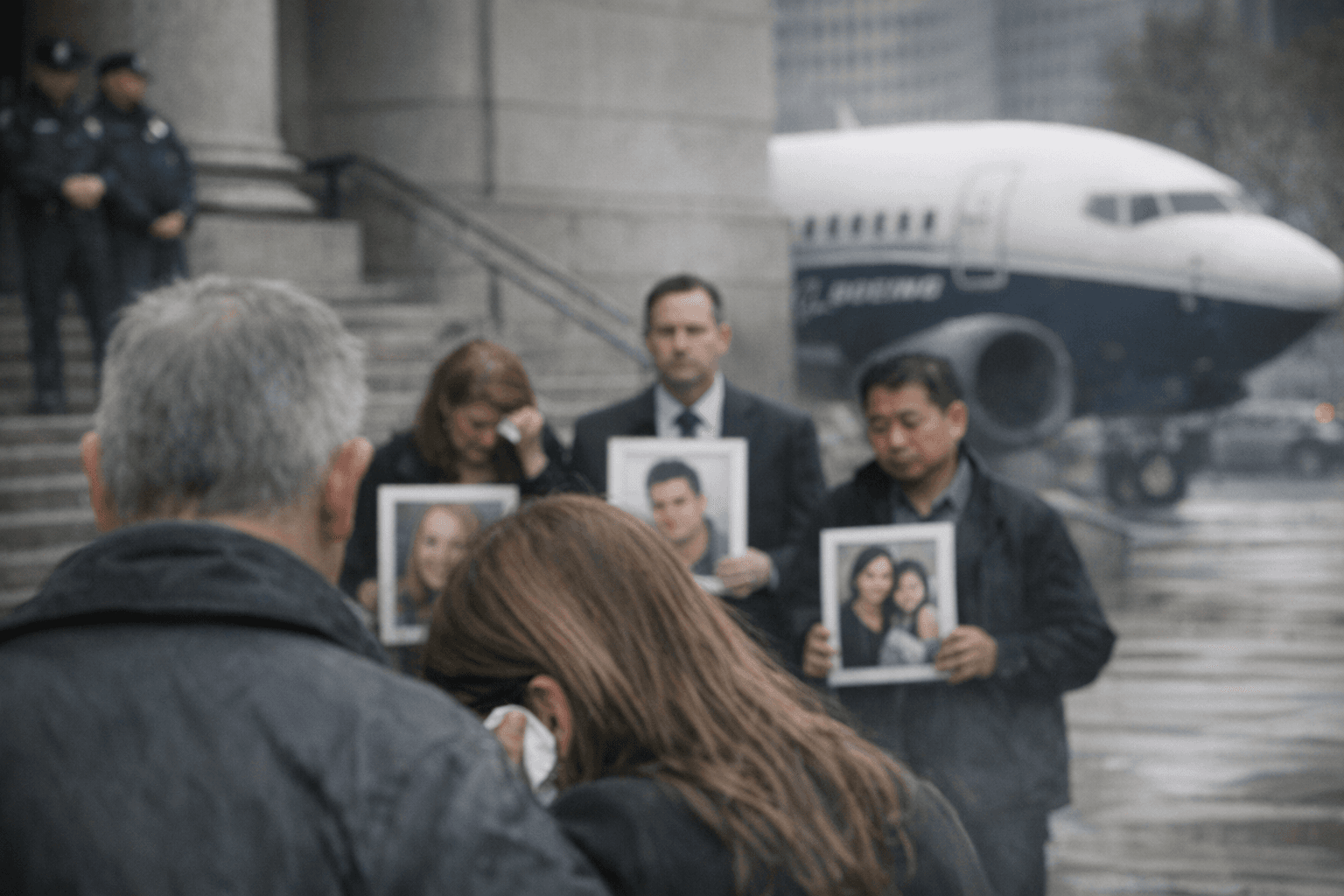
A three-judge federal appeals panel handed Boeing a decisive legal victory Tuesday, upholding the Justice Department's decision to drop its sole criminal charge against the company connected to two 737 MAX crashes that together killed 346 people.
The ruling confirmed what U.S. District Judge Reed O'Connor in Fort Worth, Texas, had reluctantly concluded during earlier proceedings: courts have no authority to override the executive branch's prosecutorial prerogative, even when a judge personally finds the outcome morally deficient. O'Connor criticized the settlement deal in pointed terms, writing that it "fails to secure the necessary accountability to ensure the safety of the flying public," yet still approved the dismissal because the law left him no alternative. The appeals panel agreed on the jurisdictional limits while leaving his moral criticism untouched.
The criminal matter traces to Boeing's certification of the 737 MAX's flight control software, which prosecutors alleged the company misrepresented to federal regulators before Lion Air Flight 610 crashed in October 2018 and Ethiopian Airlines Flight 302 went down in March 2019. In late 2025, the Justice Department finalized paperwork completing a settlement that triggered the charge's dismissal, a resolution that families and safety advocates fought at every stage of the process.
Victims' families brought the appeal arguing the dismissal denied both the public and crash survivors appropriate accountability, invoking the Crime Victims' Rights Act. The appeals court declined to overturn the lower court's action, effectively closing the last viable judicial avenue for forcing a criminal prosecution. That statutory argument did not persuade the panel, but the tension between prosecutorial discretion and victims' rights in corporate safety cases will likely surface in future litigation.
For Boeing, the ruling removes the most significant remaining criminal exposure tied to the MAX disasters, though civil claims by families and ongoing federal regulatory scrutiny remain active. Lawyers for the families signaled they would pursue other legal routes and continue pressing Congress and the FAA to strengthen oversight of aircraft certification practices.
The broader policy debate the case exposed is unlikely to quiet. Critics of the Justice Department's approach argue that resolving a criminal conspiracy charge through negotiated settlement, rather than prosecution, creates a structural gap in accountability whenever large manufacturers cause mass casualties. The 737 MAX crashes had already prompted a 20-month global grounding of the aircraft, sweeping software reforms, and a restructuring of FAA oversight of the manufacturer self-certification process. Those systemic changes remain in place.
What the courts have now confirmed, at both the district and appellate levels, is that those changes arrived without a criminal conviction. That distinction carries weight well beyond Boeing's balance sheet, shaping how regulators, prosecutors, and the public understand the boundaries of corporate accountability when catastrophic engineering failures end up before the bar.
This article was produced by Prism’s automated news system from verified source data, official records, and press releases, then run through automated quality and moderation checks before publishing. The system is built and supervised by the people who set the standards it runs under. Read our full AI policy.
Did this article answer your question?