Apple, Intel reach preliminary chip-making deal, report says
Apple’s preliminary Intel pact could split chip production, lift Intel’s foundry ambitions and strengthen Washington’s domestic manufacturing push.
Apple has reached a preliminary agreement with Intel for the chipmaker to manufacture some of the semiconductors that power Apple devices, a move that could redraw part of the U.S. tech supply chain and give Intel a long-sought outside customer. The arrangement is still tentative, and it remains unclear which Apple products would use Intel-made chips, but even a limited partnership would signal a meaningful shift for a company that has long depended on Taiwan Semiconductor Manufacturing Co. for its most advanced parts.
The talks have been intensive for more than a year, and the reported breakthrough comes as Apple looks to add more manufacturing options after supply constraints weighed on growth. Tim Cook recently said Apple had “less flexibility in the supply chain than we normally would,” and that chip shortages were constraining growth. That pressure helps explain why Apple would consider Intel, even after completing its transition of Mac computers from Intel processors to Apple silicon starting in late 2020. This would not be a return to Intel chips inside Apple’s own computers; it would be a return to Intel as a manufacturing partner for Apple-designed silicon.
Intel’s pitch is tied to its foundry turnaround and its 18A production roadmap. The company said in late 2025 that Panther Lake would be its first client system-on-a-chip built on Intel 18A and that 18A products were moving into production. That matters because Apple would need confidence that Intel can deliver advanced-node manufacturing at scale, with the performance, power efficiency and security standards Apple requires. Any deal would likely begin with a narrow set of components rather than a full transfer of production.
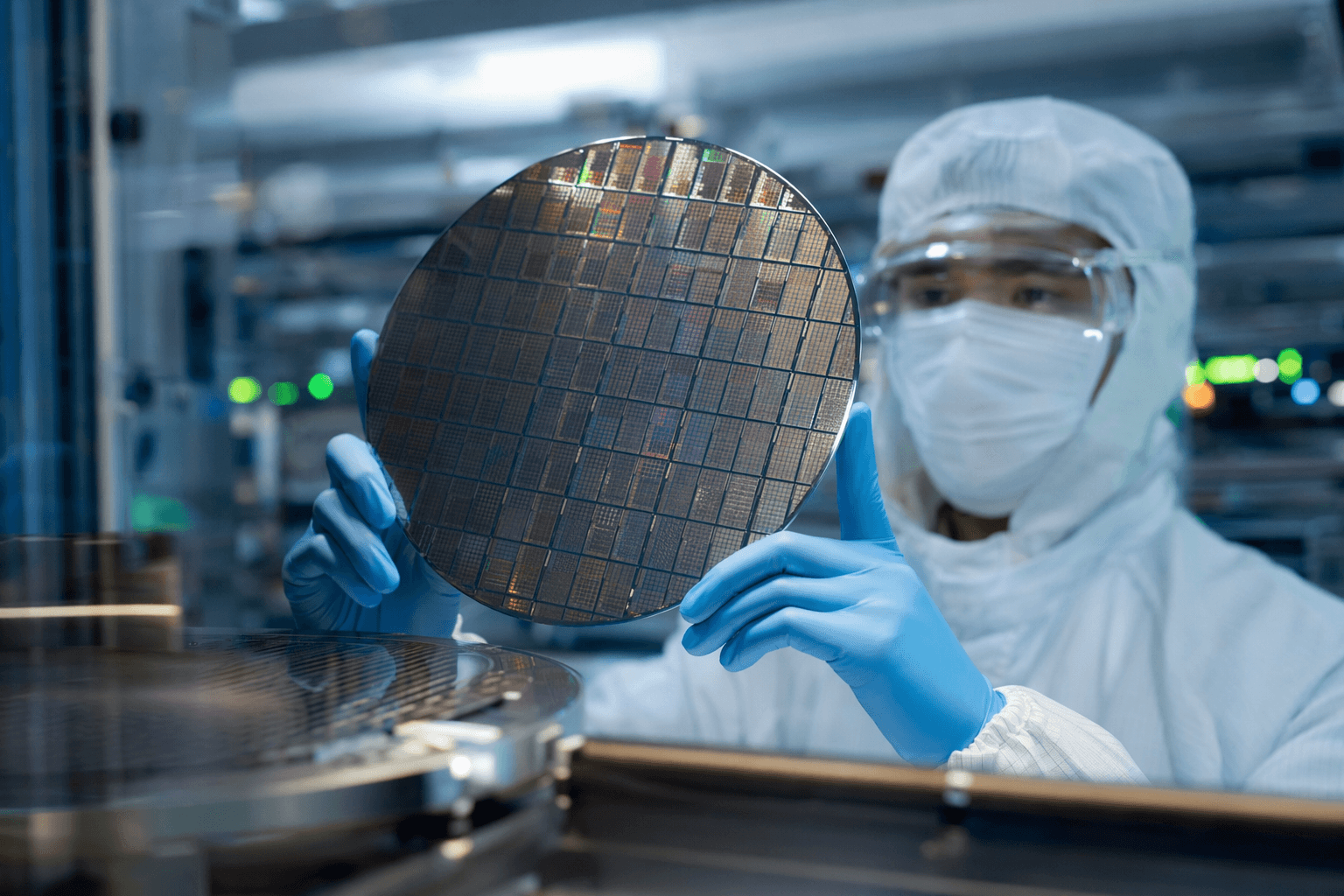
The stakes extend well beyond Cupertino and Santa Clara. Apple has held exploratory discussions with Intel and Samsung Electronics about producing main processors in the United States, underscoring a broader effort to diversify manufacturing and reduce dependence on overseas production. For Washington, a credible Apple-Intel partnership would fit neatly with years of policy pressure for more domestic semiconductor output. For Intel, landing Apple would validate its foundry strategy and could help it compete more aggressively for premium customers. For Apple, it would offer leverage, redundancy and a hedge against concentration risk.
Investors immediately read the news that way. Apple shares rose about 2% and Intel gained about 14% after the development, a sharp move that suggests markets see the potential partnership as strategically important even before any final contract is signed. If the deal holds, the biggest winner may be all three: Apple gains flexibility, Intel gains credibility and the United States gains another step toward a deeper domestic chipmaking base.
This article was produced by Prism’s automated news system from verified source data, official records, and press releases, then run through automated quality and moderation checks before publishing. The system is built and supervised by the people who set the standards it runs under. Read our full AI policy.
Did this article answer your question?
%3Amax_bytes(150000)%3Astrip_icc()%2FCertificate-of-deposit-2301f2164ceb4e91b100cb92aa6f868a.jpg&w=1920&q=75)