Apple sues OpenAI over trade secret theft in hardware push
Apple accused OpenAI of raiding its hardware playbook, saying a former chief hardware executive used code names, interview props and confidential files to fuel rival devices.
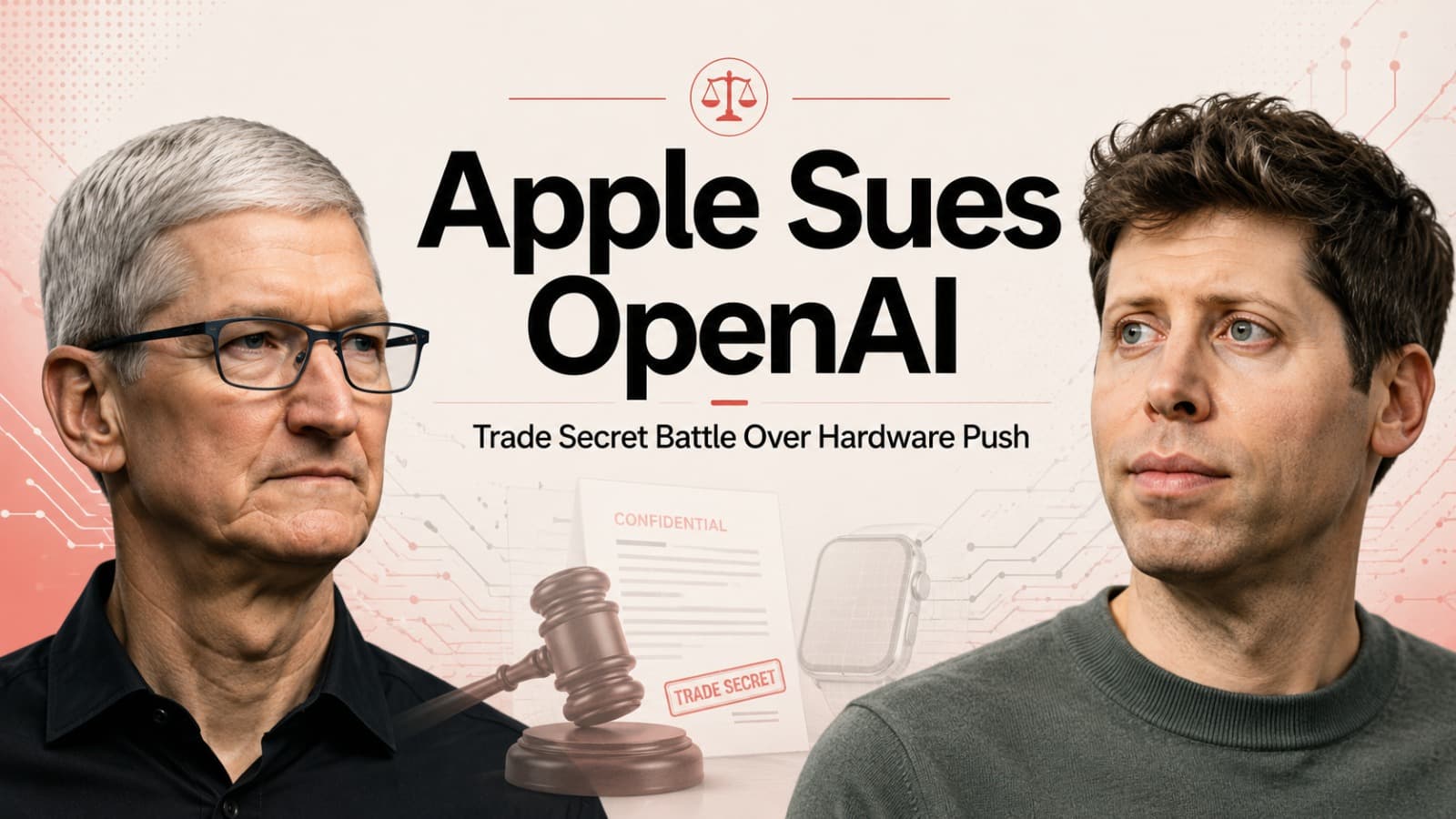
Apple filed a federal lawsuit Friday in the U.S. District Court for the Northern District of California, accusing OpenAI, its hardware arm io Products, Tang Yew Tan and Chang Liu of misappropriating trade secrets to speed a consumer hardware push that Apple says could compete with the iPhone. The filing turns a partnership that once put ChatGPT inside Apple’s software into a direct fight over who gets to define the next AI device.
Apple says Tan used confidential project code names while recruiting, asked job candidates to bring Apple hardware components to interviews and sought details about unreleased products. The complaint also says Liu failed to return a company-issued laptop and used an authentication bug to download dozens of confidential hardware-related files. Apple’s lawyers wrote that “This case is about Apple’s former employees stealing Apple’s trade secrets for the benefit of OpenAI.”

The dispute lands after Apple and OpenAI formed a high-profile partnership in 2024, when ChatGPT was integrated into the iPhone’s operating system and OpenAI chief executive Sam Altman visited Apple headquarters for the announcement. It also follows OpenAI’s 2025 acquisition of Jony Ive’s io Products for about $6.5 billion, a deal that moved one of Apple’s most celebrated designers into OpenAI’s hardware ambitions. Apple says it first raised concerns with OpenAI in February 2026 and got no response. OpenAI said it had “no interest in other companies’ trade secrets” and remained focused on building “innovative technology that empowers people everywhere.”
The filing adds another layer of legal pressure around OpenAI and Altman, coming months after a California jury rejected Elon Musk’s lawsuit against the company in May. Apple’s case puts employee mobility, trade-secret ownership and hardware competition at the center of the AI race, where control over new devices could matter as much as control over the software that runs them.
This article was produced by Prism’s automated news system from verified source data, official records, and press releases, then run through automated quality and moderation checks before publishing. The system is built and supervised by the people who set the standards it runs under. Read our full AI policy.
Did this article answer your question?