Apple unveils M5 Pro and M5 Max MacBook Pros, signals pricier tiers
Apple announced new M5 Pro and M5 Max chips and updated 14- and 16-inch MacBook Pros, emphasizing on-device AI and high memory bandwidth; preorders start March 4, availability March 11.
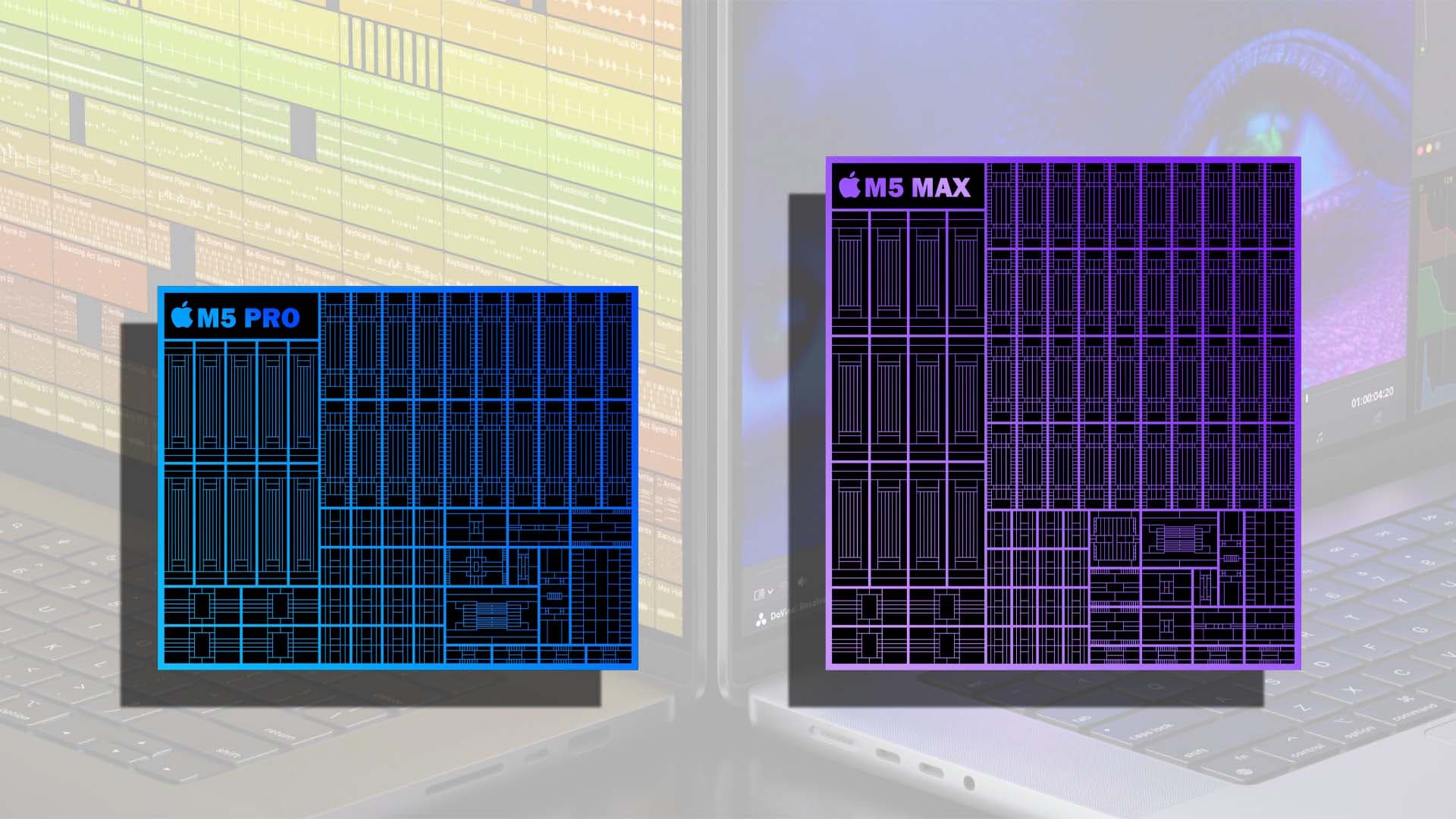
Apple announced new M5 Pro and M5 Max chips and refreshed 14- and 16-inch MacBook Pro models as it pushes on-device artificial intelligence and higher-performance hardware for professional users. The company said preorders open March 4, with units available beginning March 11, and it also updated MacBook Air variants to the base M5 family.
Apple described the M5 Pro and M5 Max as built on a new Fusion Architecture that connects two dies into a single system on a chip. The company said the architecture integrates a powerful CPU, a next-generation GPU with Neural Accelerators, a Media Engine, a unified memory controller, and Thunderbolt 5 capabilities to scale performance while maintaining unified memory and data flow.
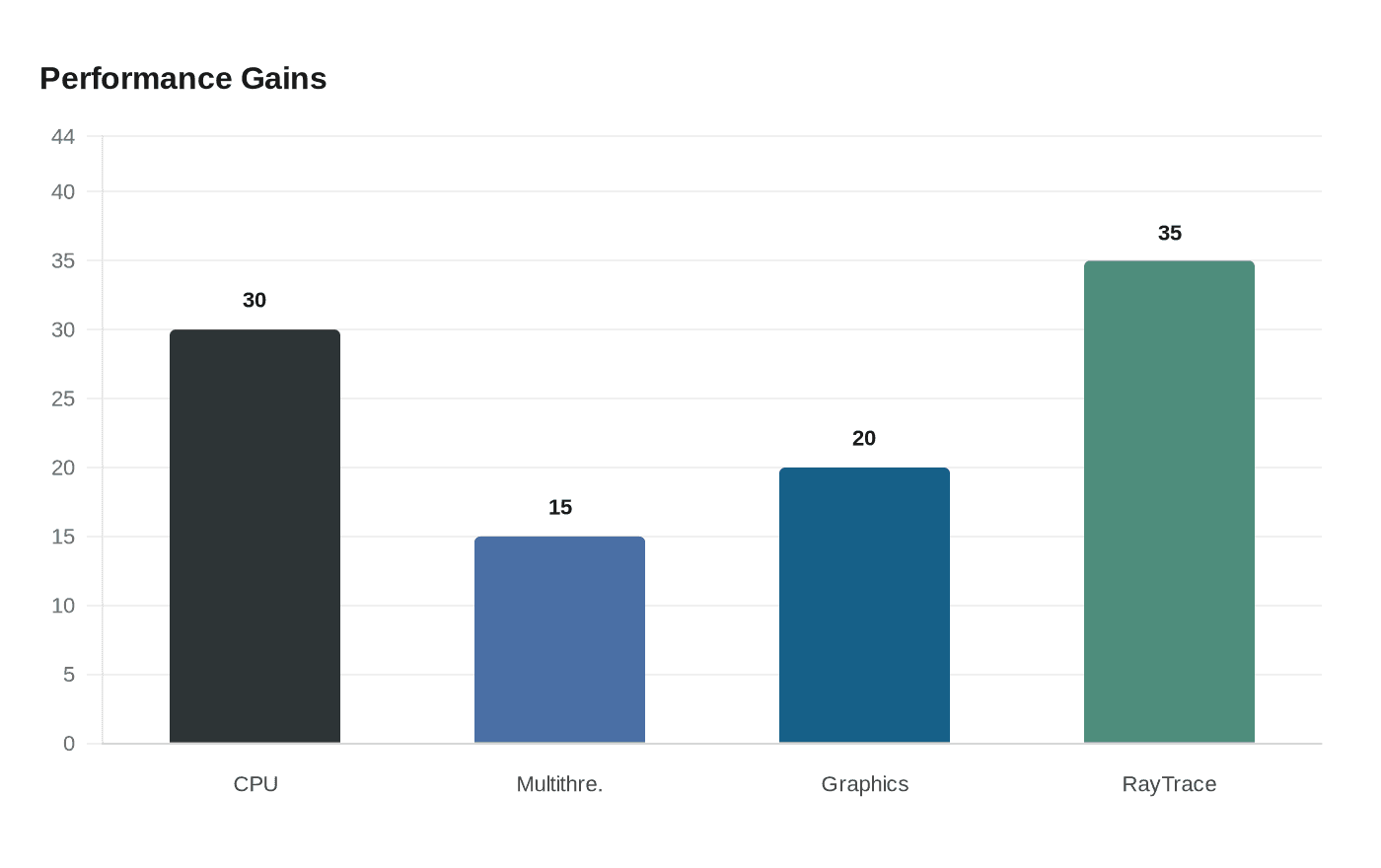
On the CPU side, Apple said both chips use an 18-core design made up of six so-called super cores plus 12 all-new performance cores. The firm claimed the super core design is its fastest and said the combined CPU can boost pro workloads by up to 30 percent; separate materials cite up to 15 percent higher multithreaded performance versus the prior M4 Max in some comparisons.
Graphics and AI features are the headline differentiators. Apple said the GPU scales to an up-to-40-core configuration and that each GPU core includes a Neural Accelerator. The company framed those changes as delivering a large jump in AI throughput, saying M5 Pro and M5 Max provide over four times the peak GPU compute for AI compared with the previous generation. Company materials also claim more than six times the AI GPU compute versus some earlier M1 series chips.
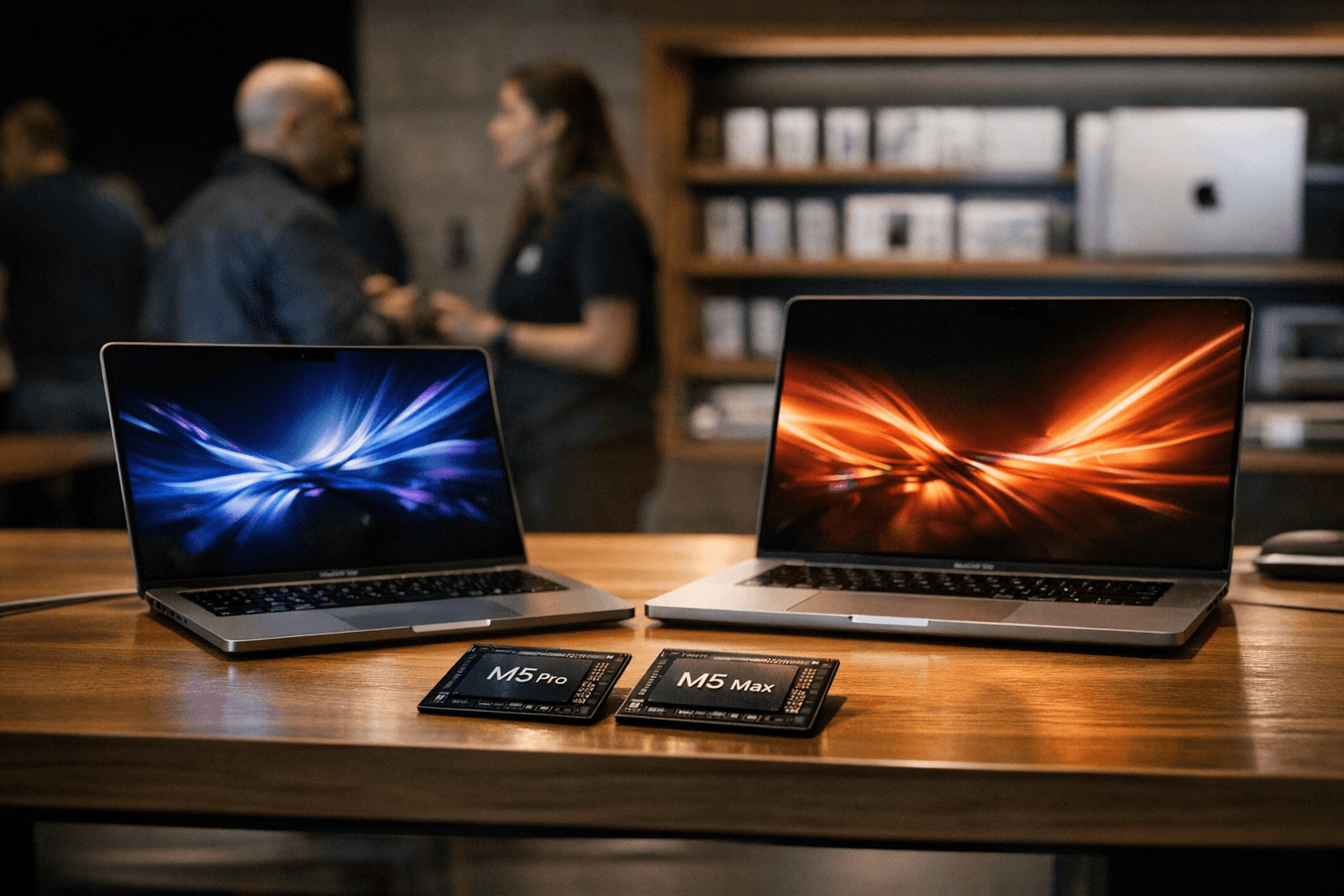
Memory bandwidth and capacity are substantial. Apple specified that M5 Pro supports up to 64GB of unified memory with bandwidth up to 307GB per second, while M5 Max supports up to 128GB with bandwidth up to 614GB per second. Apple also cited graphics performance gains of up to 20 percent overall and improvements as much as 35 percent for ray tracing workloads, positioning the chips for sustained, memory-heavy professional tasks such as 3D animation, large-scale app builds, and on-device model training or inference.
The product pitch is strategic. By putting Neural Accelerators in every GPU core and dramatically increasing unified memory bandwidth, Apple is betting that more professionals will prefer local AI processing over cloud-dependent workflows. That could lower recurring cloud compute expense for some users, shift software optimization toward macOS-native AI features, and increase device-level revenue per user if buyers trade up to the higher-end MacBook Pros.
Apple did not disclose prices for the new models in its announcement. The company historically prices Pro-tier hardware at a premium; the current rollout and the expanded memory and compute ceilings suggest higher sticker prices for top configurations, though final MSRPs and configuration pricing have not yet been published.
For enterprises and creative studios, the new chips may reframe procurement decisions. Organizations that pay for cloud GPU time could calculate total cost of ownership differently if on-device AI reduces external compute bills, but IT buyers will weigh those savings against higher up-front hardware costs and compatibility with existing software pipelines.
Apple’s release marks a continued industry shift toward on-device AI acceleration and denser packaging of compute. The Fusion Architecture approach also illustrates a semiconductor trend of combining multiple dies to scale performance without sacrificing unified memory, a design direction likely to reverberate across PC vendors and chip suppliers in the year ahead.
This article was produced by Prism’s automated news system from verified source data, official records, and press releases, then run through automated quality and moderation checks before publishing. The system is built and supervised by the people who set the standards it runs under. Read our full AI policy.
Did this article answer your question?

