Apple’s closed ecosystem faces new risks in the AI race
Apple’s biggest advantage, its control, is now the pressure point. As AI rewards speed and openness, John Ternus inherits a model that may need loosening to keep up.

Apple’s strength is becoming its test
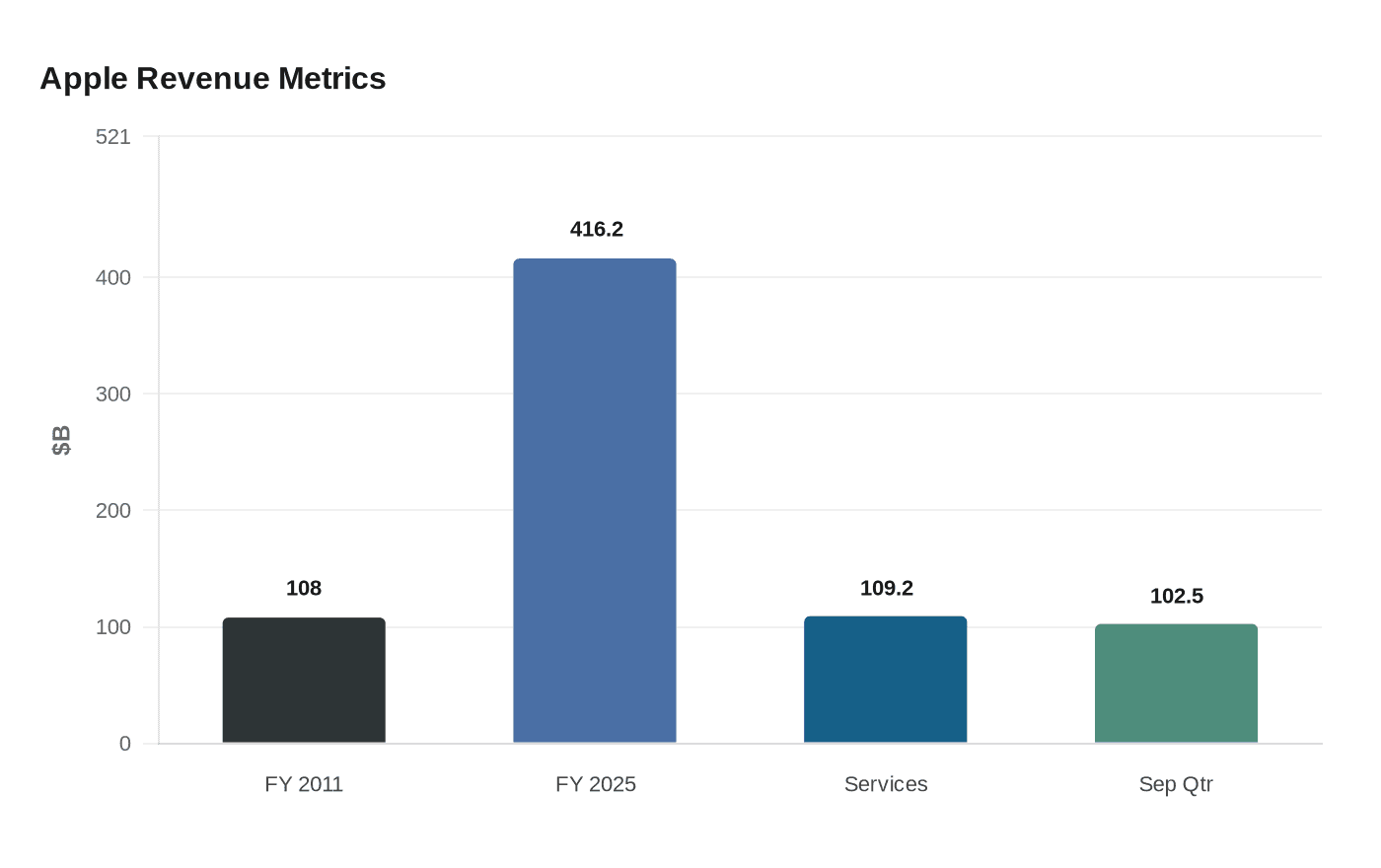
Apple built its empire on a tightly managed system: custom chips, proprietary operating systems, curated apps, and a user experience shaped around security, consistency, and control. That formula helped turn Cupertino into the center of one of the most valuable companies in the world, and it still underpins a business that reported fiscal 2025 revenue of about $416.2 billion. Services alone reached about $109.2 billion, a reminder that Apple’s ecosystem is now not just a product strategy but a financial engine.
The problem is that artificial intelligence rewards a different kind of behavior. The leading AI companies have moved quickly, released models broadly, and kept iterating even when products were rough at launch. OpenAI, Google, and Meta have all treated speed, access, and experimentation as advantages. Apple, by contrast, has leaned toward caution, and in this market caution can look less like discipline than delay.
The market now rewards openness more than polish
Apple’s model was built for an era when integration was the product. A tightly controlled stack made the iPhone easier to trust, easier to use, and harder for rivals to copy. That same system also gave Apple enormous leverage over the software and hardware that could live on its devices, which helped create a business that grew from about $108 billion in fiscal 2011 to more than $416 billion in fiscal 2025.
AI changes the terms. Developers want faster access to models, more room to experiment, and tools that work across platforms rather than inside one company’s walls. Consumers, meanwhile, are seeing AI features arrive first from companies willing to ship quickly and refine later. For Apple, the question is no longer whether it can build a polished product. It is whether polish still matters enough if rivals get to market first and learn faster from usage.
Apple Intelligence exposed the tradeoff
The clearest sign of strain came in March 2025, when Apple delayed some Apple Intelligence Siri features until 2026. That move mattered because it showed that even Apple’s own AI rollout was moving more slowly than customers had been led to expect. In a field where rivals are already normalizing rapid releases and frequent upgrades, that kind of delay is not a minor scheduling issue. It is a strategic signal.
Apple’s latest numbers show why the stakes are so high. The company reported a record September-quarter revenue of $102.5 billion, and Services hit an all-time high. Those results suggest Apple remains extraordinarily strong, but they also show how much the company now depends on the continued strength of its installed base and the services business layered on top of it. If AI becomes a primary way users discover, navigate, and pay for digital services, Apple cannot afford to be slow in a market it does not fully control.
John Ternus will inherit the hardest version of the problem
Reuters has said John Ternus is expected to succeed Tim Cook this fall, and that transition gives the AI challenge a leadership dimension. Ternus will inherit a company that has mastered end-to-end integration, but now has to decide how much of that discipline can survive in a more open, more competitive AI era.
The strategic tradeoff is stark. If Apple opens too much, it risks weakening the integration that supports its product quality and its services business. If it opens too little, it risks ceding developer momentum and AI mindshare to faster rivals. This is not just a product decision. It is a test of whether Apple can preserve the trust and predictability that define its brand while accepting the messier, faster-moving economics of generative AI.
Craig Federighi and Greg Joswiak have both been part of the public face of Apple’s software and product story, and their company has long treated control as a virtue. That approach works best when the market values coherence. In AI, the market increasingly values iteration, access, and cross-platform reach.
Regulators are pushing on the same fault line
Apple’s closed model is also under legal pressure, and that pressure reinforces the strategic dilemma. In April 2025, the European Commission fined Apple €500 million for breaching the Digital Markets Act’s anti-steering obligations. The ruling was about competition, but it also cut to the heart of Apple’s approach to platform control in Europe.
At the same time, a U.S. District Court judge found Apple violated an injunction in the Epic Games antitrust case, requiring changes to App Store payment rules. That case, long associated with Tim Sweeney and Epic Games, has become a symbol of the broader fight over how much power a platform owner should hold over transactions on its devices. Apple’s legal battles in Brussels and the United States show that the company’s control model is not only a strategic choice. It is increasingly a regulatory target.
For Apple, that matters because AI and antitrust pressure are converging on the same issue: who gets access, on what terms, and how much freedom developers have to build around Apple’s platform. The company can no longer assume that the rules that helped it dominate the smartphone era will be accepted unchanged in the AI era.
The central question for Apple’s next era
Apple’s closed ecosystem is not doomed, but it is no longer automatically an advantage. The company’s strengths, brand trust, software polish, hardware integration, and tight system design, remain formidable. Yet in a market where competitors are moving faster and the rules reward openness, those same strengths can become friction.
That is the challenge now facing John Ternus and the broader leadership team in Cupertino. Apple must decide how much to loosen its grip without undermining the model that made it one of the most successful companies in history. If it adapts carefully, its control may still become an asset in AI. If it resists for too long, the market may decide that control has turned into a structural disadvantage.
This article was produced by Prism’s automated news system from verified source data, official records, and press releases, then run through automated quality and moderation checks before publishing. The system is built and supervised by the people who set the standards it runs under. Read our full AI policy.
Did this article answer your question?