Arab creators turn to dark humor online amid war and trauma
Dark humor has become a survival language for Arab creators in wartime, but its spread raises a harder question: when does coping start to look like trivializing?
Why the jokes arrive so fast
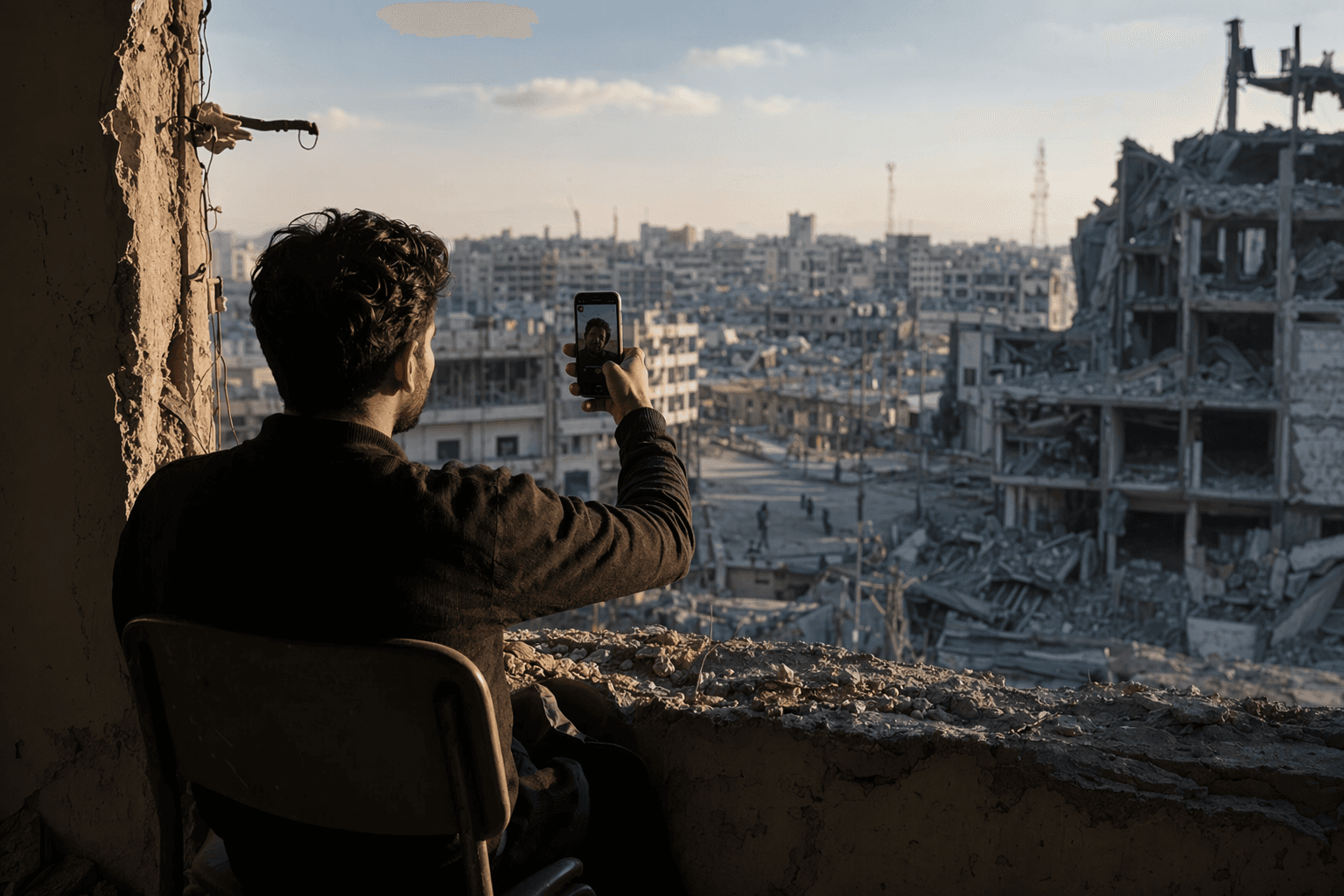
After the October 7, 2023 Hamas attack on Israel and the war that followed, humorous clips began appearing on TikTok within days. A 2025 Frontiers study examined 257 videos from that early post-attack period and treated war humor as more than an online stunt, showing how it can function as a resilience-building response to collective trauma. The speed matters. In a conflict where grief is still raw, the joke often works as an emergency tool, giving creators a way to process shock while signaling to viewers that fear has not yet silenced them.
Gaza’s fragile but essential online lifeline
In the Gaza Strip, digital life has been shaped by interruption as much as expression. Reuters Institute for the Study of Journalism reported in March 2024 that Telegram and radio had become key sources of news and information, and that closed messaging apps such as Telegram were especially useful when internet access was available. UN and humanitarian reporting, including warnings echoed by UNRWA, has repeatedly described severe communication disruptions and internet blackouts as a major obstacle to civilian communication and access to information.
That is why social media in Gaza has become more than a place to post. 7amleh’s position paper, The War on Gaza: How Social Media Constructed Narratives and Solidarity among Gazans, framed these platforms as tools for solidarity, documentation, and survival. When the connection holds, the same feed can carry news, family updates, grief, and jokes in the same scroll. In a setting this unstable, even a short satirical clip can do the work of a bulletin, a pressure valve, and a shared acknowledgment that life is still being lived.
Dark humor as regional coping, not novelty
The impulse is not confined to Gaza. In 2024, social media users in Iran responded to conflict-related events with dark humor, and Holly Dagres of the Atlantic Council described gallows humor as a way for people in the Middle East to work through adversity. Lebanese users also turned to sarcasm during the Iran-Israel confrontation, with a June 2025 report describing it less as entertainment than as a coping mechanism.
Even in Israel, wartime feeds reflected the same instinct to defuse fear through irony. Coverage noted that users joked about politics and even Passover as they tried to ward off wartime jitters. Across the region, the pattern is similar: when violence becomes ordinary, humor becomes a way to speak without pretending the pain is gone.
Creators, journalists, and the collapse of old boundaries
The rise of creator-driven news has made this style of expression much more visible. NBC News reported in late 2023 that Gaza-based creators and journalists saw large follower increases while documenting daily life and war conditions online. Their posts blurred the line between reporting and witness testimony, turning Instagram, TikTok, and related platforms into places where damaged streets, crowded shelters, and ordinary routines were all part of the same public record.
That shift has widened the space for satire across the Arab world. Alternative voices and creator collectives now publish political parody and dark comedy alongside war coverage, and those posts can spread quickly because they sit inside the same attention economy as breaking news. The result is not just more jokes. It is a new kind of public square, one in which grief, commentary, and performance are constantly colliding.
Why the audience reaction is so divided
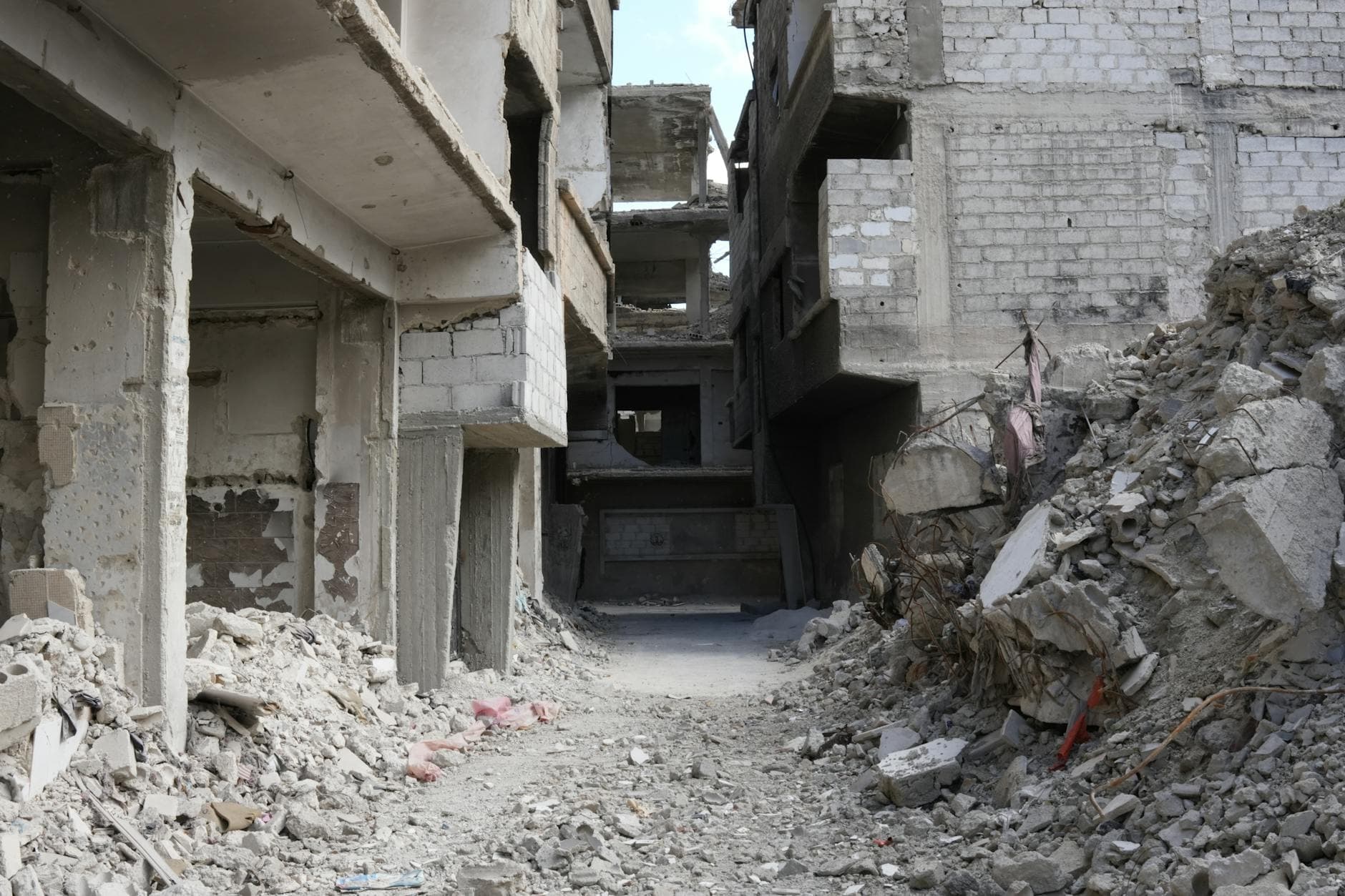
The same clip can land as solidarity for one viewer and as insult for another. For people living through bombardment, displacement, shortages, or internet shutdowns, a joke about war may feel like a recognition of shared pain, a brief moment of breathing room in a relentless crisis. For others, the humor can seem to flatten suffering into content, especially when the target is a population that is still counting losses in real time.
That tension explains why audiences keep drawing and redrawing the line between coping and trivializing. The deciding factors are usually clear enough: who is making the joke, who is being mocked, and whether the humor is aimed upward at power or downward at people already under pressure. In wartime digital culture, laughter is never just laughter. It is also a test of empathy, timing, and trust.
A bigger creator economy changes the stakes
This conversation is unfolding inside a much larger creator economy than the one that existed in earlier conflicts. Qoruz data cited in 2025 put the GCC creator count at 263,000 influencers, up from 150,000 in 2023. That growth signals a more professionalized and crowded online ecosystem, where creator content is already central to how many people consume news, commentary, and satire.
As a result, war-adjacent humor can travel farther and faster than it once did, and the stakes rise with every repost. The same systems that elevate alternative voices also magnify content that mixes politics, grief, and comedy. That visibility helps creators metabolize trauma in public, but it also means audiences encounter these posts in a far louder, more combustible environment than before.
The line is not fixed
Dark humor in Arab digital culture is best understood as a survival practice, not a genre exercise. It lets creators turn panic, exhaustion, and anger into something speakable, while giving audiences a language for feelings that official statements rarely capture. But it depends on a fragile social contract: the joke has to be legible as a response to pain, not a dismissal of it.
In a region where blackouts isolate civilians, messaging apps become lifelines, and social feeds double as war diaries, comedy is often what remains when ordinary language fails. The laughter is real, but so is the wound underneath it.
This article was produced by Prism’s automated news system from verified source data, official records, and press releases, then run through automated quality and moderation checks before publishing. The system is built and supervised by the people who set the standards it runs under. Read our full AI policy.
Did this article answer your question?


