ArcelorMittal Donates $37 Million in Foreign Steel for Trump's White House Ballroom
ArcelorMittal donated $37 million in European steel for Trump's White House ballroom, then saw Canadian plant tariffs halved just two days after Trump praised the gift.
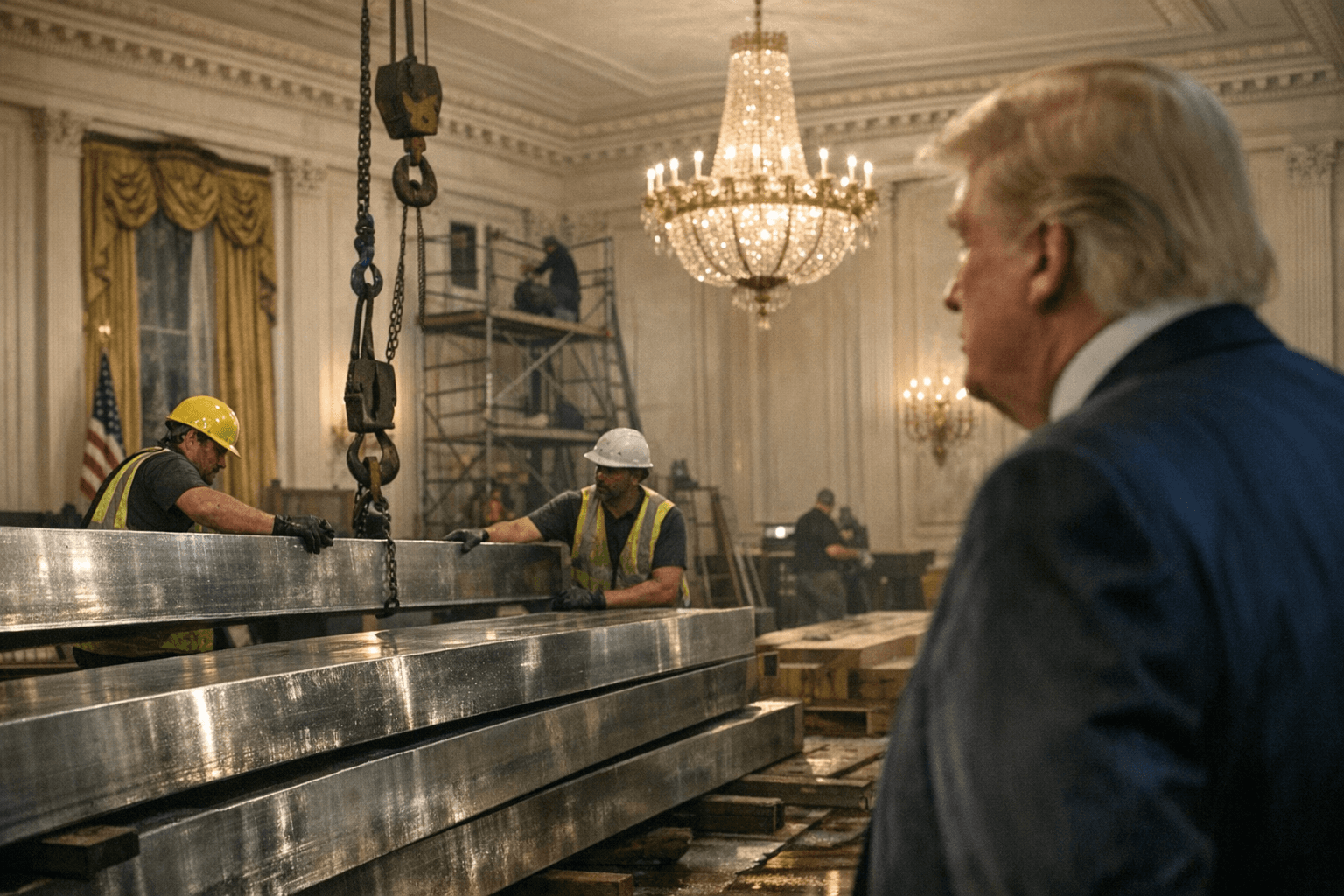
Luxembourg-based ArcelorMittal, the world's second-largest steel producer, donated $37 million worth of European-made steel to President Trump's planned White House ballroom, and two days after Trump publicly praised the gift at a private donor dinner, his administration issued a proclamation cutting in half the tariffs on automotive steel exported from the company's Canadian plant.
Trump disclosed the donation's value at an October 15, 2025 White House fundraising dinner attended by representatives from Amazon, Apple, Caterpillar, Coinbase Global, Comcast, Google, Lockheed Martin, Meta Platforms, Microsoft, Palantir Technologies, and T-Mobile. Without naming ArcelorMittal, Trump described the gift in his own words: "Sir, it's down for $37 million. I said, This is a nice donation, right?" He referred only to a "great steel company." The New York Times first identified the donor, citing two anonymous sources familiar with the plans.
The tariff cut, issued just 48 hours after that dinner, halved duties on automotive steel from ArcelorMittal's Canadian plant. A White House official denied any quid pro quo, arguing the company contributes to the U.S. economy through a joint venture with Japan's Nippon Steel in Alabama and an iron mine in Minnesota. The White House had not publicly disclosed the donation's details.
The ballroom project has ballooned in both scale and cost. Architect James McCrery II of McCrery Architects was hired July 13, 2025, with plans announced July 31. What began as a $200 million project has since grown to an estimated $400 million. The 90,000-square-foot structure, nearly double the footprint of the White House itself, will accommodate 999 guests, and Trump has indicated he intends to name it after himself. White House Press Secretary Karoline Leavitt called the ballroom Trump's "main priority" in October 2025.
Making room required demolishing the historic White House East Wing, which came down around October 21, 2025, drawing crowds who watched the heavy machinery work as an impromptu tourist attraction. The National Trust for Historic Preservation sued to stop the project, and a federal judge ruled construction could not proceed without Congressional authorization. The National Capital Planning Commission nonetheless voted to approve the plans on April 2, 2026.
Trump has insisted the ballroom will not cost taxpayers a dime, crediting "many generous Patriots, Great American Companies, and, yours truly." Public dollars are nonetheless paying for underground bunkers and security upgrades on White House grounds. The 2026 White House budget allocates $377 million for renovations and repairs to the presidential residence, with an additional $174 million in proposed spending beyond that.
The use of foreign steel ignited particular outrage given Trump's years of imposing sweeping metal tariffs as a shield for domestic manufacturers. Pennsylvania Governor Josh Shapiro called it "a slap in the face" for his state's steel industry. California Governor Gavin Newsom mocked the decision on X with the phrase "Make America Luxembourg Again?" Minnesota State Senator Grant Hauschild, a Democrat, wrote on X: "Foreign steel in the White House? Are you kidding? We've got Iron Range mines shut down..."
ArcelorMittal, led by CEO Aditya Mittal, son of company founder Lakshmi Mittal, produced 58 million metric tonnes of crude steel in 2024 across operations in 15 countries. The donated steel was produced in Europe, where the company's production is concentrated. ArcelorMittal did not immediately respond to requests for comment.
Sources:
Know something we missed? Have a correction or additional information?
Submit a Tip