Armenian, Azerbaijani civil society meet in Gabala for peace talks
Armenian and Azerbaijani civil society groups met in Gabala after the Armenian delegation crossed the land border, a rare confidence-building step in fragile peace talks.
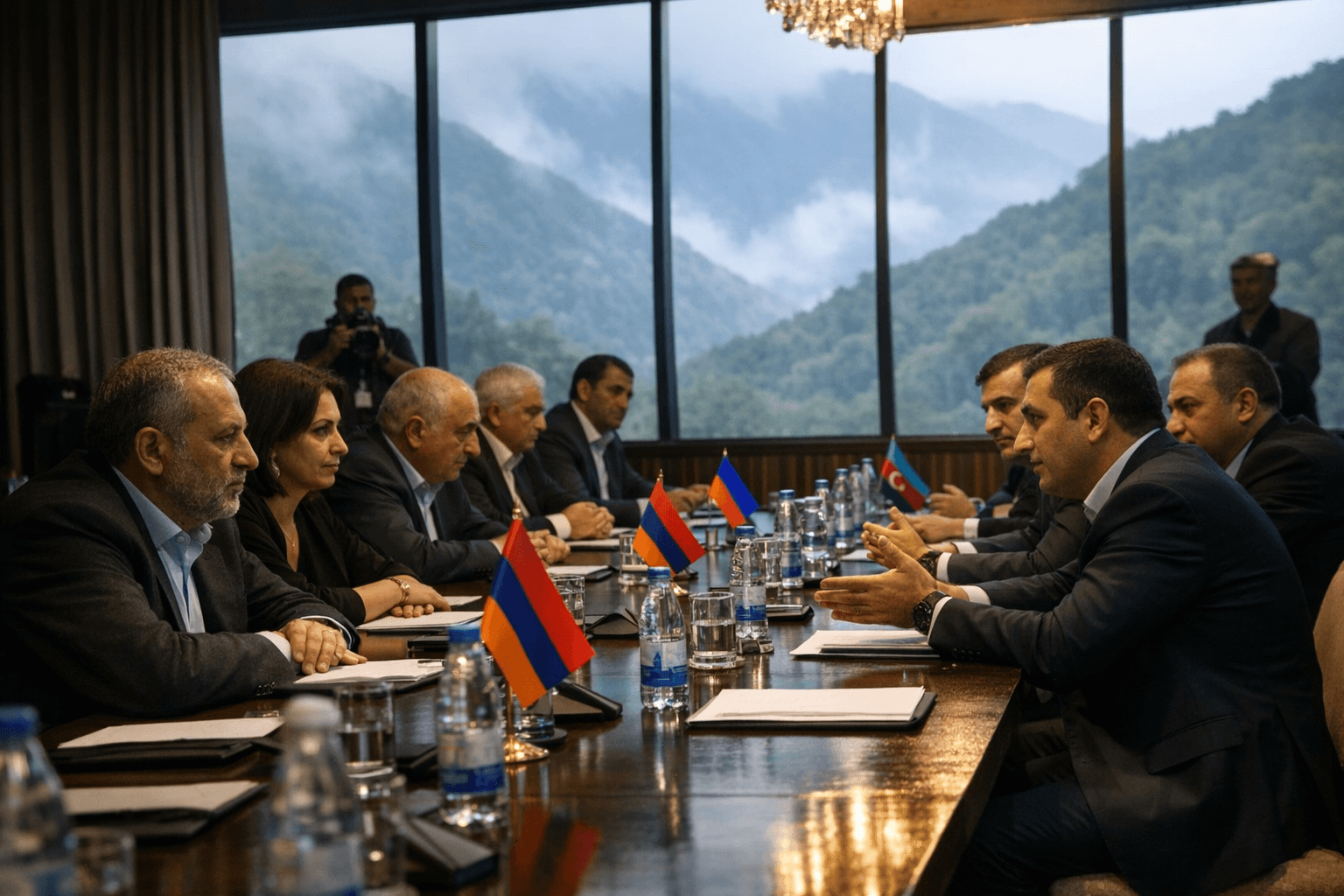
The Armenian delegation’s crossing into Azerbaijan through a formally delimited and demarcated land border was the most telling moment of the Gabala roundtable, where civil society representatives tried to keep peace efforts moving while formal politics remained brittle. The four-session meeting ran from April 10 to 12 in Gabala, Azerbaijan, marking the fourth roundtable in the Peace Bridge Initiative and showing how the quiet track of dialogue is being used to build habits of contact that official negotiations have struggled to sustain.
Representatives of non-governmental organizations, media outlets and think tanks from Armenia and Azerbaijan took part in the discussions over two days. The agenda focused on regional geopolitical developments, how those shifts affect the peace process in the South Caucasus, and what people in both countries expect from normalization. Participants also compared the concerns and hopes that had emerged in separate meetings with domestic civil society groups before the roundtable, then devoted a session to presenting those findings. The final discussion centered on possible joint and individual steps in the next phase of peace efforts.
On April 11, participants met Hikmet Hajiyev, the assistant to the president of Azerbaijan and head of the Foreign Policy Department of the Presidential Administration. The discussion covered regional security, progress in the political-level peace process and the role of civil society in normalization. Hajiyev stressed that confidence-building measures, including Track 2 diplomacy, have to work bilaterally, a point that fits the format’s goal of turning dialogue into something more durable than symbolic contact.
That practical element was reinforced by the Armenian delegation’s route into Gabala. Passing through border and passport controls on a section that has been formally delimited and demarcated gave the meeting added weight, because the journey itself functioned as a confidence-building measure. It suggested that the peace process can produce concrete changes in how the two sides interact, not only in statements and summits.
The Peace Bridge Initiative, as described by the Armenian Council, is an ongoing program aimed at fostering constructive dialogue between the civil societies, expert communities and media of Armenia and Azerbaijan. The Gabala meeting followed an earlier round in Tsaghkadzor, Armenia, on February 13 and 14, 2026, and another in Baku before that. Linked in reporting to the peace agenda advanced after the Washington summit of August 8, 2025, the initiative is increasingly being treated as a parallel channel for reducing mistrust. Its limits remain clear, but so does its purpose: to keep Armenians and Azerbaijanis talking when official diplomacy hardens or stalls.
This article was produced by Prism’s automated news system from verified source data, official records, and press releases, then run through automated quality and moderation checks before publishing. The system is built and supervised by the people who set the standards it runs under. Read our full AI policy.
Did this article answer your question?


