Armenia’s Pashinyan seeks re-election as Russia, Europe clash
Armenia votes June 7 as Pashinyan tries to hold power while Moscow tightens pressure and Europe beckons. The choice now tests war fatigue against sovereignty.
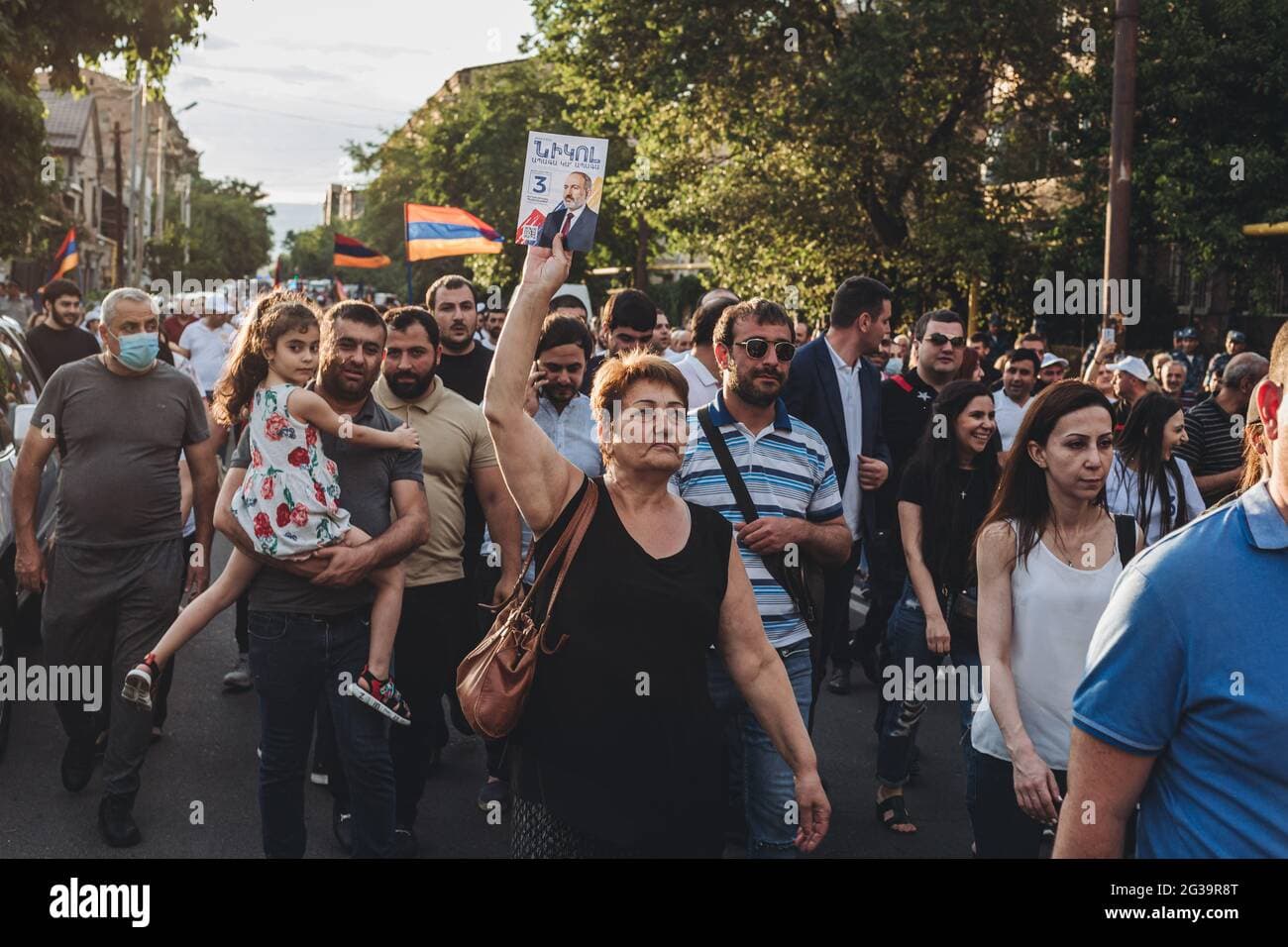
Armenia’s parliamentary election has become a test of something larger than one leader’s political future: whether a country battered by war, displacement and economic pressure can move toward Europe without surrendering the security guarantees it still associates with Russia.
Prime Minister Nikol Pashinyan is seeking another term through his Civil Contract party in the June 7 vote, six years after the 2018 Velvet Revolution brought him to power and after he was reappointed prime minister in 2021. His campaign is unfolding against a stark choice for voters in Yerevan and beyond: stay tied to Moscow’s orbit or keep pushing toward the European Union despite the risks that come with breaking from Russia’s system of influence.
That pressure has been unusually direct. Vladimir Putin has warned Armenia over its EU ambitions and tied that message to energy supplies and trade, while Russian restrictions have hit Armenian exports including Jermuk mineral water, flowers, vegetables, strawberries, fish and seafood. Moscow’s tactics have been described by analysts as a familiar playbook of economic blackmail, one that aims to turn dependence into leverage at the exact moment Armenia is trying to widen its foreign policy options.
Pashinyan has answered by rejecting Russia’s call for an immediate referendum on leaving the Russia-led Eurasian Economic Union for the European Union. He has argued that such a vote would be unreasonable before formal EU-candidate status is even on the table, a stance that reflects the balancing act at the heart of his re-election bid. He is trying to persuade voters that Armenia can move west without inviting a collapse in trade, energy security or deterrence.
The vote also carries the weight of recent defeat. Pashinyan led Armenia through the 2020 Second Nagorno-Karabakh War, which ended in Azerbaijani victory, and in 2023 more than 100,000 ethnic Armenians fled Nagorno-Karabakh after Azerbaijan retook the enclave. Those losses still shape public life and political memory, making the campaign about more than ideology: it is about whether Armenia can escape a cycle of military humiliation and strategic dependence.
The stakes extend to peace with Azerbaijan. Analysts say a constitutional majority for Pashinyan could give him room to pursue a deal with Ilham Aliyev’s government, while a weaker result could leave Armenia locked into stalemate and continued reliance on Russia for years. Trump’s public endorsement of Pashinyan on May 27 added another layer to the contest, but the core question remains unchanged: whether Armenia’s future lies in democracy and independence, or in an older order defined by subjugation.
This article was produced by Prism’s automated news system from verified source data, official records, and press releases, then run through automated quality and moderation checks before publishing. The system is built and supervised by the people who set the standards it runs under. Read our full AI policy.
Did this article answer your question?


