Army Secretary Driscoll Denies Resignation Plans Despite White House Praise
Army Secretary Dan Driscoll denied resignation plans as Defense Secretary Hegseth purged three of his closest Army allies during an active war with Iran.

Army Secretary Dan Driscoll moved to quash speculation about his future in the Trump administration, stating in a statement to The Washington Post that he had "no plans to depart or resign as the Secretary of the Army." The denial came even as White House officials praised Driscoll publicly, and as Defense Secretary Pete Hegseth had spent recent weeks systematically dismantling the network of Army leaders who worked most closely with him.
The standoff illuminates a fault line running through the civilian leadership of the U.S. military. As the 26th Secretary of the Army, Driscoll is a Senate-confirmed political appointee who oversees operations, modernization, and resource allocation for nearly one million Active, Guard, and Reserve soldiers and more than 265,000 Army civilians. Hegseth, as Secretary of Defense, sits above Driscoll in the chain of command and has authority over service secretaries. But administration officials told The Washington Post that the White House blocked Hegseth from removing Driscoll directly, at least for now, leaving Hegseth with limited options. "Hegseth can't fire Driscoll," one official said. "So he's going to make his life hell."
Hegseth has done exactly that through a series of personnel moves. On April 4, he forced out Army Chief of Staff Gen. Randy George, who had been expected to serve until the end of summer 2027 and was among Driscoll's closest partners in running the service. Hegseth simultaneously fired Maj. Gen. William Green, the Army's chief of chaplains, and Gen. David Hodne, commanding general of Army Transformation and Training Command, a structure Driscoll and George had built together under the Army Transformation Initiative they jointly announced in May 2025. In February, Hegseth ordered Driscoll to remove his top adviser, Col. David Butler, who had previously served as spokesperson for former Joint Chiefs Chairman Gen. Mark Milley.
Notably, military officials said the tension was not rooted in substantive disagreements about Army policy or battlefield strategy. According to reporting from multiple officials, it stemmed instead from Hegseth's personal distrust of Driscoll and his perception of Driscoll as a rival. Driscoll, a former Army armor officer who deployed to Iraq and a Yale Law School graduate, was sworn in by Vice President JD Vance in February 2025 and has maintained close ties to the White House, including leading a delegation to Kyiv in November 2025 to meet with Ukrainian President Volodymyr Zelenskyy. One source familiar with administration dynamics said Hegseth "is very concerned about being fired and knows that Driscoll is one of the top contenders to succeed him," driving him to target anyone he perceives as Driscoll's ally.
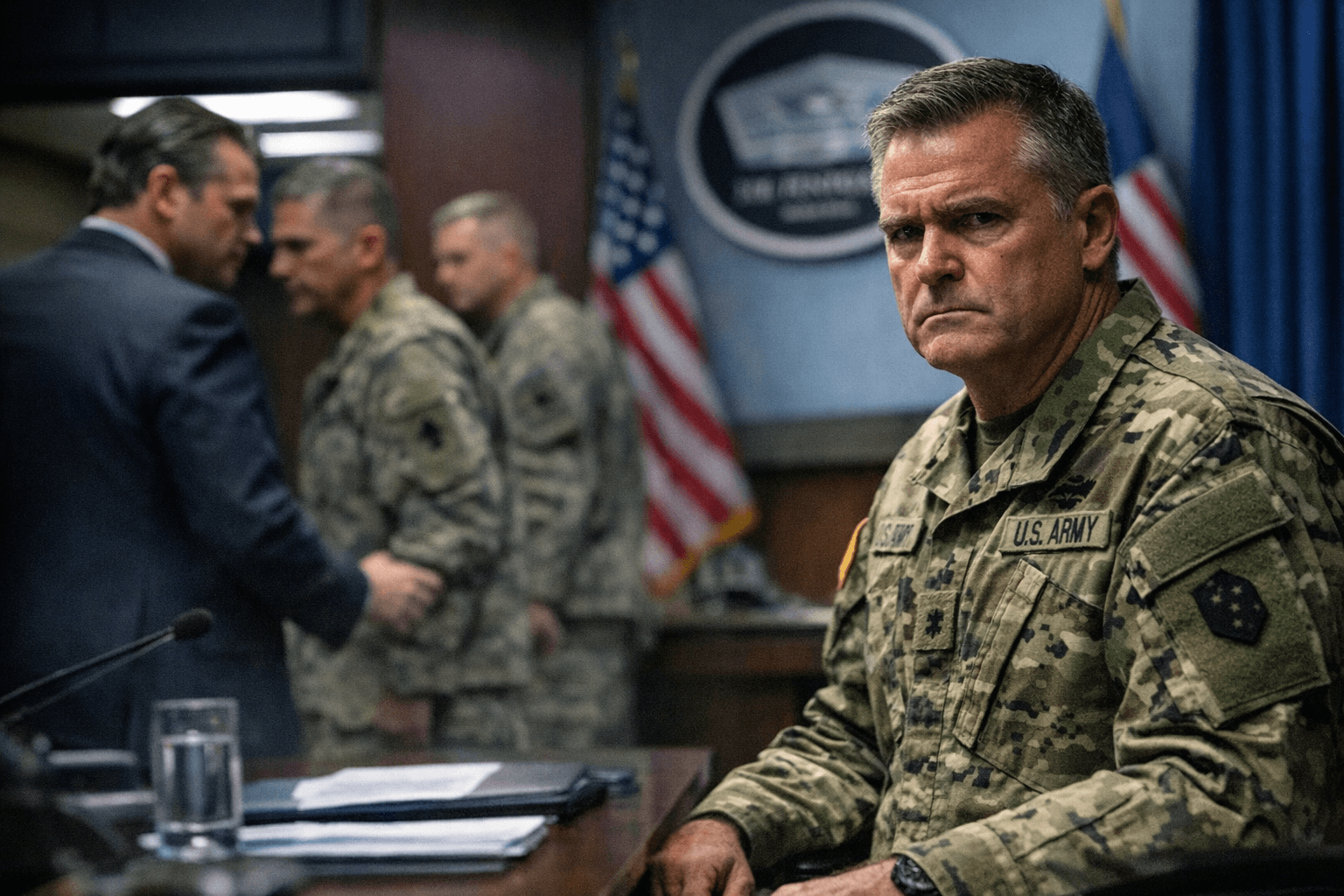
The consequences for operational readiness are concrete. The Army is currently deployed in an ongoing war with Iran that began February 28 and is primarily responsible for providing integrated air and missile defense coverage for U.S. forces. George's abrupt removal, which he learned of in a phone call while in a meeting, left senior Army officers reacting with "anger and frustration." Defense officials raised concerns that removing experienced leadership mid-conflict could directly impair operational effectiveness, particularly as the 82nd Airborne Division has been deployed as part of the campaign.
On procurement, the vacuum of trusted leadership compounds ongoing transformation deadlines. Hegseth had ordered the Army to field unmanned systems in every division and deploy advanced manufacturing to operational units by the end of 2026, targets Driscoll and George were jointly executing. Driscoll had already signaled a shift in acquisition philosophy, describing an Army that could now "buy 100 to 1,000 of a thing, almost like Special Forces have been able to do," rather than waiting on multi-year, hundred-thousand-unit contracts. The firing of Gen. Hodne, who headed Army Transformation and Training Command, removes a key leader from that procurement pipeline at a critical deadline year.
If the standoff between Hegseth and Driscoll persists, the legal and institutional constraints are significant. Congress confirmed Driscoll 66 to 28, and service secretaries cannot be unilaterally dismissed by a defense secretary without presidential direction. The question now is whether White House support for Driscoll holds as Hegseth's pressure campaign continues, or whether the institution absorbs further losses to its senior uniformed and civilian leadership while fighting a war abroad.
This article was produced by Prism’s automated news system from verified source data, official records, and press releases, then run through automated quality and moderation checks before publishing. The system is built and supervised by the people who set the standards it runs under. Read our full AI policy.
Did this article answer your question?