Artemis II Astronauts Say Moon Mission Is Starting to Feel Real
Four Artemis II astronauts arrived at Kennedy Space Center this week ahead of an April 1 liftoff that would mark humanity's first crewed lunar mission since Apollo.
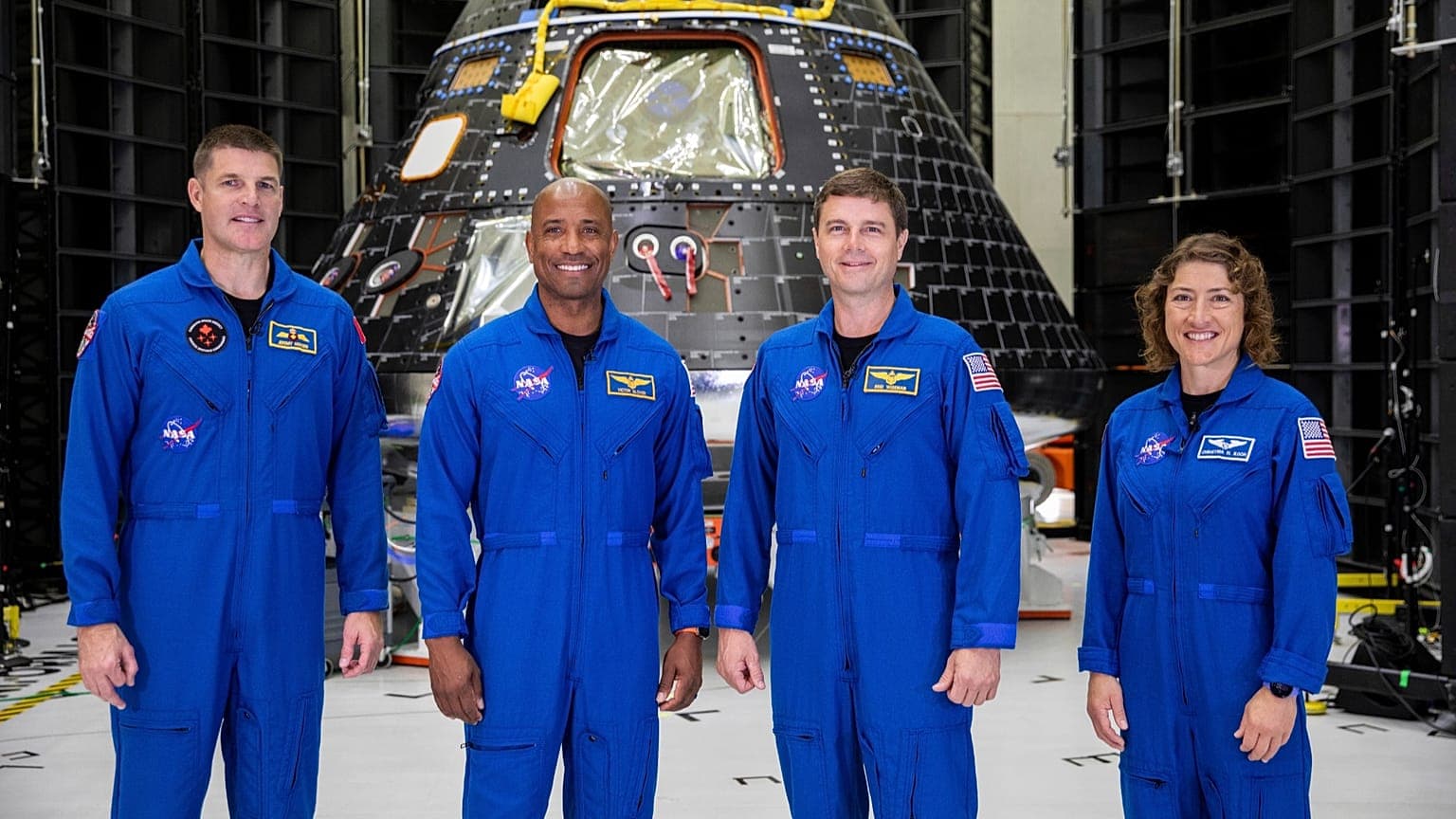
Commander Reid Wiseman stepped off his T-38 jet at Kennedy Space Center and pumped his fists. "Hey, let's go to the moon!" he said. The Artemis II crew had flown in from Houston on March 27, touching down on the spaceport's three-mile runway with five days to spare before a potential April 1 liftoff, and their arrival marked the clearest sign yet that the first crewed lunar mission in more than half a century was no longer hypothetical.
"Every day that passes is a day closer to launch," mission specialist Christina Koch told reporters on the runway. "That's something that I keep in mind."
Wiseman, Koch, pilot Victor Glover, and Canadian Space Agency astronaut Jeremy Hansen had been in quarantine since March 18 as ground teams finalized systems at Launch Complex 39B. Koch, Wiseman, and Glover are space veterans; Hansen, a Canadian fighter pilot, will be making his first trip to space. The mission carries a distinct set of historical firsts: Koch will become the first woman to venture to the moon, Glover will become the first Black person to travel to deep space, and Hansen will be the first non-NASA astronaut on a lunar flight. The moon, Hansen acknowledged, has already started to look different. "When I walk out and I look at the moon now, it looks and feels a little bit farther than it used to be," he said.
The Space Launch System rocket that will carry them there completed its own ground-level journey earlier this month. On March 20, crawler-transporter 2 hauled the Artemis II stack, an SLS rocket topped with an Orion crew capsule, 4 miles from Kennedy Space Center's Vehicle Assembly Building to Launch Complex 39B in a roughly 10-hour overnight crawl. High winds had delayed the first movement by about 4.5 hours, pushing the start to 12:20 a.m. EDT before the convoy made its way to the pad. Ground crews have since been readying the rocket, capsule, and pad systems for the window opening April 1.

Wiseman said recent technical reviews have offered the crew confidence heading into the final stretch. "There was not a single surprise in that entire flight readiness review," he said. Glover was candid about the psychological dimension of the countdown. "Liftoff can be this terrific and terrifying moment all at the same time," he said, "and so I'm just really grateful to that team that helps us to get ready."
The roughly 10-day mission will follow a free-return trajectory around the far side of the moon, covering approximately 600,000 miles before the crew splashes down in the Pacific Ocean off San Diego. Mission managers adjusted the reentry profile after analyzing heat shield performance data from the uncrewed Artemis I flight in 2022, opting for a steeper entry angle rather than the skip reentry tested on that earlier mission. Wiseman added, speaking of the nation's anticipation: "I think the nation and the world has been waiting a long time to do this again."
If Artemis II launches April 1, the four astronauts will travel farther from Earth than any human in history.
Sources:
Know something we missed? Have a correction or additional information?
Submit a Tip