Artemis II Crew Captures Stunning Moon Photos as Mission Reaches Key Milestone
The Artemis II crew crossed the two-thirds mark to the moon and captured what NASA says is the first human view of a 600-mile-wide lunar crater, ahead of a record-breaking flyby today.
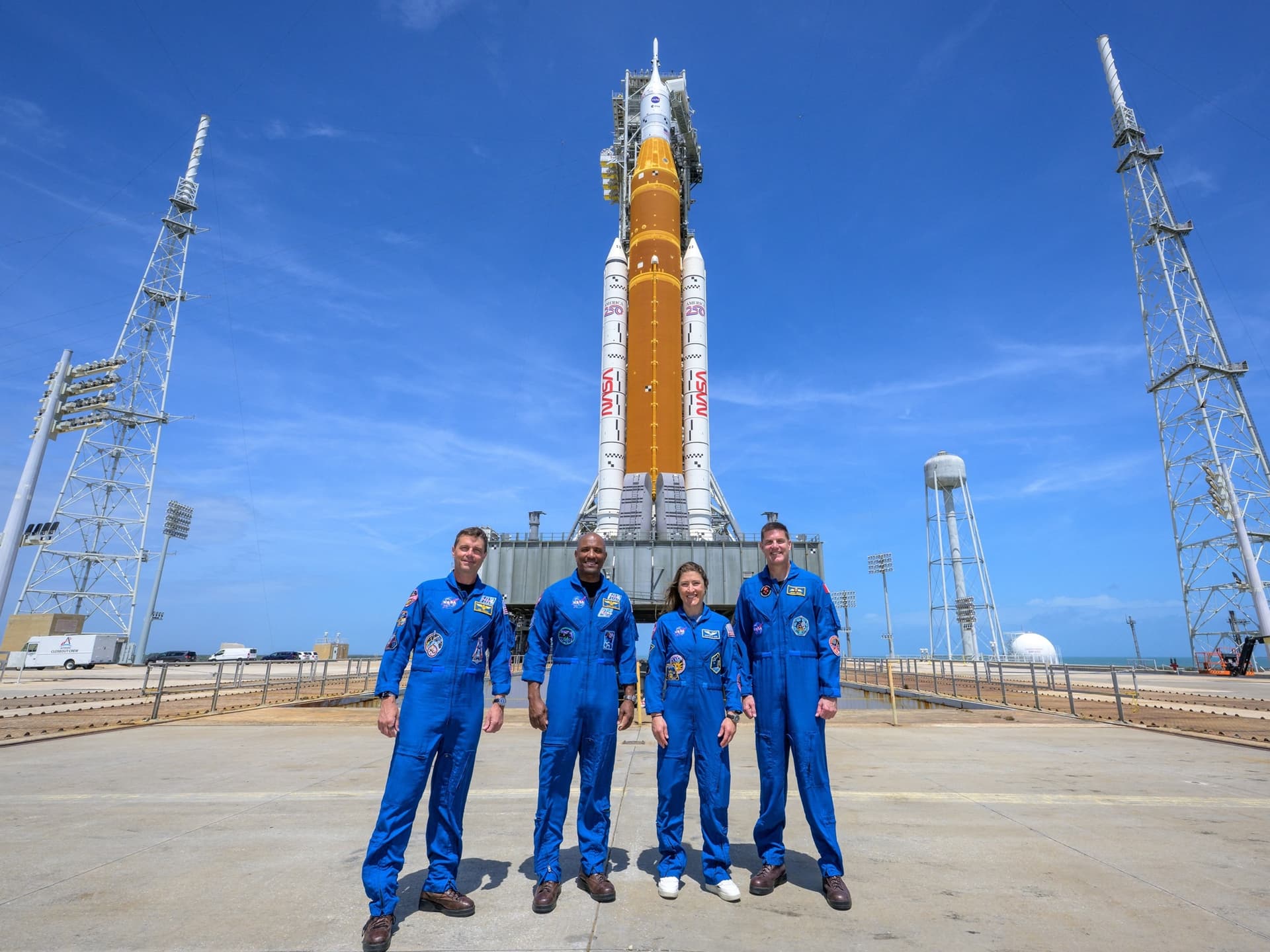
Four astronauts aboard NASA's Orion spacecraft "Integrity" crossed the two-thirds mark on their journey to the Moon Saturday, sharing photographs that captured what NASA described as the first direct human view of the Orientale basin, a nearly 600-mile-wide ancient crater that straddles the lunar near and far sides, as the mission prepared for a historic flyby today.
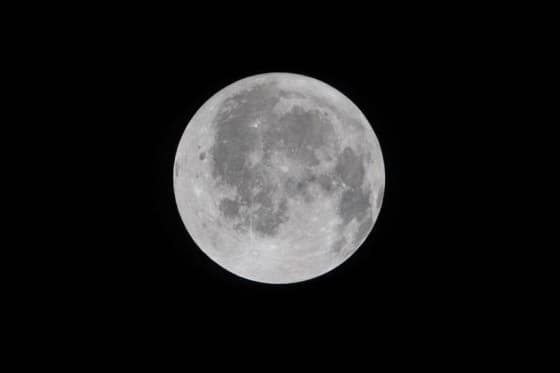
Commander Reid Wiseman, Pilot Victor Glover, Mission Specialist Christina Koch, and Canadian Space Agency astronaut Jeremy Hansen shot the images through Orion's four windows near the display console. One photograph published by NASA showed Earth illuminated against the blackness of space, growing smaller in the distance. Another, taken on flight day 4, showed the Moon oriented with its South Pole at the top, with the Orientale basin visible at the edge of the lunar disk. "This mission marks the first time the entire basin has been seen with human eyes," NASA said. The 3.8-billion-year-old impact crater, which NASA scientists have called the textbook multi-ring basin used to compare craters across rocky worlds from Mercury to Pluto, was fully illuminated and photographed as Orion drew within 65,235 miles of the Moon at the start of flight day 5.
The crew also completed a full evaluation of the Orion Crew Survival System spacesuit Saturday, with all four astronauts putting on and pressurizing the suit, conducting leak checks, simulating seat entry, and testing their ability to eat and drink while suited in microgravity. The evaluation is a key test objective of the mission, designed to assess how the suit's enhanced mobility, thermal management, and communication systems hold up during extended wear in the deep-space environment.
Late Saturday night, mission control in Houston and the crew executed an outbound trajectory correction burn at 11:03 p.m. EDT, lasting 17.5 seconds, to refine Orion's path toward the Moon. It was only the third correction burn of the mission; NASA flight director Rick Henfling explained why the first two were skipped. "We found that Orion was on such a pinpoint trajectory that we didn't need to do the first two correction maneuvers," Henfling said. Shortly after midnight, Orion crossed into the lunar sphere of influence, the point where the Moon's gravity takes over as the dominant force acting on the spacecraft.
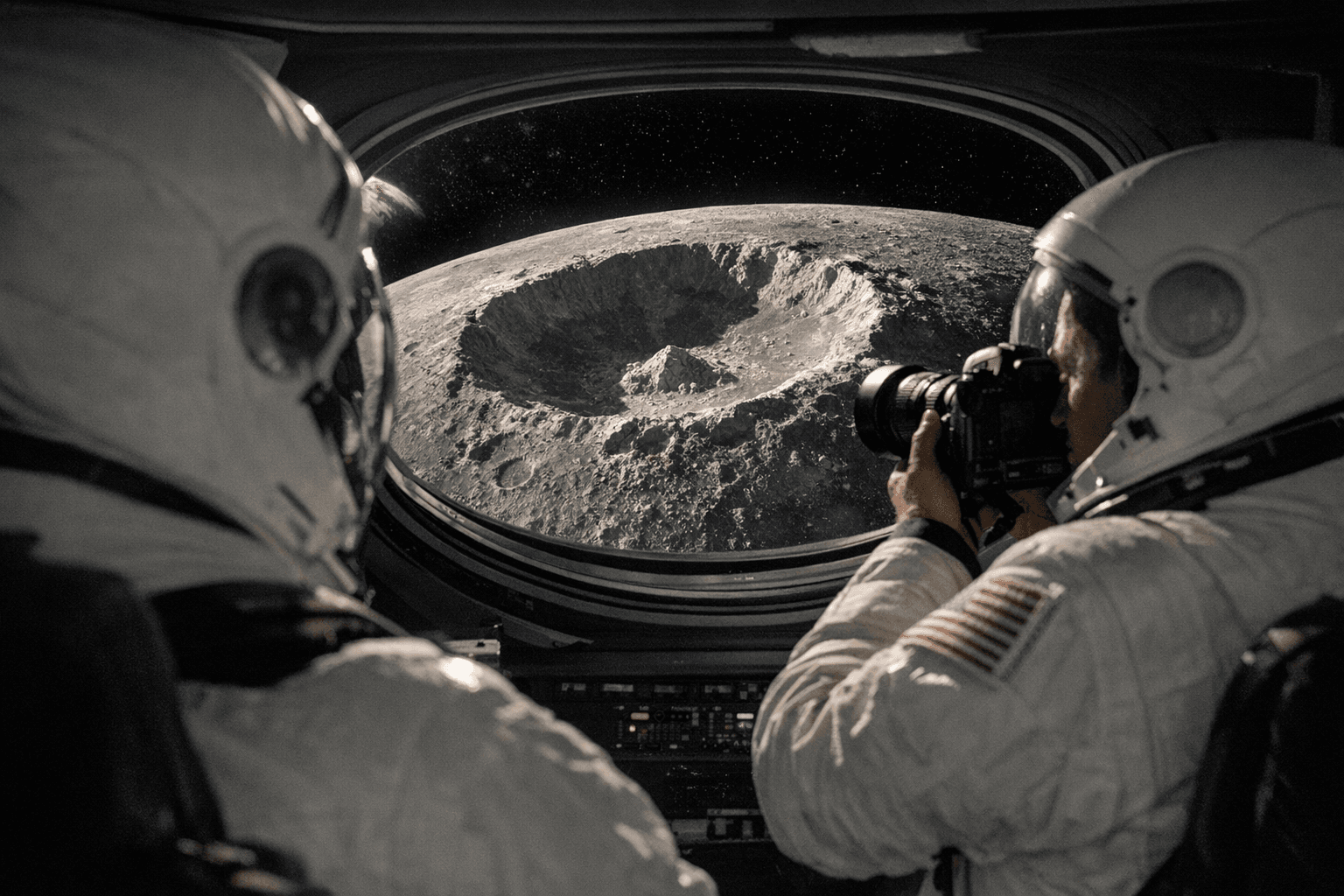
The lunar flyby today marks the main event of the 10-day, 685,000-mile mission, which launched April 1 from Kennedy Space Center in Florida. At 1:56 p.m. EDT, the crew is expected to surpass the record for the farthest any human has traveled from Earth, a mark set by the Apollo 13 crew at 248,655 miles in 1970. The flyby follows a figure-eight path around the far side of the Moon, and mission control expects a temporary communications blackout beginning around 6:44 p.m. as Orion passes behind the lunar horizon. Among the 30 science targets assigned to the crew are the Orientale basin and the Hertzsprung basin, a nearly 400-mile-wide crater on the far side whose degraded features offer a contrast to Orientale's sharper, better-preserved rings.
The crew is scheduled to splash down in the Pacific Ocean near San Diego on April 10, nine days after launch and more than 54 years after the last human-crewed lunar mission returned to Earth.
Sources:
Know something we missed? Have a correction or additional information?
Submit a Tip