Artemis II Crew Fixes Broken Toilet Hours After Historic Moon Launch
Six hours into humanity's first lunar mission in 54 years, Christina Koch fixed Orion's broken toilet while at least one crewmate peed into a backup bag.
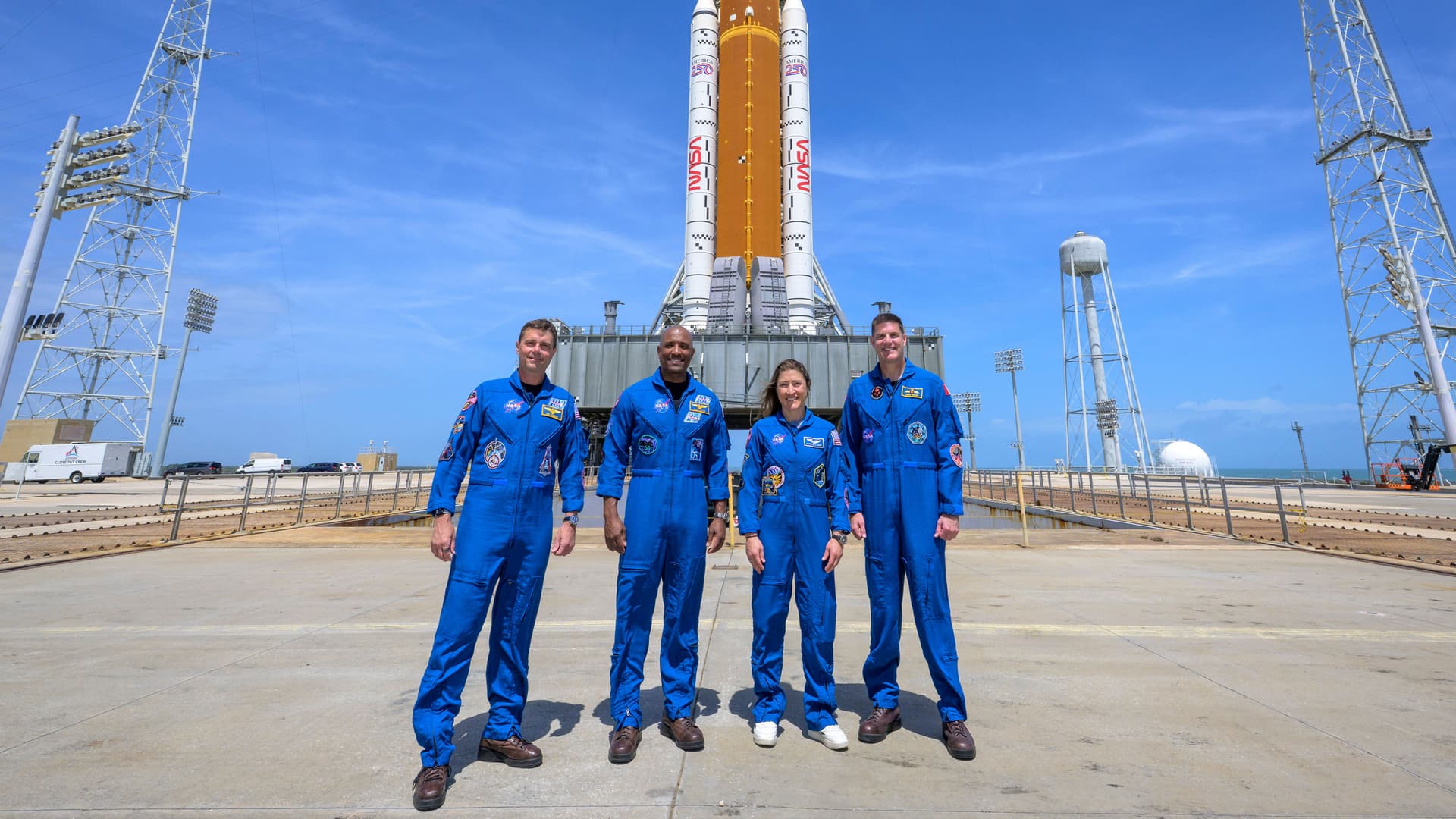
Six hours into humanity's first crewed lunar mission since 1972, Mission Specialist Christina Koch put on her metaphorical tool belt and got to work fixing a broken toilet.
The Universal Waste Management System aboard Orion "Integrity" triggered a blinking fault light shortly after Artemis II lifted off from Kennedy Space Center on April 1, 2026. NASA spokesperson Gary Jordan described the alert as akin to a car's check engine light. NASA Associate Administrator Amit Kshatriya confirmed the root cause at a post-launch press conference: a malfunctioning controller had also jammed the unit's fan, rendering the compact 5-cubic-foot system unable to process urine for roughly six hours.
The stakes were unglamorous but operationally real. In microgravity, waste management is not a convenience; it's a safety and mission-critical necessity. The UWMS uses directed airflow to pull urine and feces away from the body and into separate receptacles, venting pre-treated urine overboard daily while storing solid waste in odor-controlled canisters. Without the fan, that airflow collapsed for urination. At least one crew member resorted to a Collapsible Contingency Urinal, a bag-and-funnel backup approved for exactly this kind of failure scenario.
Late Wednesday night EDT, Koch methodically removed components from the unit and executed a diagnostic sequence radioed up from Mission Control in Houston while ground controllers cycled the system on and off remotely. Shortly after midnight on April 2, CapCom Amy Dill delivered the news: "Happy to report that toilet is go for use. We do recommend letting the system get up to operating speed before donating fluid and then let it run a little bit after donation." Koch's reply was immediate: "It worked! We are cheers all around."
NASA's Acting Associate Administrator for Exploration Systems Dr. Lori Glaze framed the incident as precisely the kind of real-world stress test the mission was designed to surface. "A lot of what we're doing here is exactly this," she said. "Trying to test out all of the things that require the crew interaction. We anticipate to have a lot of these...and work through them."
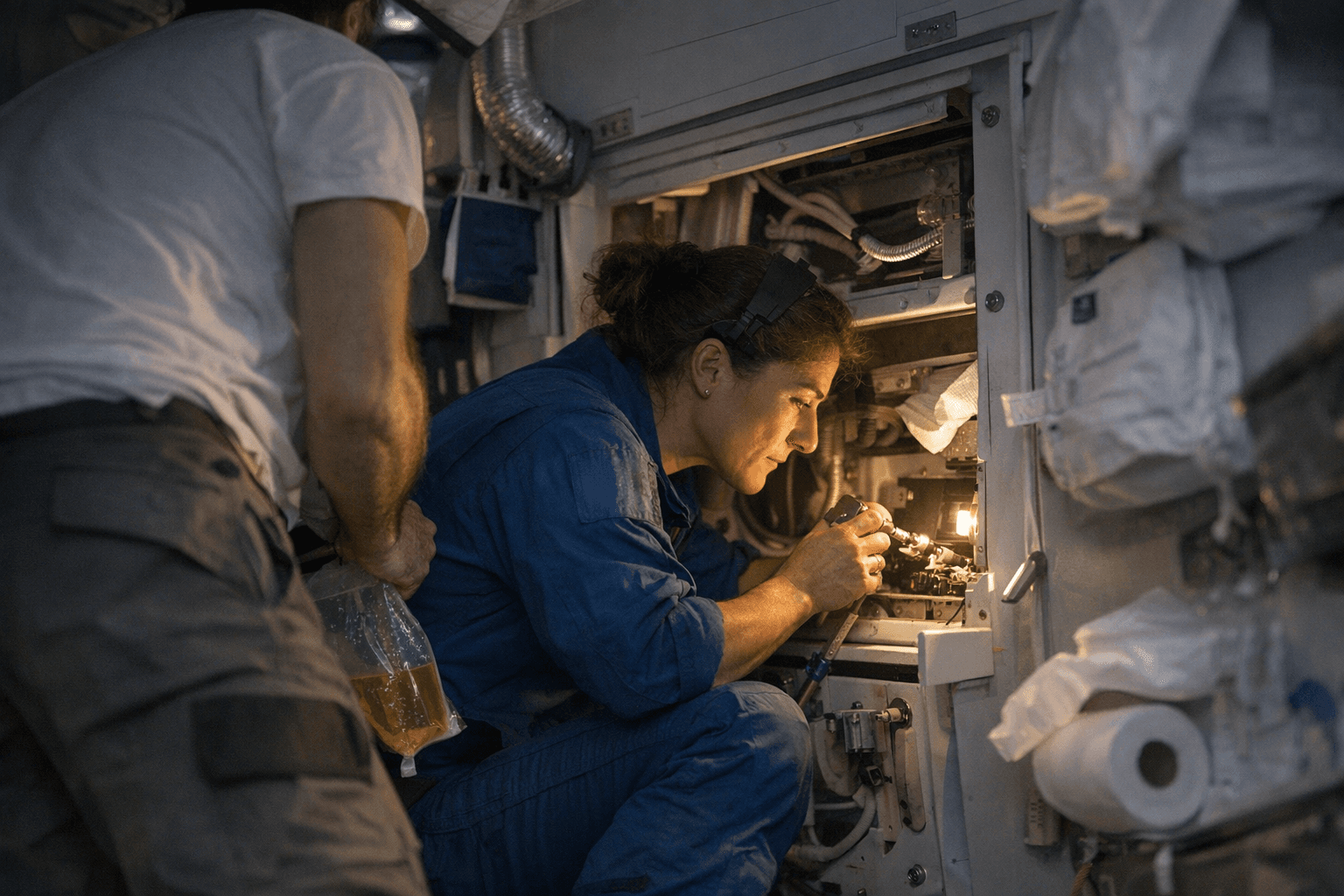
The UWMS itself represents a significant engineering leap from earlier space toilet designs. Apollo astronauts managed waste with rudimentary plastic bags, a notoriously miserable process. Shuttle-era and early ISS systems used suction-based vacuums but couldn't handle urine and feces simultaneously and were not designed with female anatomy in mind. The Orion version was built following extensive astronaut feedback, incorporating a redesigned seat and funnel to improve usability for all crew members. It was also tested aboard the ISS before integration into Orion. One unavoidable trade-off: the system runs loud enough that ear protection is mandatory.
Waste-management physics added a wrinkle even after the fix. Mission Control cautioned the crew against immediately dumping the backup bag overboard due to guidance, navigation, and control concerns: venting even a small volume of liquid produces a tiny but meaningful thrust force, enough to nudge a spacecraft off its intended trajectory.
The toilet was not Artemis II's only day-one challenge. The crew also dealt with a brief loss of communications and email glitches. None of it altered the mission's momentum. At 7:49 p.m. EDT on April 2, Orion's main engine fired for approximately 5 minutes and 50 seconds, completing the translunar injection burn and placing Commander Reid Wiseman, Pilot Victor Glover, Koch, and Canadian Space Agency Mission Specialist Jeremy Hansen on an irreversible course toward the Moon.
The crew is now bound for a record 252,799 miles from Earth and a flyby approximately 4,700 miles beyond the lunar surface, the farthest any humans have traveled since Apollo 17 departed the Moon in December 1972.
This article was produced by Prism’s automated news system from verified source data, official records, and press releases, then run through automated quality and moderation checks before publishing. The system is built and supervised by the people who set the standards it runs under. Read our full AI policy.
Did this article answer your question?