Artemis II Crew Reports Surprising Moon Color Variations During Historic Lunar Flyby
Christina Koch told mission control "the browner and browner" the moon looked up close, a puzzling color shift that could reshape where NASA lands on Artemis III.
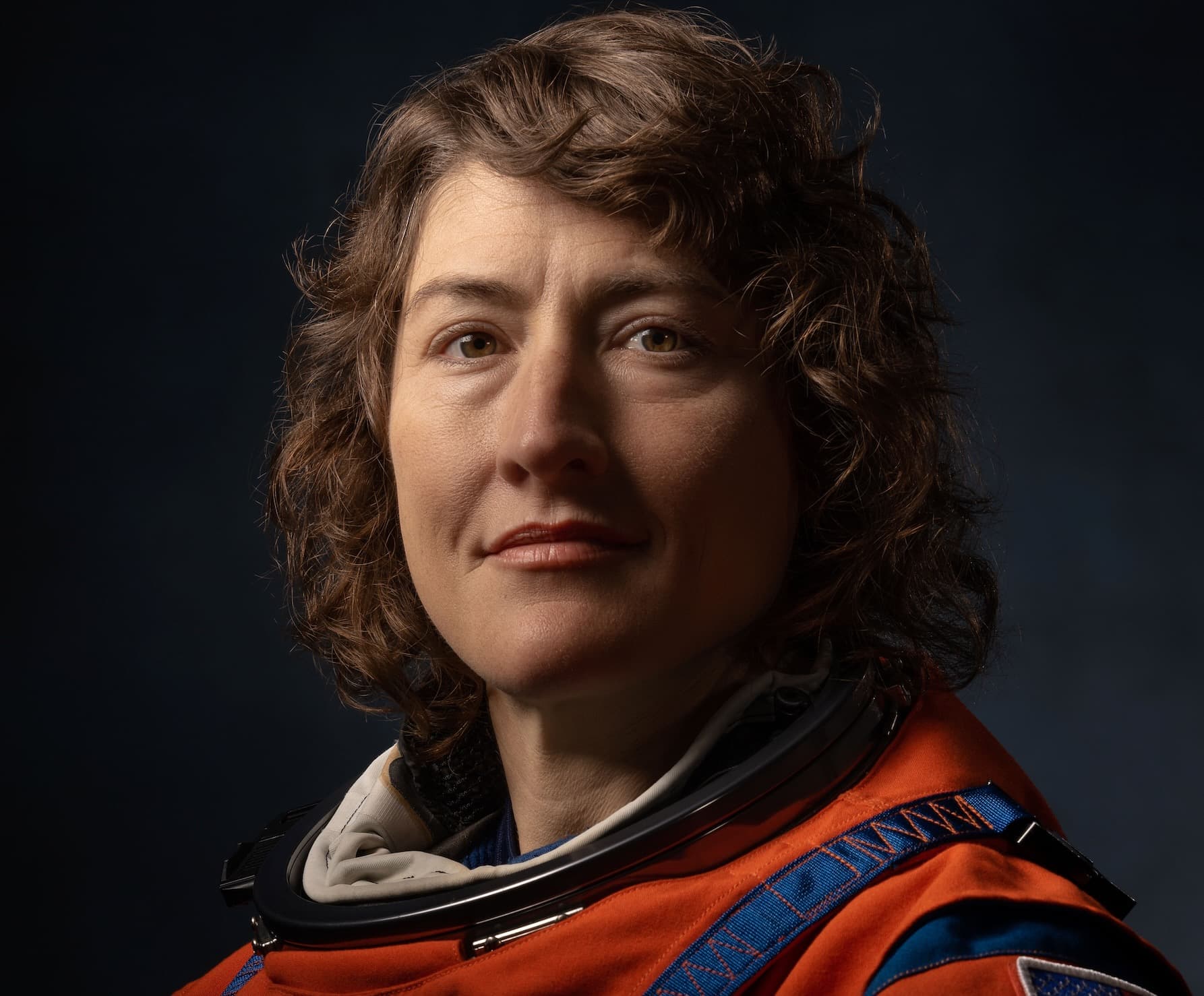
When Christina Koch looked out at the lunar surface during Monday's seven-hour flyby, she wasn't seeing the gray-white sphere visible from Earth. "The more I look at the moon, the browner and browner it looks," she told Mission Control at Johnson Space Center in Houston. That color shift may carry significant scientific weight.
The Artemis II crew completed their closest approach to the moon on April 6, passing within 4,070 miles of the surface aboard the Orion spacecraft "Integrity." At 1:56 p.m. CDT, the crew broke Apollo 13's 54-year-old distance record, reaching a maximum of 252,760 miles from Earth. Among their 10 official science objectives for the flyby, detecting color variations on the lunar surface ranked among the most scientifically tantalizing and the hardest to achieve with robotic instruments alone.
Color variations encode the lunar surface's geological biography. The dark volcanic plains known as the maria, formed between 1.2 and 3.8 billion years ago from basaltic flows, contrast sharply with the pale anorthosite of the ancient highlands. Brown tones indicate minerals like olivine or pyroxene; blues suggest titanium-rich basalts. Working in rotating pairs roughly every hour, the crew photographed and verbally described approximately 30 surface targets in real time for scientists in the Science Evaluation Room at Johnson Space Center, who responded to the incoming observations with "grins, nods, and lots of chatter."
The fundamental tension between human observation and satellite data was central to the mission's design. Kelsey Young, Artemis II lunar science lead at NASA's Goddard Space Flight Center, described the human eye as "the most nuanced detector there is, especially when it's connected to a well-trained brain." Satellites like the Lunar Reconnaissance Orbiter, mapping the moon since 2009, are constrained by fixed orbital illumination angles; accumulating the range of lighting conditions the crew captured in a single pass would, as Young noted, take some spacecraft "days, months, weeks, years."
Commander Reid Wiseman identified brownish tones in the outer rim of the Orientale basin, a 3.8-billion-year-old crater roughly 600 miles wide that scientists call the moon's Grand Canyon, seen by human eyes for the first time. Pilot Victor Glover, observing the same region, said he did not see the same coloration. That divergence illustrates precisely why spectroscopic analysis of the crew's photographs and eventual sample return will be needed: color perception shifts with viewing angle and illumination geometry, and resolving those discrepancies requires instruments that can quantify what the eye can only approximate.
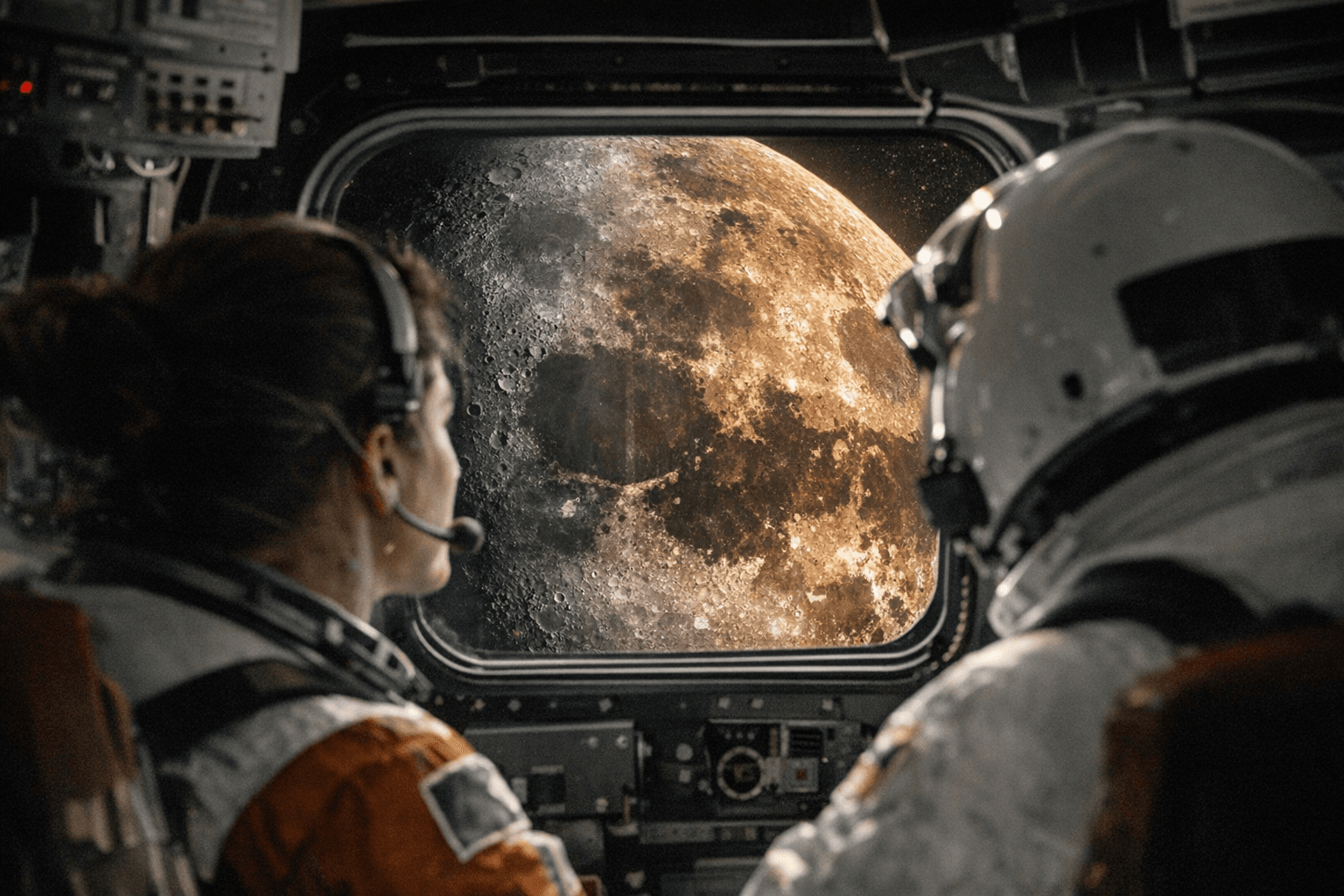
Glover's sharpest impression came elsewhere. Studying the terminator, the sharp boundary between the moon's illuminated face and its shadow, he described seeing "the islands of light, the valleys that look like black holes" as the most visually captivating thing he had witnessed. Mission Specialist Jeremy Hansen was more direct: "It is blowing my mind what you can see with the naked eye from the moon right now."
The crew's observations of the lunar south pole, a region believed to harbor water ice in permanently shadowed craters, will directly inform where future Artemis missions land. NASA Administrator Jared Isaacman has indicated Artemis III is approximately one year away, and the photographic and spectroscopic record from April 6 will be among the primary inputs shaping its landing site selection and resource prospecting priorities.
One detail from the flyby carried personal weight beyond the science. The crew proposed naming a previously unnamed bright crater "Carroll," in honor of Commander Wiseman's late wife. Hansen made the announcement during the flyby: "It's a bright spot on the moon, and we would like to call that Carroll.
Sources:
Know something we missed? Have a correction or additional information?
Submit a Tip