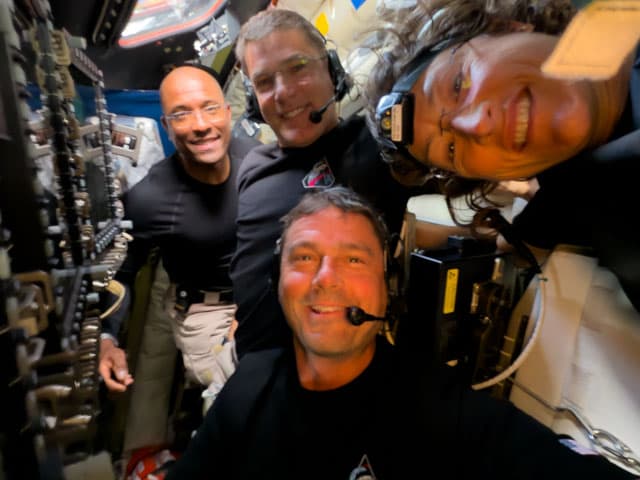
Artemis II Crew Returns Home After Historic Lunar Flyby
Artemis II's four-person crew returns from 252,756 miles out, carrying lunar observations that scientists say could help recover 30-40% of Earth's own missing geological history.
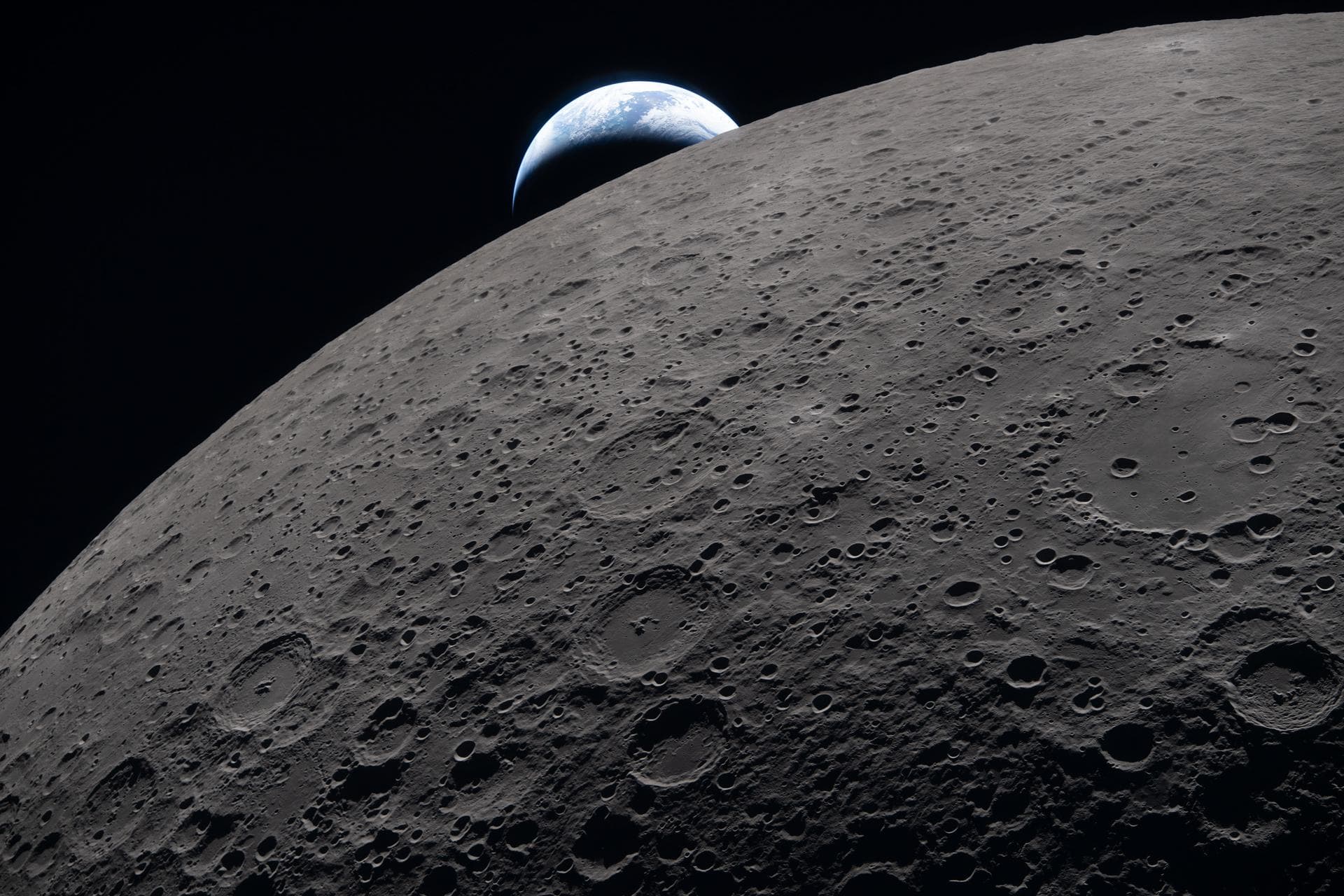
The Orion spacecraft "Integrity" is carrying its four-person crew back toward Earth after completing the first crewed lunar flyby in more than 50 years, a mission that rewrote the record books and produced observations that planetary scientists say could help recover billions of years of Earth's own missing geological history.
Commander Reid Wiseman, pilot Victor Glover, mission specialist Christina Koch, and Canadian Space Agency astronaut Jeremy Hansen completed their close pass of the Moon on Flight Day 6, swinging to within 4,070 miles of the lunar surface. At its farthest point, Orion reached 252,756 miles from Earth, surpassing Apollo 13's record of 248,655 miles set in 1970, and extended approximately 4,700 miles beyond the Moon itself. The four broke the record for most people in deep space simultaneously, a mark Apollo 8 had set at three in 1968, and each carried a historic first: Glover became the first person of color to travel beyond low Earth orbit and near the Moon; Koch the first woman; Hansen the first non-American; Wiseman the oldest.
The scientific payoff extends beyond the Moon. James W. Head III, Louis and Elizabeth Scherck Distinguished Professor Emeritus at Brown University, frames the lunar surface as a direct window into Earth's own lost past. Head received his Ph.D. from Brown in 1969, joined NASA to select landing sites and train astronauts for Apollo 7 through 17, and has since trained 18 Artemis astronauts, including Wiseman, using virtual reality at Brown. His framing is direct: "We're missing about 30% to 40% of Earth's history. It's like a book with the first 10 or 12 chapters ripped out. But all those early chapters are preserved on the Moon, Mars and Mercury, and that's why we want to go study them. We can find those missing chapters."
Earth's own geology erased those chapters. Plate tectonics continuously recycles the crust; atmospheric weathering destroys what remains. The Moon, lacking both, preserved the early solar system's bombardment record intact. Craters that vanished from Earth billions of years ago remain legible on the lunar surface today.
The Artemis II trajectory gave the crew a scientific advantage Apollo never had. Earlier flybys flew closer to the Moon but could not view its poles; Artemis II's wider arc revealed the entire lunar disk. During approximately five hours of observations, the crew targeted formations that preserve evidence of processes that also shaped Earth. Reiner Gamma, a bright surface swirl of unknown origin, is a future NASA CLPS landing site. Glushko crater, 27 miles wide, trails ejecta streaks 500 miles across the surface. Hertzsprung basin's degraded features, contrasted with the sharper Orientale crater, let scientists track how micro-impacts progressively bury the record of earlier catastrophic events.
Scientists asked the crew to call out subtle color variations, a technique rooted in Apollo 17, when geologist Harrison Schmitt spotted orange soil in 1972 and forced a revision of the timeline for lunar volcanic activity. A solar eclipse during the flyby, as Orion, the Moon, and the Sun aligned, gave the crew an unobstructed view of the solar corona and a window to watch for meteoroid flash impacts.
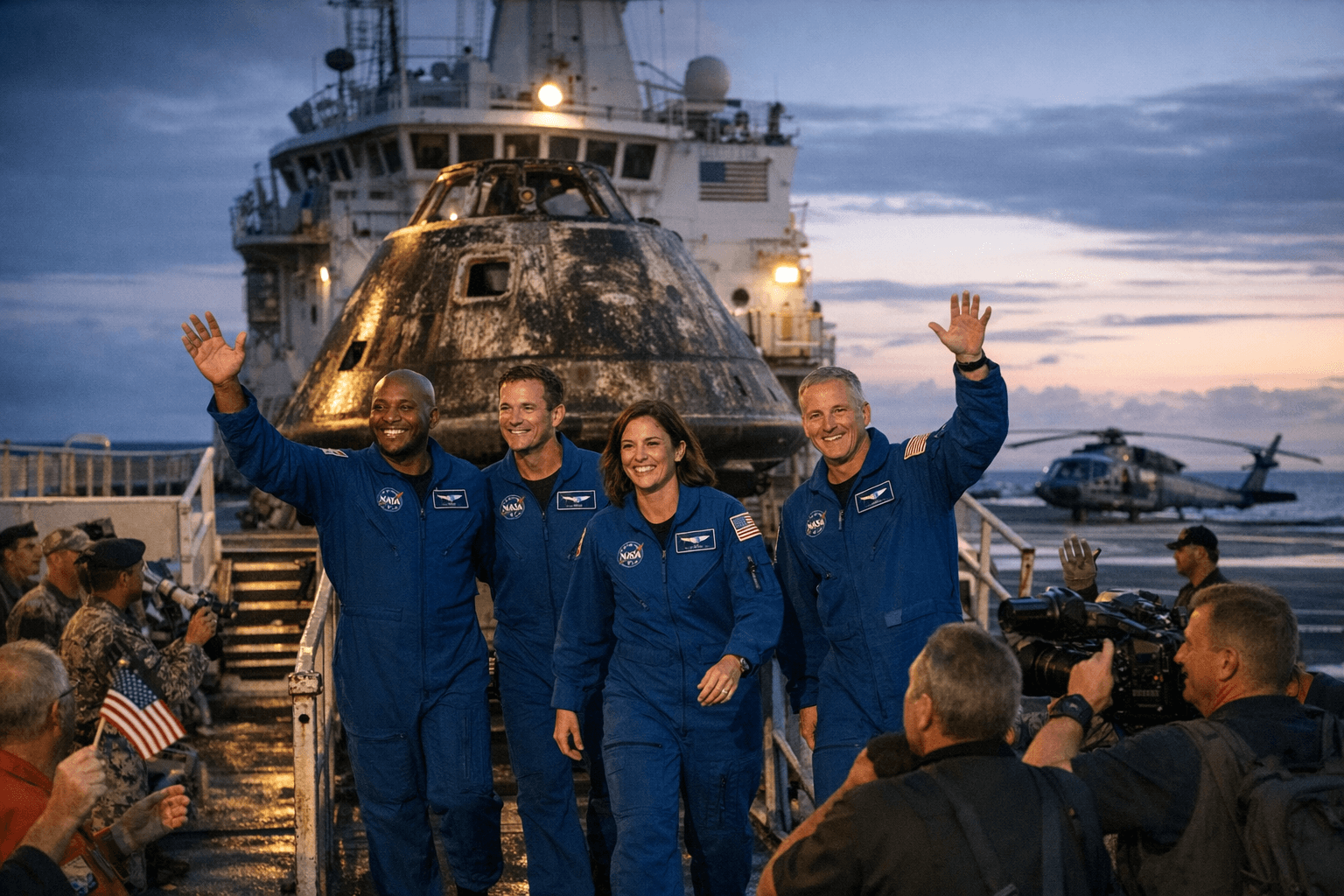
Head, who leads Brown's 500-Day Design Reference Mission on extended lunar habitation, sees the flyby observations as a targeting exercise. The data will help scientists identify which craters and mineral deposits Artemis III's surface crew must sample to turn the "missing chapters" from analogy into testable findings. Splashdown is planned in the Pacific Ocean off San Diego, followed by helicopter transport to Naval Base San Diego's USS John P. Murtha for medical evaluations before the crew flies to NASA's Johnson Space Center in Houston.
Sources:
Know something we missed? Have a correction or additional information?
Submit a Tip