Artemis II Crew Speaks Live with Media from Orion on Lunar Flyby Mission
Artemis II's crew confirmed a 'flawless' engine burn and resolved toilet failure live from Orion, giving NASA its first real-time readiness audit of deep-space systems.
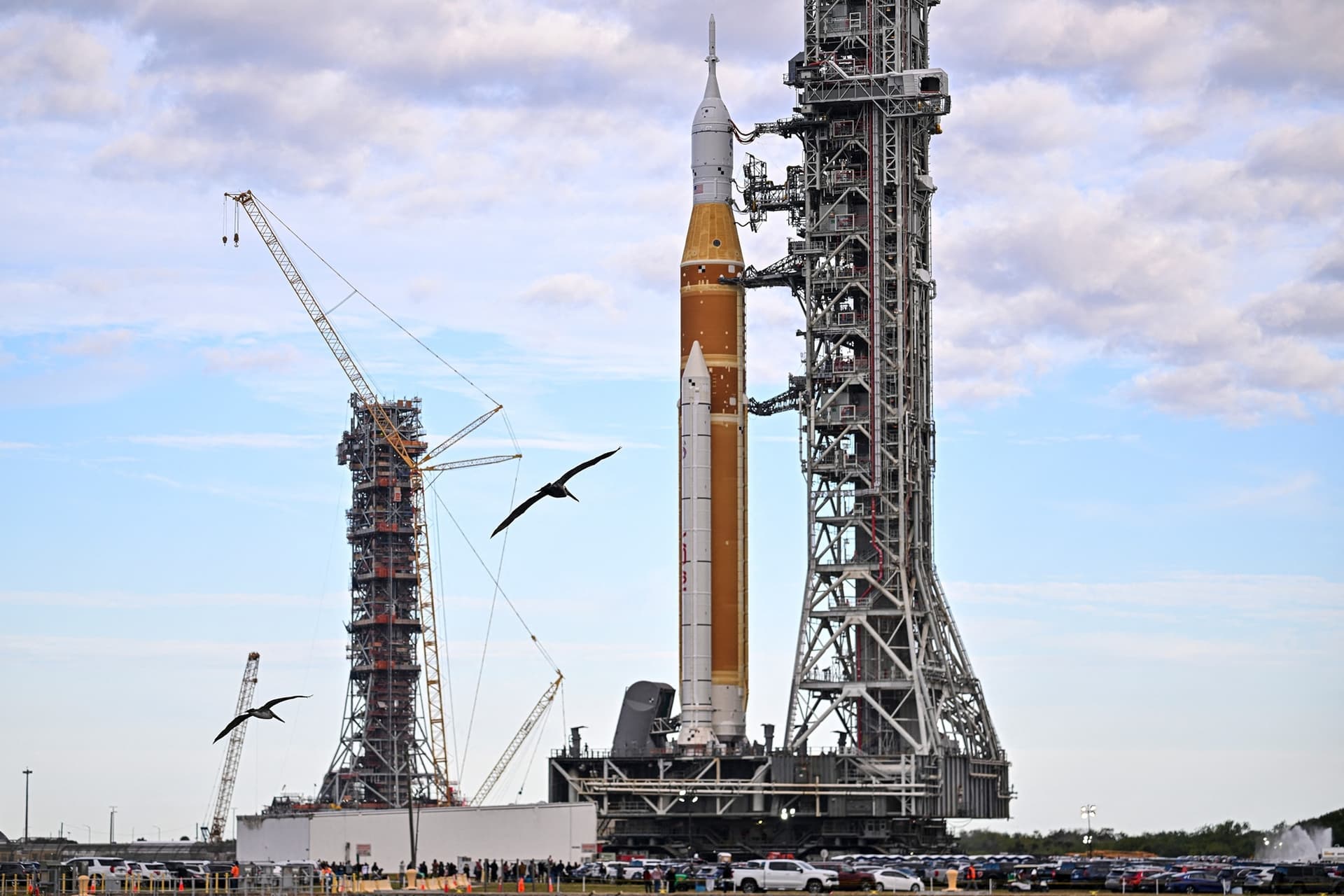
Four astronauts transmitting from the Orion spacecraft, cruising toward a maximum distance of approximately 252,799 miles from Earth, gave NASA its most detailed public accounting yet of how its deep-space systems are performing under actual mission conditions. The daily media downlinks NASA arranged for Artemis II are not ceremonial gestures; they are real-time validation of the communication architecture that any crewed lunar landing will require.
The translunar injection burn on April 2 was the mission's first major propulsion checkpoint. NASA Acting Associate Administrator Lori Glaze called it "flawless," and Commander Reid Wiseman confirmed Orion was on a free-return trajectory that will carry the crew within approximately 6,000 miles of the lunar surface before orbital mechanics return them to Earth. That burn represents the navigation milestone most critical to Artemis III planning: reliable deep-space propulsive maneuvers are a baseline requirement before a landing mission can be sanctioned.
Life support delivered the mission's sharpest early stress test. Shortly after launch, a fault light activated on the Universal Waste Management System, Orion's toilet, which must function continuously across a 10-day mission for four people inside a 16.5-foot capsule. Mission Specialist Christina Koch, who holds the record for the longest single spaceflight by a woman at 328 days, addressed it directly: "I'm proud to call myself the space plumber. I like to say that it is probably the most important piece of equipment on board." The fault was later resolved. The incident illustrates precisely why NASA treats Artemis II as a test flight: systems that pass ground testing behave differently under mission-day stresses in actual deep space.
The communications architecture cleared its most demanding test yet. NASA scheduled media downlinks nearly every day of the mission, connecting the crew with NBC News, ABC News correspondent Gio Benitez, and Fox News correspondent Trace Gallagher, among others. Sustaining reliable two-way audio and video with a spacecraft beyond Earth orbit validates the Deep Space Network infrastructure Artemis III will depend on to coordinate a lunar landing in real time.

Human factors remain the least quantifiable variable still being measured. Wiseman, Pilot Victor Glover, Koch, and Canadian Space Agency astronaut Jeremy Hansen are spending 10 days in a vehicle comparable in volume to a large SUV. On Flight Day 2, as Mission Control reoriented the spacecraft and the sun set behind Earth, the crew gathered at Orion's windows to watch the northern lights arc across the planet below. Wiseman described it as "the most spectacular moment" that "paused all four of us in our tracks." NASA needs to understand how crew focus and cohesion hold across transits like this one before committing four people to a landing attempt.
What Artemis II will not test is equally significant. The mission carries no landing hardware, no descent stage, and no surface systems. Glover, who would become the first Black person to travel to the Moon; Koch, the first woman; and Hansen, the first Canadian, will pass within 6,000 miles of the surface without descending. Artemis III, targeting a mid-2027 launch, must integrate the SpaceX Human Landing System, an updated Orion configuration, and lunar surface EVA operations, none of which Artemis II validates.
The crew's live transmissions from deep space confirm that Orion's propulsion, waste management, and communications systems survived their first crewed shakeout. Whether those results are sufficient to hold Artemis III on a mid-2027 schedule is the question NASA's program managers will spend the next year answering.
This article was produced by Prism’s automated news system from verified source data, official records, and press releases, then run through automated quality and moderation checks before publishing. The system is built and supervised by the people who set the standards it runs under. Read our full AI policy.
Did this article answer your question?