Artemis II rehearsal halted at T-5:15 after hydrogen leak at pad
The wet dress rehearsal for Artemis II was stopped at T-5:15 due to a liquid hydrogen leak; NASA managers now pause to review and reset the launch timeline.
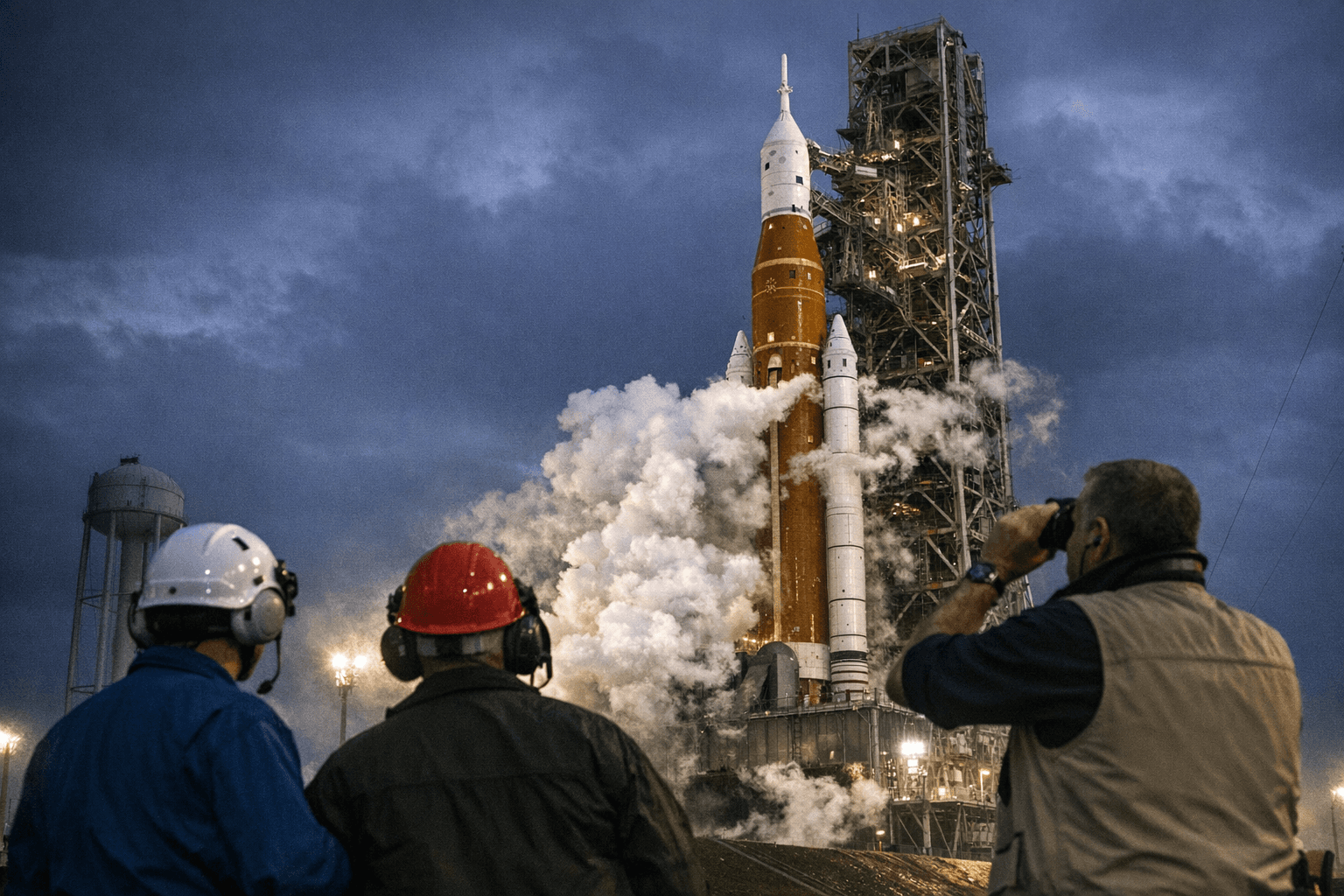
The Artemis II wet dress rehearsal at Kennedy Space Center’s Launch Pad 39B was terminated at the T-5:15 mark after teams detected a liquid hydrogen leak at the tail service mast umbilical, a problem that brought the simulated countdown to an abrupt stop. "The Artemis II wet dress rehearsal countdown was terminated at the T-5:15 minute mark due to a liquid hydrogen leak at the interface of the tail service mast umbilical, which had experienced high concentrations of liquid hydrogen earlier in the countdown," Brandi Dean reported on February 3.
The test had been rescheduled from Saturday night, January 31, to Monday, February 2 because engineers judged forecast temperatures would violate pad limits during a rare Arctic outbreak over Florida. "Managers have assessed hardware capabilities against the projected forecast given the rare Arctic outbreak affecting the state and decided to change the timeline," NASA said in messaging relayed by multiple outlets. Local reporting noted numerical weather rules that govern fueling and launch operations: "The outside temperature can't be below approximately 40 degrees for 30 or more consecutive minutes, and the overall average must stay above 41 degrees to not only rehearse but also launch," WESH reported.
A wet dress rehearsal takes the Space Launch System and its Orion capsule through near-launch procedures, beginning around T-49 hours and proceeding through fueling operations before halting short of liftoff. On the recent attempt teams had brought liquid oxygen and liquid hydrogen into the vehicle’s supply lines and were exercising closeout operations and pad systems when hydrogen concentration readings rose at the tail service mast umbilical. The SLS, a 322-foot rocket with the Orion crew module mounted atop, remained secured on the mobile launcher while crews and pad teams began post-termination safing actions.
NASA had positioned the closeout crew and pad rescue team at the White Room on the crew access arm to run through standard checks, including securing the Orion spacecraft, verifying hatch seals and environmental conditions, and ensuring all access points were properly configured for simulated crew ingress. Live streams of Pad 39B and a dedicated wet dress feed carried the countdown activities to a wide audience until the leak alarm halted operations.
The schedule consequences were immediate. With the rehearsal slip, mission planners now list Sunday, February 8, as the earliest viable launch opportunity; prior opportunities around February 6 and 7 have been removed from consideration while teams analyze hardware and timeline impacts. NASA officials said they will review the wet dress rehearsal data, inspect the umbilical interface and other ground support systems, and will not set an official launch date until the review is complete.
The Artemis II crew of four, Commander Reid Wiseman, Pilot Victor Glover, and mission specialists Christina Koch and Jeremy Hansen, remain in quarantine at Johnson Space Center in Houston, where quarantine began January 23, while managers determine when astronauts will travel to Florida should the schedule permit. Engineers have warned that any additional delays could ripple day for day through the campaign, shifting launch opportunities and logistic windows.
Investigators will focus on the tail service mast umbilical components implicated in the leak, the timing of the high hydrogen concentration alerts, and whether any repairs or replacements will be required before another tanking attempt. Until that review concludes, NASA’s priority is to ensure hardware integrity and crew safety before returning the SLS and Orion to a full rehearsal and a final launch decision.
This article was produced by Prism’s automated news system from verified source data, official records, and press releases, then run through automated quality and moderation checks before publishing. The system is built and supervised by the people who set the standards it runs under. Read our full AI policy.
Did this article answer your question?