As War With Iran Escalates, President Moves to Cut Family Financial Aid Programs
Trump's 2027 budget kills LIHEAP, community block grants, and job training to fund a $1.5 trillion war budget, forcing the poorest Americans to foot the bill.

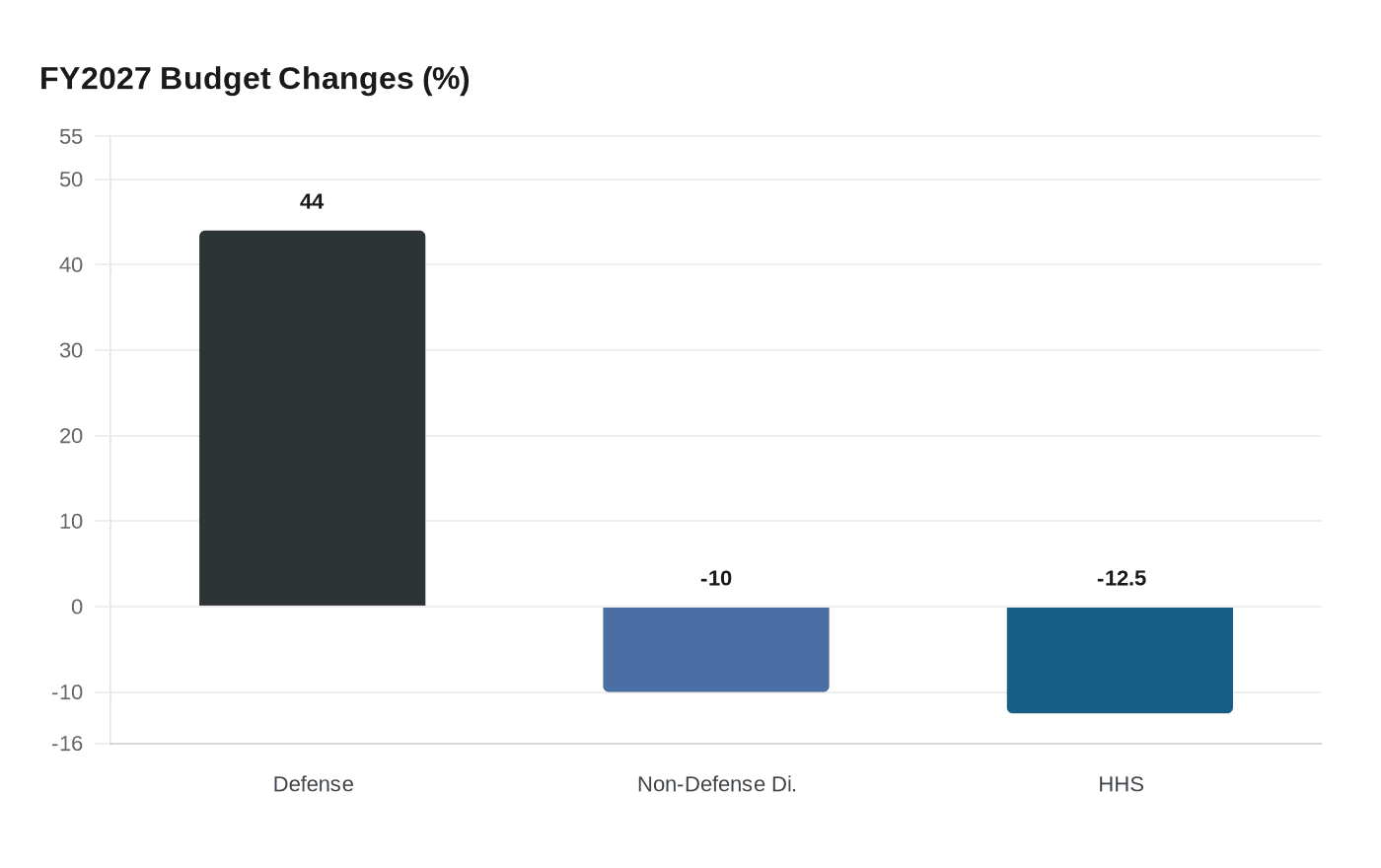
President Trump's fiscal year 2027 budget, released April 3, would eliminate the $4 billion Low Income Home Energy Assistance Program, zero out Community Services Block Grants, and gut dozens of other programs that millions of struggling families rely on, all to finance a 44 percent increase in defense spending to $1.5 trillion as the U.S.-Israel war with Iran stretches into its fifth week.
The White House is seeking roughly $1.5 trillion for defense as part of the fiscal 2027 budget request, a proposal that would boost military spending to its highest point in modern history as the conflict continues. The U.S. and Israel launched joint military strikes on Iran on February 28, kicking off the ongoing conflict in the Middle East. The war has caused a spike in oil and gas prices across the world, including the U.S., where drivers are now paying a national average price of over $4 per gallon of regular gas, over a dollar more than a month ago.
The price of the war at home is already denominated in more than gasoline. The Trump administration is quietly pursuing a regulatory change that would strip federal nutrition assistance from an estimated 6 million low-income Americans, including nearly two million children, even as the formal budget document calls for eliminating LIHEAP, which provides heating and cooling assistance to 6 million low-income households to help prevent utility shutoffs. Also on the chopping block are the $775 million Community Services Block Grant, which aims to reduce poverty, along with the HOME Investment Partnerships Program, Job Corps, and the Minority Business Development Agency.
The proposal submitted to Congress on April 3 proposes a 10% decrease of $73 billion in non-defense discretionary spending. The budget requests $111.1 billion in discretionary funding for the Department of Health and Human Services, a 12.5%, or $15.8 billion, reduction from the 2026 enacted level. The Small Business Administration, National Science Foundation, and Environmental Protection Agency each face more than 50% cuts compared to 2026 numbers.
Trump made the trade-off explicit himself. Speaking at a private White House event on April 1, Trump said, "We're fighting wars. We can't take care of day care," adding: "It's not possible for us to take care of day care, Medicaid, Medicare, all these individual things. They can do it on a state basis. You can't do it on a federal." He urged states to pick up the slack because "we have to take care of one thing: military protection."
The approach marks a sharp departure from how the U.S. has historically financed wartime spending. After the September 11 attacks and during the Iraq and Afghanistan wars, Congress approved large emergency supplemental appropriations, essentially adding war costs on top of existing domestic budgets rather than extracting the money from programs like food aid and home energy assistance. Trump's budget instead treats domestic programs as the direct offset for military escalation, a structural shift with no modern precedent.
That framing is already generating bipartisan friction on Capitol Hill. Senate Appropriations Chair Susan Collins, a Republican from Maine, praised the defense boost but said the nondefense side of the request had "several shortcomings" that Congress had already rejected in fiscal 2026, specifically citing "unwarranted funding cuts in biomedical research." The fact that Collins, typically an ally on military spending, publicly flagged the same domestic cuts Congress had already blocked once signals the budget faces a turbulent path.
Senator Patty Murray of Washington, Vice Chair of the Senate Appropriations Committee, said the president was "proposing to gut investments American families count on in order to fund reckless wars abroad," calling the request "bleak and unacceptable." Representative Brendan Boyle of Pennsylvania, the top Democrat on the House Budget Committee, declared: "This budget represents 'America Last.'"
Republicans and Democrats alike have expressed concern about increasing defense spending as the administration has provided limited information about Iran war updates, and they have not been entirely supportive of some of Trump's proposed cuts to agencies that serve millions of Americans, having already rejected a spending package for this fiscal year that had large reductions in some programs.
The constituencies most exposed to these cuts span a wide range of the electorate: rural households in cold-weather states who depend on LIHEAP for winter heating bills, low-income seniors relying on Community Services Block Grants for food assistance and job placement, and working-class families whose children would lose access to federally supported child care. Many of those households sit in the competitive districts that Republicans need to hold in 2026 midterm races, a political reality that several Republican appropriators have quietly acknowledged. The war's price tag, which topped $11.3 billion in just its first six days last month, is being passed directly to the families least equipped to absorb it.
This article was produced by Prism’s automated news system from verified source data, official records, and press releases, then run through automated quality and moderation checks before publishing. The system is built and supervised by the people who set the standards it runs under. Read our full AI policy.
Did this article answer your question?

