Asia markets tumble as AI and chip selloff hits South Korea
A U.S.-led rotation out of AI names sent the Kospi down more than 8%, briefly halting trade as Samsung and SK Hynix plunged.
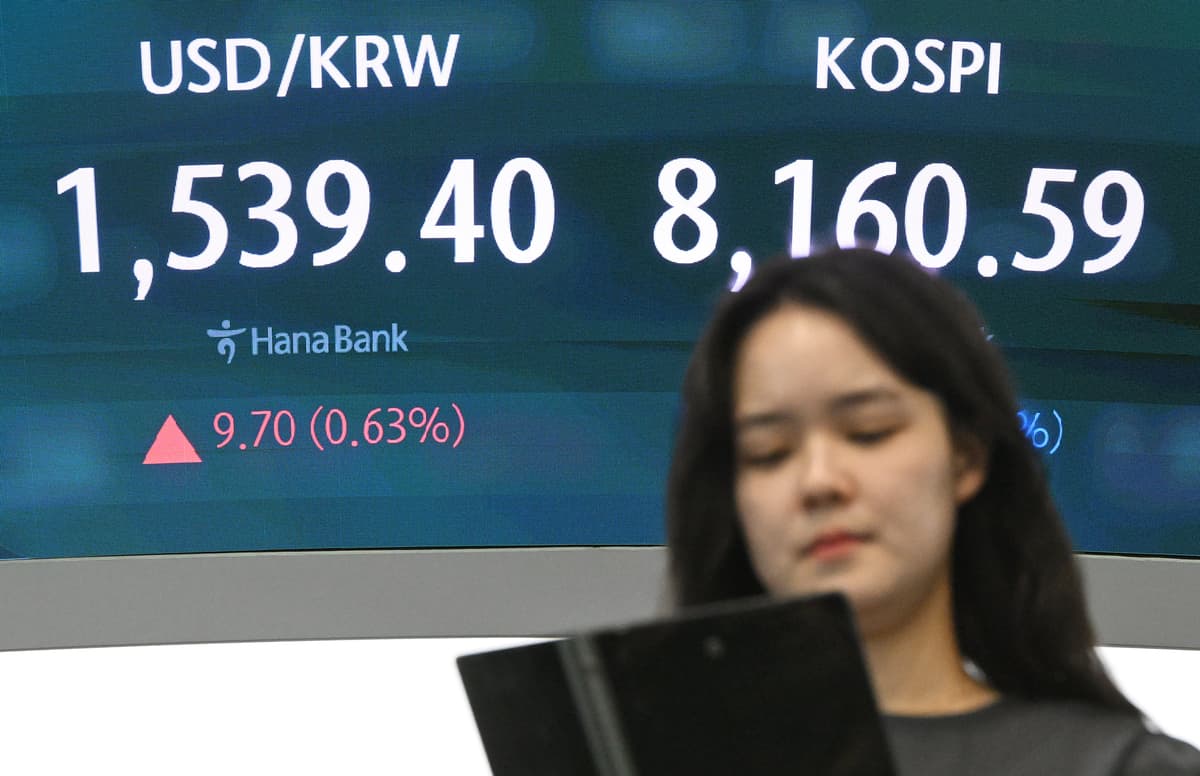
A global unwind in AI and chip stocks slammed South Korea on Monday, sending the Kospi down more than 8% intraday and forcing a 20-minute trading halt shortly after the open. Samsung Electronics fell as much as 11%, while SK Hynix slid about 10%, turning Seoul into the epicenter of a broader selloff that swept through Asian technology shares.
The trigger was not a domestic shock so much as a reassessment of Wall Street’s most crowded trade. Investors had already been rotating out of chip names after weakness in U.S. semiconductor stocks, with Broadcom’s disappointing results and guidance helping sour sentiment. The pressure followed a nearly 4.5% weekly drop in the Nasdaq, a reminder that Asia’s AI rally has become tightly tethered to the direction of U.S. tech and the market’s appetite for risk.

South Korea has been hit harder than most because its benchmark is so concentrated. Samsung Electronics and SK Hynix together account for more than 40% of the Kospi, so sharp moves in those two stocks can dominate the index even when the rest of the market is steadier. That concentration also explains why the Kospi could fall so quickly after the open, setting off the Korea Exchange’s circuit breaker and underlining how little cushion the market has when global sentiment turns.

Foreign investors had already been trimming exposure. In May, they sold $11.5 billion of Korean stocks on a net basis, putting the market on track for its third-biggest monthly outflow on record. The exodus came after a strong run driven by AI enthusiasm and local inflows, leaving Korean equities exposed once that momentum faded and valuations in chip names came under pressure.
The selling was not confined to Seoul. Tech shares in Japan and Taiwan also weakened as investors reassessed richly valued AI-linked stocks across Asia. The move reinforced a broader message from global markets: the AI trade remains powerful, but it is no longer being priced as a one-way bet. Concerns are building that the spending boom may run into margin pressure, especially if U.S. growth slows and demand expectations for semiconductors get reset.
The political backdrop in South Korea has added another layer of tension. The labor minister has recently urged major technology firms to share more of the gains from the AI-driven semiconductor boom with workers and suppliers, a sign that the windfall from chips is now drawing scrutiny as quickly as it drew capital. For now, the market is signaling that Asia’s tech-heavy indices remain vulnerable whenever Wall Street’s enthusiasm for AI starts to crack.
This article was produced by Prism’s automated news system from verified source data, official records, and press releases, then run through automated quality and moderation checks before publishing. The system is built and supervised by the people who set the standards it runs under. Read our full AI policy.
Did this article answer your question?

