Asia markets tumble as KOSPI circuit breaker trips and oil spikes
Asian stocks plunged across multiple sessions while Brent and WTI jumped as US-Israel strikes on Iran and Tehran’s reprisals halt Strait of Hormuz traffic, raising energy and shipping costs.
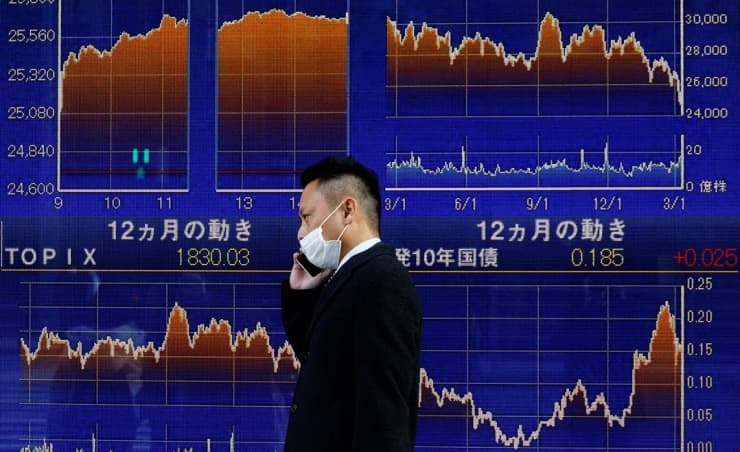
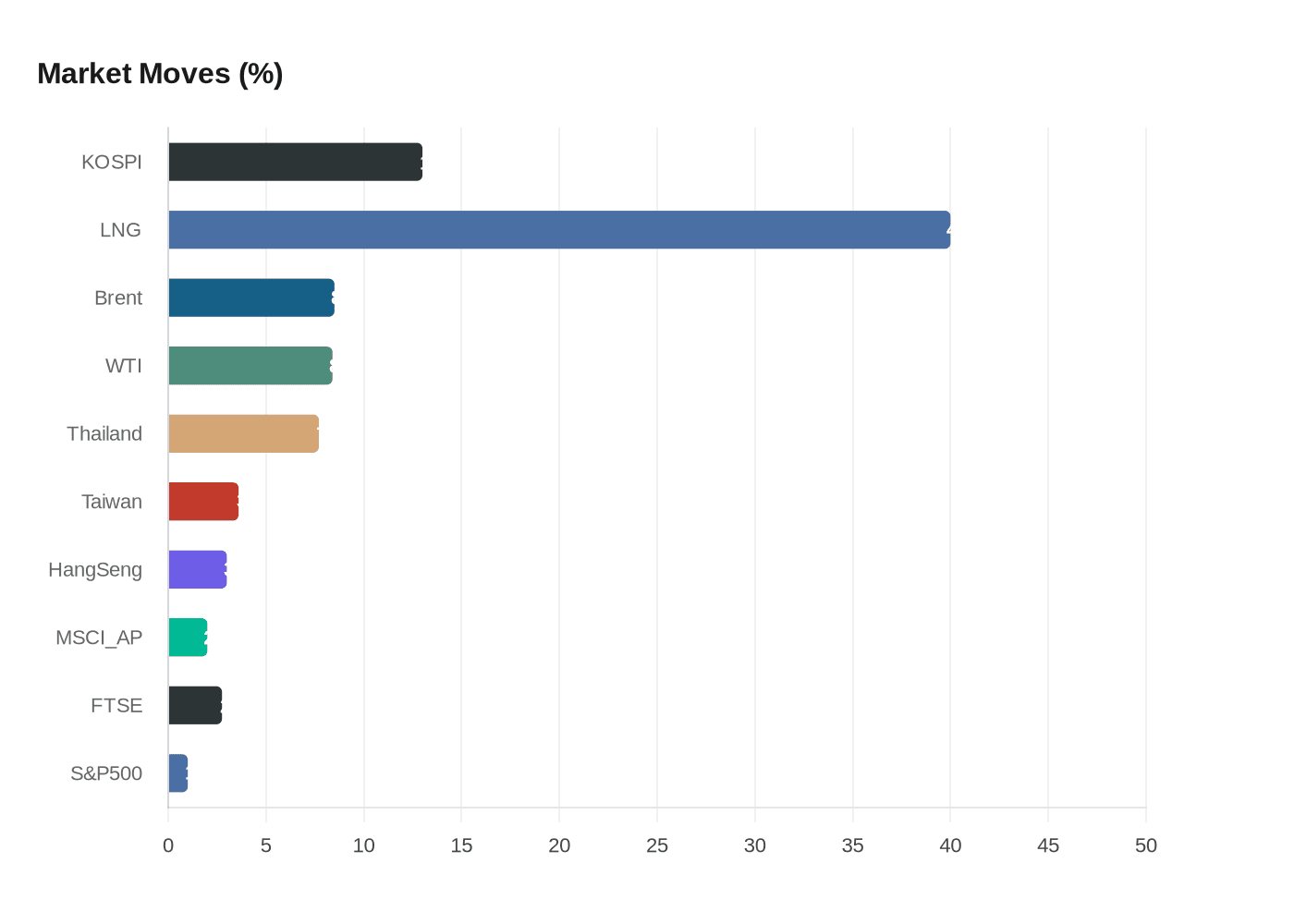
Asian equity markets slumped and global oil prices jumped after a wave of US and Israeli strikes on Iran and Tehran’s retaliatory actions sent trading into a wartime selloff that halted traffic through the Strait of Hormuz. South Korea’s KOSPI triggered a circuit breaker after plunging by more than 10% and fell as much as nearly 13% at one point, Reuters reported, marking the country’s biggest two-day losses since 2009. Markets in Tokyo, Hong Kong, Taiwan and Southeast Asia also posted sharp declines across multi-day sessions.
Japan’s Nikkei 225 traded 2.3% to 4% lower in different sessions, reflecting rapid intraday swings reported by Livemint, BBC and Reuters. Hong Kong’s Hang Seng was down about 3% in Asian trade, while Taiwan’s index dropped 3.6% and Thailand’s SETI plunged 7.7%, Reuters said. The MSCI Asia Pacific Index fell as much as 2%, extending losses from the previous day, Livemint reported. European and US markets moved lower as well; Britain’s FTSE 100 closed about 2.75% down and the S&P 500 ended nearly 1% lower after an opening rout, BBC reported.
Energy markets bore the brunt of the shock. In early trading on Monday front-month West Texas Intermediate futures rose 8.4% to $72.65 a barrel and Brent climbed 8.5% to $79.08, Morningstar reported. Livemint recorded Brent at $79.22 on Tuesday after an additional rise. Benchmark European and Asian LNG prices jumped around 40% in a single session, Livemint said, as buyers priced not only crude but the cost of moving it.
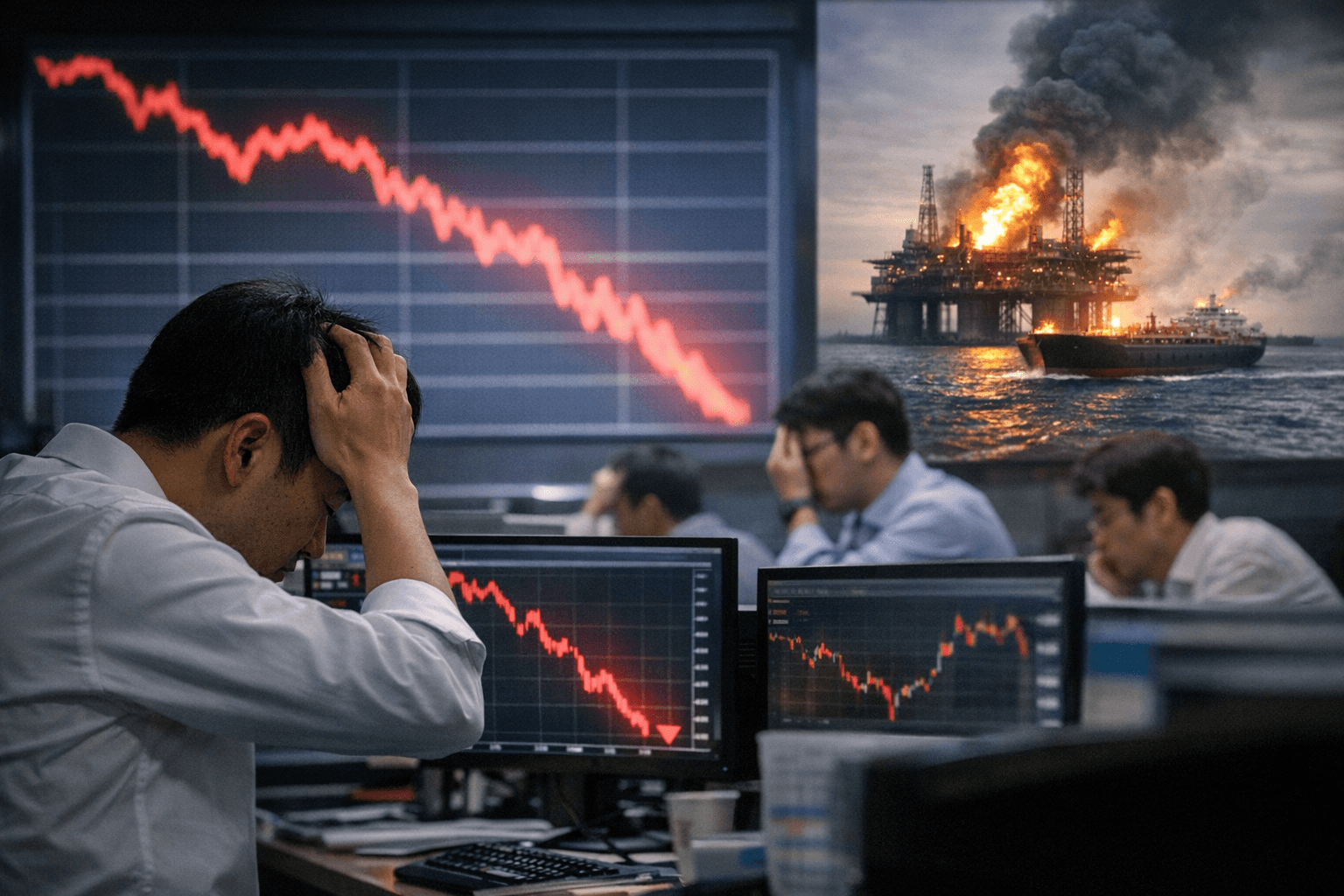
The Strait of Hormuz, through which around a fifth of the world’s oil and gas normally flows, saw near-complete disruption, BBC reported. Morningstar noted that roughly 20 million barrels of crude and refined products transit the strait each day, meaning even partial stoppages can ripple through global supply chains. Asia Nikkei reported Iran’s navy issued a ban on sailing through the strait and quoted the country’s Revolutionary Guard as saying it struck three oil tankers it described as belonging to the US and Bahrain; those claims are attributed to Iran’s statements in Asia Nikkei reporting.
The White House sought to calm markets with public commitments. Reuters said there was some relief in New York when President Donald Trump posted that he had ordered the U.S. International Development Finance Corporation to provide political risk insurance and financial guarantees for tankers in the Gulf and might use the U.S. Navy to escort shipping. BBC quoted Trump saying the US Navy would protect ships in the region "if necessary" to stop an energy supply crunch. Reuters also relayed analysts’ skepticism: "However, the fact the administration had not thought about this and set it up before attacking Iran did not exactly instil confidence. Details were also lacking and analysts saw many problems ahead."
Analysts warned the shock could be more persistent than past headline-driven moves. Charu Chanana of Saxo, quoted by Morningstar, said, "Oil upside may be stickier than typical headline spikes because markets are pricing both barrels and the cost of moving barrels given the entire Middle East region is engulfed in the conflict." Invesco told Livemint that highly open, energy-importing economies such as Thailand, India, South Korea and the Philippines are most vulnerable to a sustained price rise while Malaysia may fare better.
The market turmoil played out in trading rooms across Asia; a Getty Images photo used by BBC showed a currency dealer at Hana Bank in Seoul covering her mouth as teams monitored exchange rates on 4 March, a small human snapshot of strains hitting exporters, importers and energy-dependent households across the region.
This article was produced by Prism’s automated news system from verified source data, official records, and press releases, then run through automated quality and moderation checks before publishing. The system is built and supervised by the people who set the standards it runs under. Read our full AI policy.
Did this article answer your question?


