Asia stocks slip as chip rally fades ahead of Trump-Xi talks
Chip-heavy Asia markets lost steam as the Kospi slipped from 8,000 and investors questioned how durable any Trump-Xi thaw could be.

Asian shares lost momentum as the region’s chip rally cooled and traders reassessed how much relief a Trump-Xi meeting could deliver to trade-sensitive markets. Treasury yields rising to one-year highs added to the pressure, sharpening doubts that the surge in semiconductor stocks could keep outrunning broader concerns about inflation and global growth.
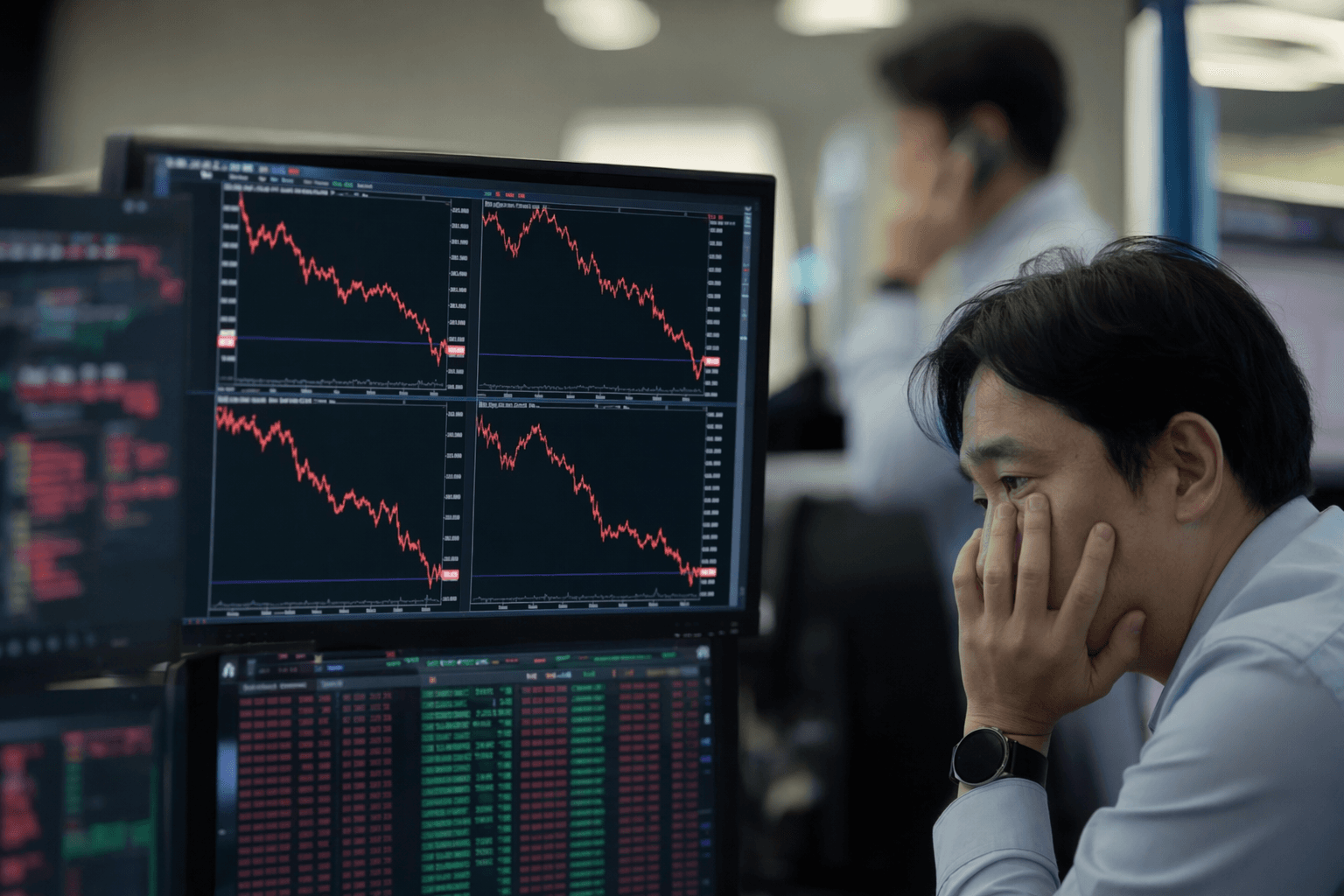
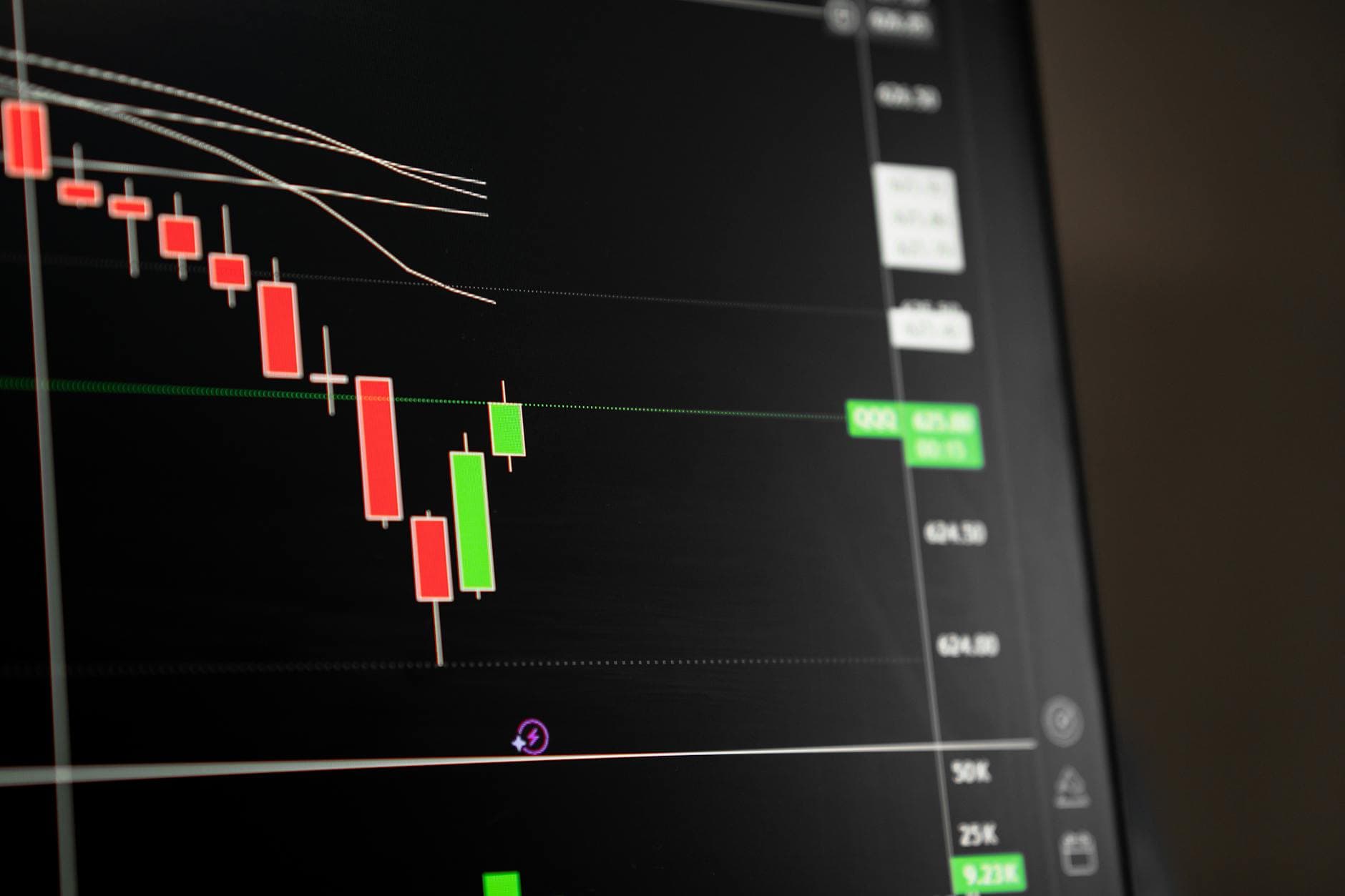
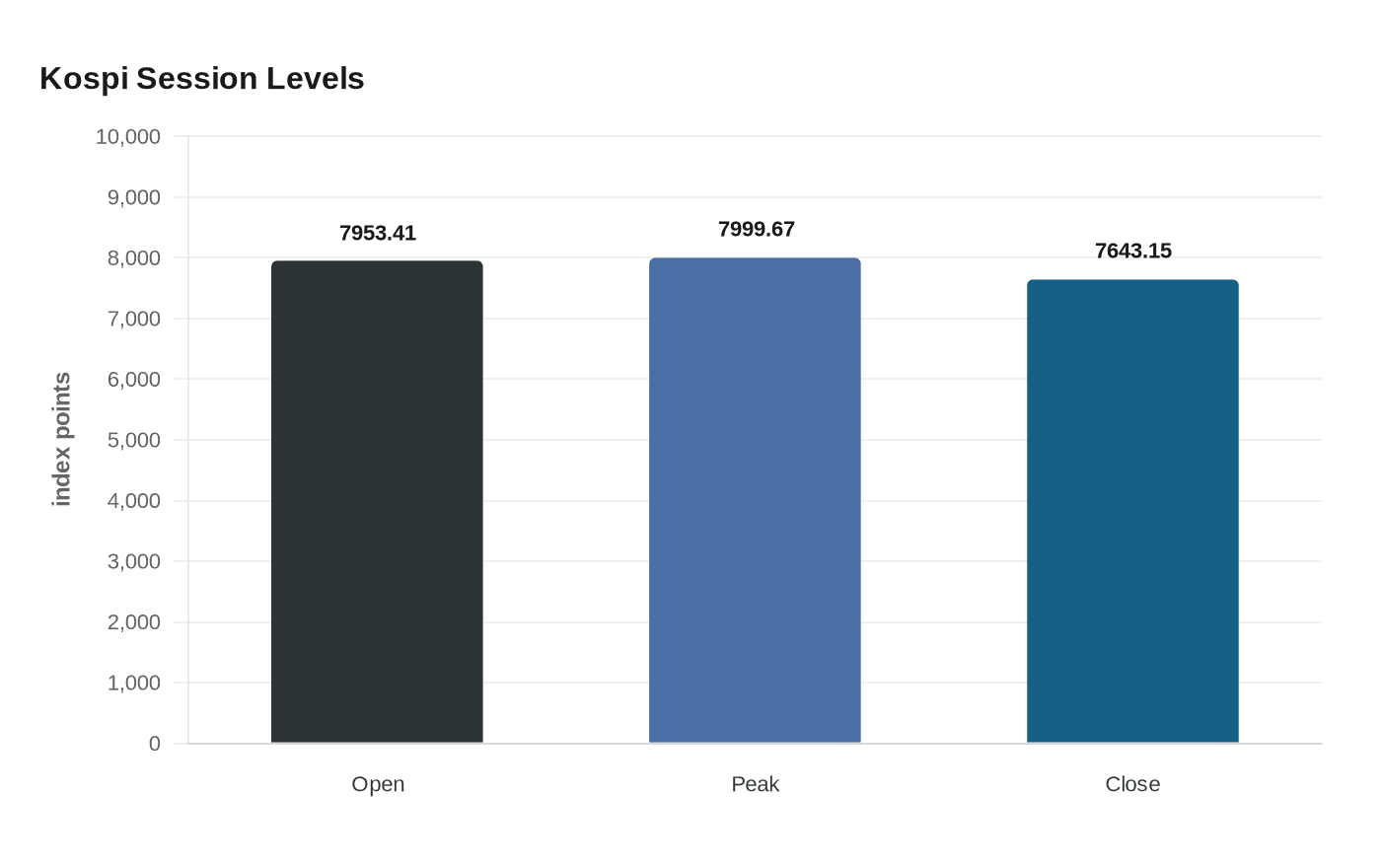
The pullback was most visible in South Korea, where the Kospi had briefly crossed 8,000 for the first time before reversing sharply. Korean market data showed the index opened at 7,953.41, touched 7,999.67, then closed at 7,643.15, down 2.29%. Foreign investors were heavy sellers in the decline, taking profits after a run that had already pushed the benchmark more than 80% higher in 2026.
That rally had been unusually concentrated. Samsung Electronics and SK Hynix together accounted for a record 42.2% of the Kospi in May, underscoring how tightly South Korea’s market has come to depend on a handful of chip names. The same pattern has been seen in Taiwan, where TSMC makes up more than 40% of the Taiex benchmark. That concentration has helped indices race to records, but it has also left them exposed to sudden reversals when sentiment shifts.
The market backdrop grew more delicate as U.S. Treasury Secretary Scott Bessent and China’s Vice Premier He Lifeng held about three hours of preparatory trade talks in Seoul before the Trump-Xi summit in Beijing on May 14 and 15. The meeting was Donald Trump’s first visit to China since 2017, and investors were watching for signs that Washington and Beijing might ease tensions around technology, tariffs and broader strategic friction.
But the summit also reinforced how much uncertainty still hangs over the relationship. The discussions reportedly touched on Taiwan, the Middle East, Ukraine and the Korean Peninsula, while public remarks avoided North Korea. At the same time, the U.S.-China Economic and Security Review Commission said China posted 5.0% first-quarter growth in 2026, but consumer demand remained weak and inflation pressures were rising. For investors, that combination points to a fragile recovery in China and an unresolved trade backdrop, meaning the latest move in Asia may reflect not just chip-sector volatility, but a more cautious reappraisal of how durable any thaw with Washington is likely to be.
This article was produced by Prism’s automated news system from verified source data, official records, and press releases, then run through automated quality and moderation checks before publishing. The system is built and supervised by the people who set the standards it runs under. Read our full AI policy.
Did this article answer your question?

%3Amax_bytes(150000)%3Astrip_icc()%2FCertificate-of-deposit-2301f2164ceb4e91b100cb92aa6f868a.jpg&w=1920&q=75)
