Asian Shares Rise as Oil Tops $110 Amid U.S.-Israeli War in Iran
WTI crude surged 11.4% to $111.54 a barrel as Asian markets steadied, with Wall Street now weighing a scenario where oil could reach an unprecedented $200.
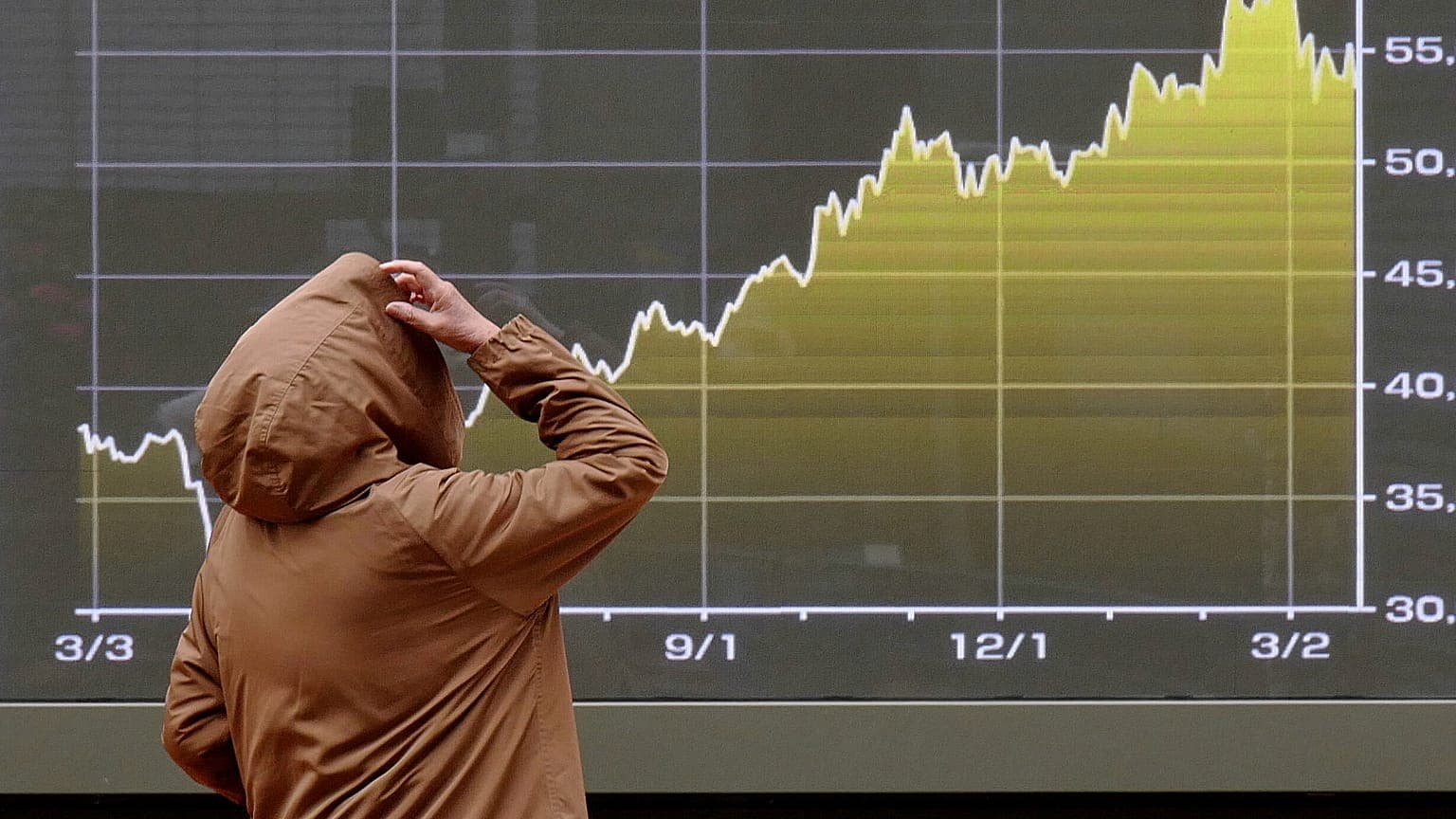
WTI crude oil surged 11.4% to $111.54 a barrel Monday as Asian equity markets staged a modest recovery, with investors parsing President Donald Trump's cryptic deadline directed at Iran and confronting the possibility that prices could climb to $200 a barrel if the Strait of Hormuz remains closed.
Japan's Nikkei 225 rose nearly 1.1% to 53,692.42 in morning trading, while South Korea's Kospi gained 1.5% to 5,460.24. Trading was shuttered in Australia for Easter and in Hong Kong and Shanghai for a traditional Chinese holiday, limiting the breadth of the rebound.
The gains offered a fragile respite from weeks of turbulence. South Korea's Kospi had plunged more than 5% in a single session on March 30, after Seoul entered the conflict directly for the first time, ultimately closing 2.97% lower at 5,277.3 that day. Japan's Nikkei 225 fell 2.79% to 51,885.85 in the same session. The MSCI gauge of emerging-market Asian equities shed 2.3% on April 2, the day after Trump gave a White House speech promising fresh strikes on Iran over the following two to three weeks.
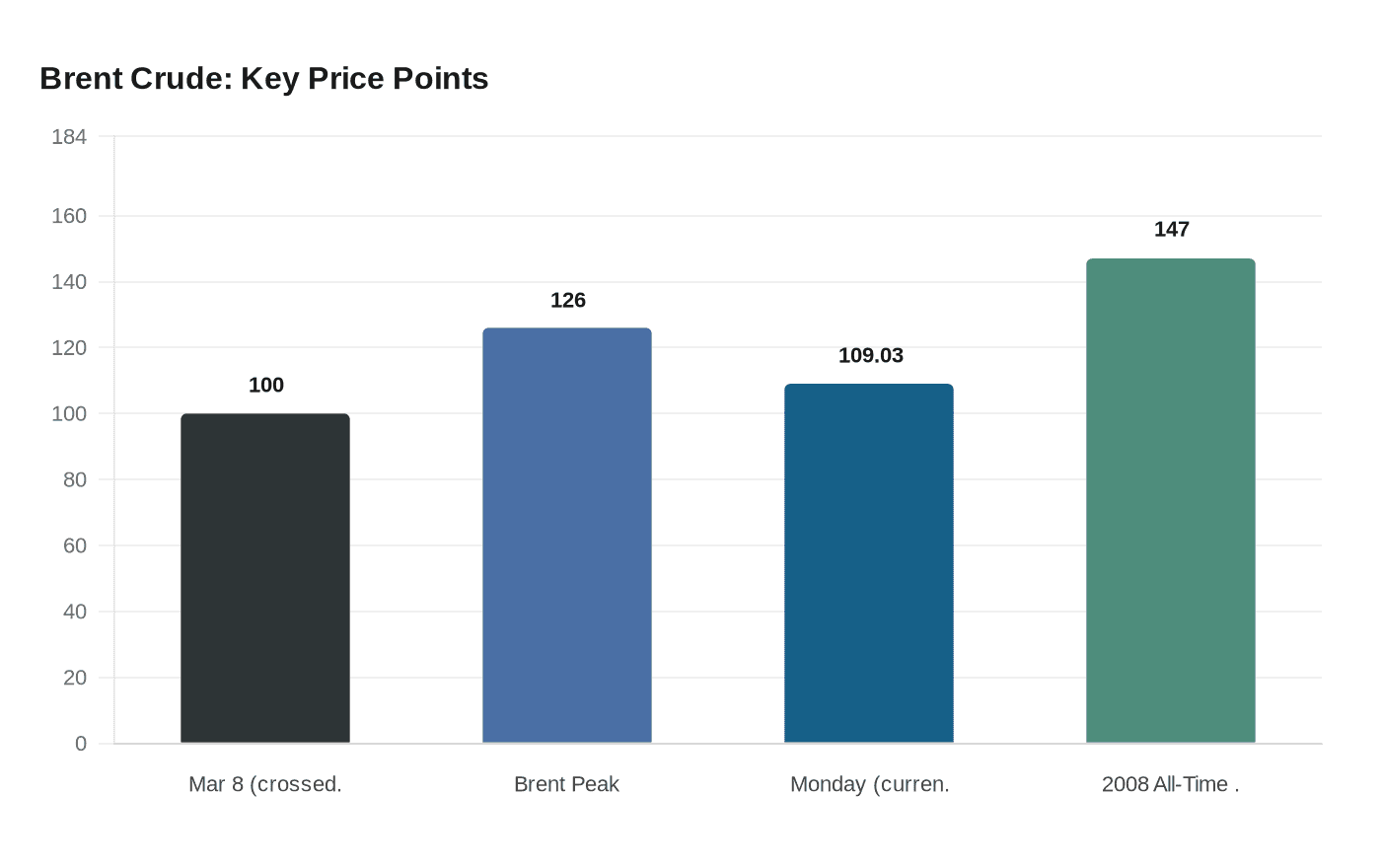
Oil has been the defining variable since the U.S. and Israel launched Operation Epic Fury on February 28, 2026. Brent crude jumped 7.8% to $109.03 per barrel Monday, extending a rally that has now pushed prices more than 25% above pre-war levels. Brent first crossed $100 per barrel on March 8, the first time in four years, before reaching a peak of $126 per barrel. The all-time record of $147 per barrel, set in July 2008, is no longer a distant reference point.
The Strait of Hormuz, the roughly 100-mile waterway between Iran and Oman, sits at the center of the crisis. Before the war, the strait carried approximately 20% of global oil supply, with about 80% of that volume destined for Asian markets. Iran's tanker attacks have effectively ended commercial shipping through the channel after insurers withdrew coverage. Some Asian nations have begun hoarding and rationing fuel, while parts of Africa are already experiencing supply disruptions. Oil executives have warned the strait must reopen by mid-April or more than 600 million barrels of supply will be at risk.
Goldman Sachs has modeled that a full one-month Hormuz closure could add roughly $10 per barrel even if governments release strategic petroleum reserves at two million barrels per day and fully utilize spare pipeline capacity. Oxford Economics has warned that if oil averages around $140 per barrel for two months, it would be sufficient to push parts of the global economy into a mild recession. Wall Street analysts and U.S. government officials are now actively stress-testing a scenario where prices reach $200 a barrel if the conflict deepens.
Against that backdrop, Trump's social media post announcing a "Tuesday 8 P.M. Eastern Time" deadline for Iran added another layer of uncertainty heading into the trading week. Trump separately vowed to bring "Hell" to Iran after U.S. forces rescued an American airman held inside the country. At the pump, the U.S. national average petrol price has already reached $3.41 per gallon, a figure likely to climb further as long as the Hormuz chokepoint stays effectively sealed.
This article was produced by Prism’s automated news system from verified source data, official records, and press releases, then run through automated quality and moderation checks before publishing. The system is built and supervised by the people who set the standards it runs under. Read our full AI policy.
Did this article answer your question?