Asian Stocks Diverge as Country Garden Hearing Fuels China Property Risk
Asian markets opened 2026 with a split mood as investor enthusiasm for AI-driven chip demand pushed technology shares higher while a high-profile hearing involving Country Garden in Hong Kong spotlighted lingering stress in China’s property sector. The contrast in monetary and fiscal direction across the region, growth-focused moves in China and India versus inflation-fighting stances elsewhere, will shape market leadership and cross-border capital flows this year.

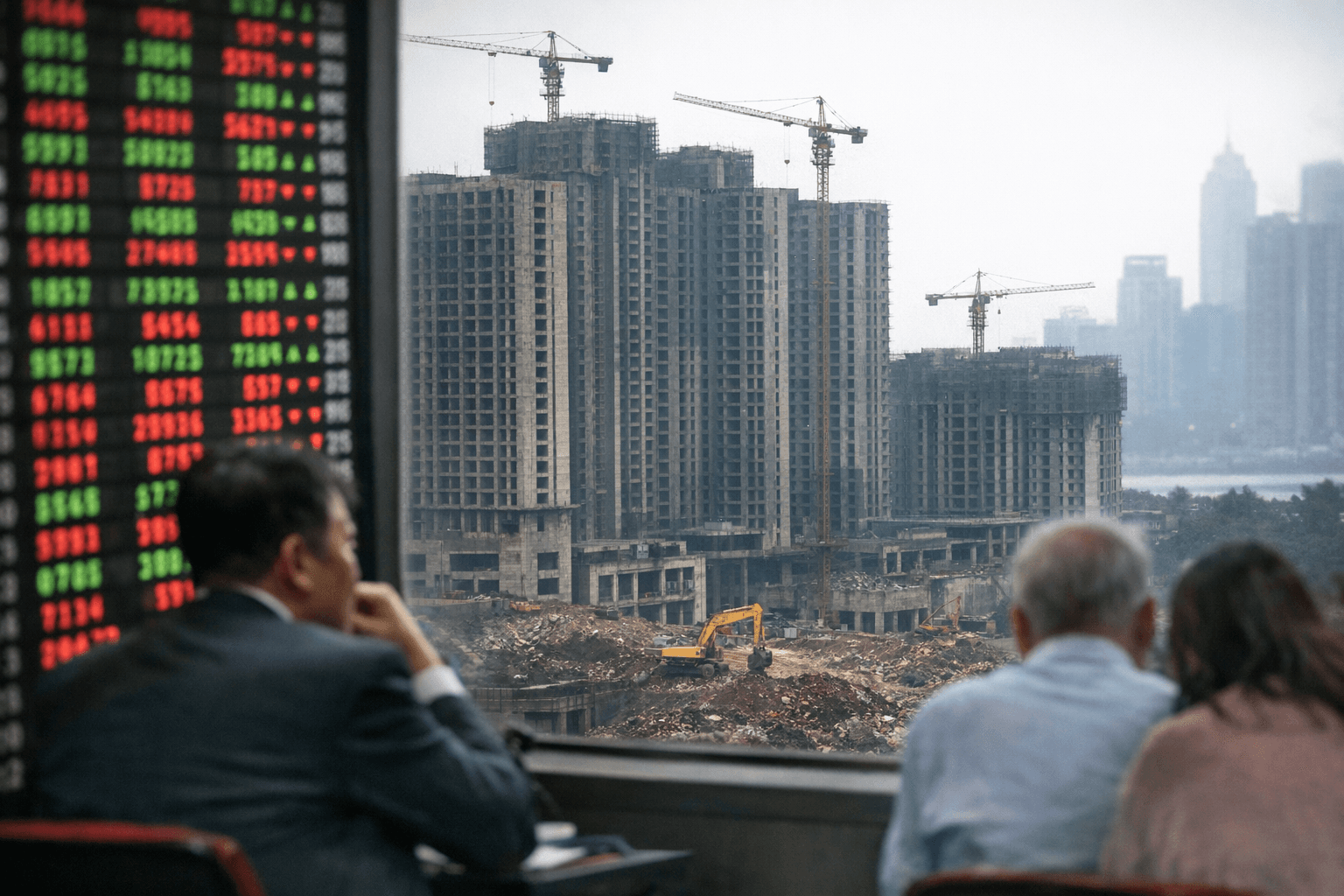
Markets across Asia registered a patchwork of gains and losses on January 4 as traders balanced renewed optimism about artificial intelligence with fresh concerns over Chinese real estate. Technology and semiconductor names led pockets of strength amid expectations of rising AI chip demand, while Hong Kong-listed property and credit-sensitive stocks underperformed after a notable court hearing involving Country Garden intensified scrutiny of developers' liquidity.
Investors bid up shares tied to AI supply chains, extending a rally that began late last year as companies and cloud providers accelerated chip purchases for generative AI and large-scale model training. Industry watchers point to double-digit year-on-year growth expectations for AI-related chip orders this calendar year, underpinning higher capital expenditure plans among leading manufacturers and supporting equity valuations in the sector. The narrowness of the advance, however, was evident: tech-heavy indices outpaced broader benchmarks, but gains were uneven across sectors and markets.
The hearing in Hong Kong involving Country Garden drew outsized attention because of the firm's size and the systemic implications of continued distress in China's property market. Trading in Hong Kong-listed developers and related credit instruments showed elevated volatility, and market participants said spreads on dollar and renminbi quasi-sovereign credits widened versus the previous session. The episode underscored that while headline macro stabilization has returned to parts of the Chinese economy, company-specific solvency issues remain a key transmission channel for broader financial risk.
Policy divergence across Asia added another layer of complexity. Beijing and New Delhi have signaled a tilt toward growth support for 2026, with regulators in China emphasizing targeted fiscal measures and India continuing to prioritize industrial investment and infrastructure spending. By contrast, central banks in several Southeast Asian economies and in other advanced Asian jurisdictions kept policy oriented toward taming inflation, maintaining restrictive bias that limits the scope for synchronized rate cuts. This split is already visible in yield and currency moves, as capital seeks higher real returns while growth-sensitive assets chase technology-led earnings upgrades.
The market mix has practical implications for portfolio allocation and regional capital flows. Risk-on momentum centered on AI could boost flows into Taiwan and South Korea where chip manufacturing is concentrated, while persistent property stress and credit repricing in China may deter incremental foreign inflows into onshore credit markets. For banks and non-bank lenders exposed to developers, the combination of localized defaults and tighter funding conditions could compress lending margins and prompt more conservative credit allocations.
Looking further ahead, the interplay between AI-driven demand and structural real estate adjustment will influence Asia’s growth composition. If chip-driven investment delivers sustained productivity gains, some economies may offset slower property investment; if property-sector contagion deepens, it could sap domestic demand and tighten financial conditions more broadly. For now, markets are navigating both narratives simultaneously: pricing in a near-term technology cycle while remaining sensitive to episodic credit stress in China’s still-evolving property restructuring.
This article was produced by Prism’s automated news system from verified source data, official records, and press releases, then run through automated quality and moderation checks before publishing. The system is built and supervised by the people who set the standards it runs under. Read our full AI policy.
Did this article answer your question?