Assailant sprays Rep. Ilhan Omar at Minneapolis town hall
A man rushed the stage at Rep. Ilhan Omar’s Minneapolis town hall and sprayed an unknown liquid; security and attendees subdued him, prompting a security review.
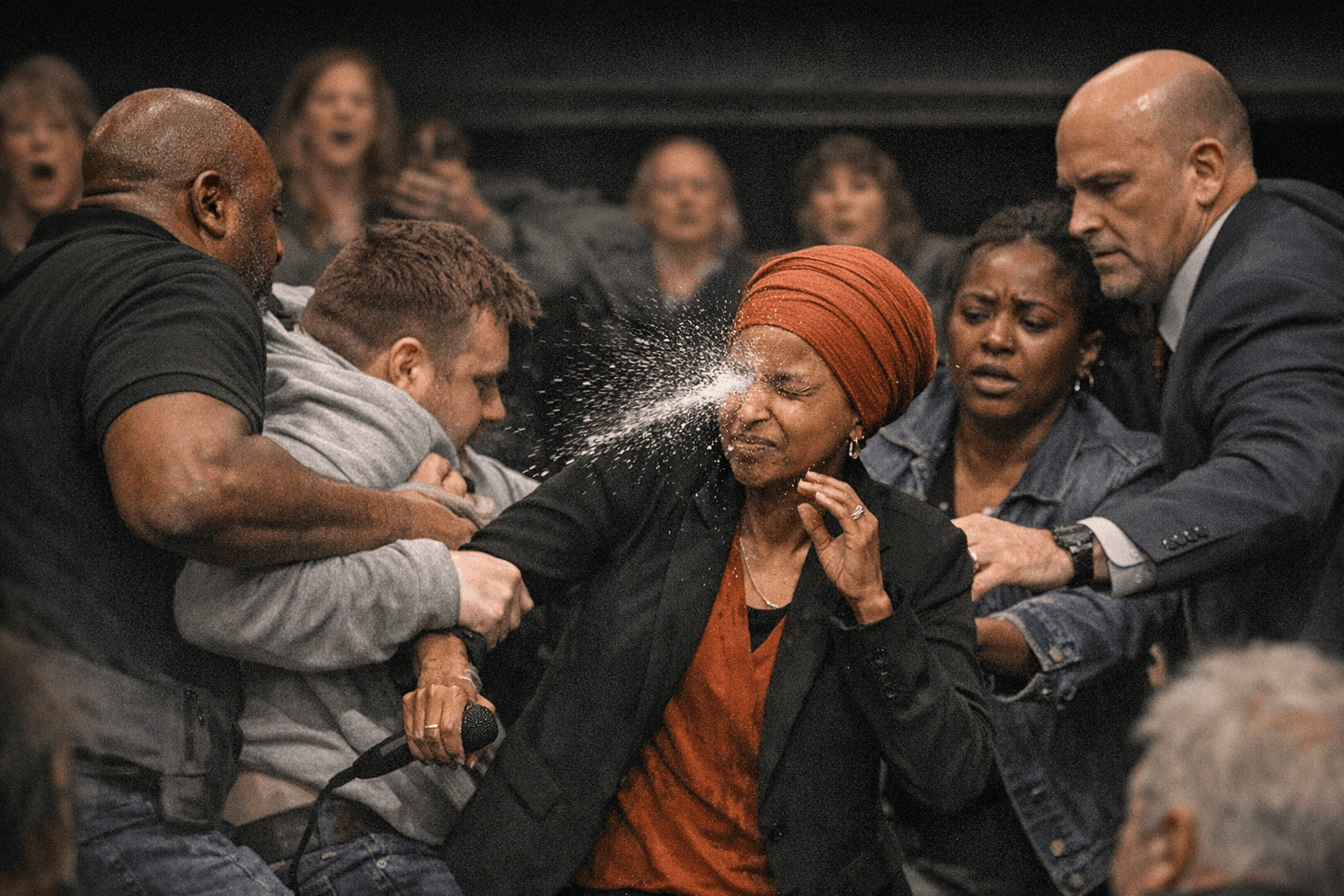
A man rushed the stage during Rep. Ilhan Omar’s town hall in Minneapolis and sprayed an unknown liquid at the congresswoman while she was urging the abolishment of ICE and calling for Homeland Security Secretary Kristi Noem to resign. Security staff and attendees immediately subdued the suspect and removed him from the venue, and local authorities opened an investigation into the incident.
The attack interrupted a public meeting designed for constituent engagement at a moment when Omar was addressing immigration policy and national accountability. Officials at the event described the substance as unidentified; investigators are working to determine its composition and whether it posed a health risk. It was not immediately clear whether the congresswoman or others sustained serious injuries.
The incident crystallizes longstanding tensions between lawmakers’ duty to hold open public forums and the need to ensure personal safety. Town halls are a traditional venue for direct voter contact, but physical confrontations have prompted lawmakers and security officials to reassess protection protocols. For members of Congress who are frequent targets of threats, particularly those from minority communities or outspoken on polarizing issues, the balance between access and safety has become an acute operational challenge.
Institutionally, congressional security falls under multiple authorities, including the House sergeant at arms and federal and local law enforcement partners. The event in Minneapolis will likely trigger reviews of on-site security arrangements for members’ public appearances, including screening procedures, placement of security personnel, and coordination with local police. Such reviews often lead to increased visible protection at events, which can alter the tone and accessibility of public engagement.
The political implications extend beyond immediate safety concerns. Omar’s call to abolish Immigration and Customs Enforcement ties into broader national debates that drive voter mobilization and partisan alignment. An assault at a policy-focused town hall can harden supporters and opponents alike, shaping turnout and messaging in upcoming municipal and federal contests. It may also deepen fears among constituents reluctant to attend public meetings, particularly within communities that already feel marginalized or targeted.
Civic engagement advocates warn that violent or threatening acts at public forums risk chilling participation by both elected officials and the public. If constituents perceive town halls as unsafe, the very mechanism meant to strengthen democratic accountability can be weakened. Conversely, violent episodes sometimes spur higher engagement from supporters and opponents, reinforcing polarized turnout patterns that shape local and national elections.
Local authorities said they would continue the investigation and assess potential charges. Separately, congressional security offices typically examine any breach to refine guidance for members and staff. For now, the incident has underscored persistent vulnerabilities in how elected officials engage directly with voters, and it raises pressing questions about preserving open democratic interaction while ensuring the safety of public servants and the public they serve.
This article was produced by Prism’s automated news system from verified source data, official records, and press releases, then run through automated quality and moderation checks before publishing. The system is built and supervised by the people who set the standards it runs under. Read our full AI policy.
Did this article answer your question?

