Association of Avian Veterinarians Offers Downloadable Vet-Authored Parrot Care Brochures
The Association of Avian Veterinarians offers veterinarian-authored, downloadable parrot and pet-bird care brochures, giving owners vetted guidance on health, training, enrichment, and emergency care.
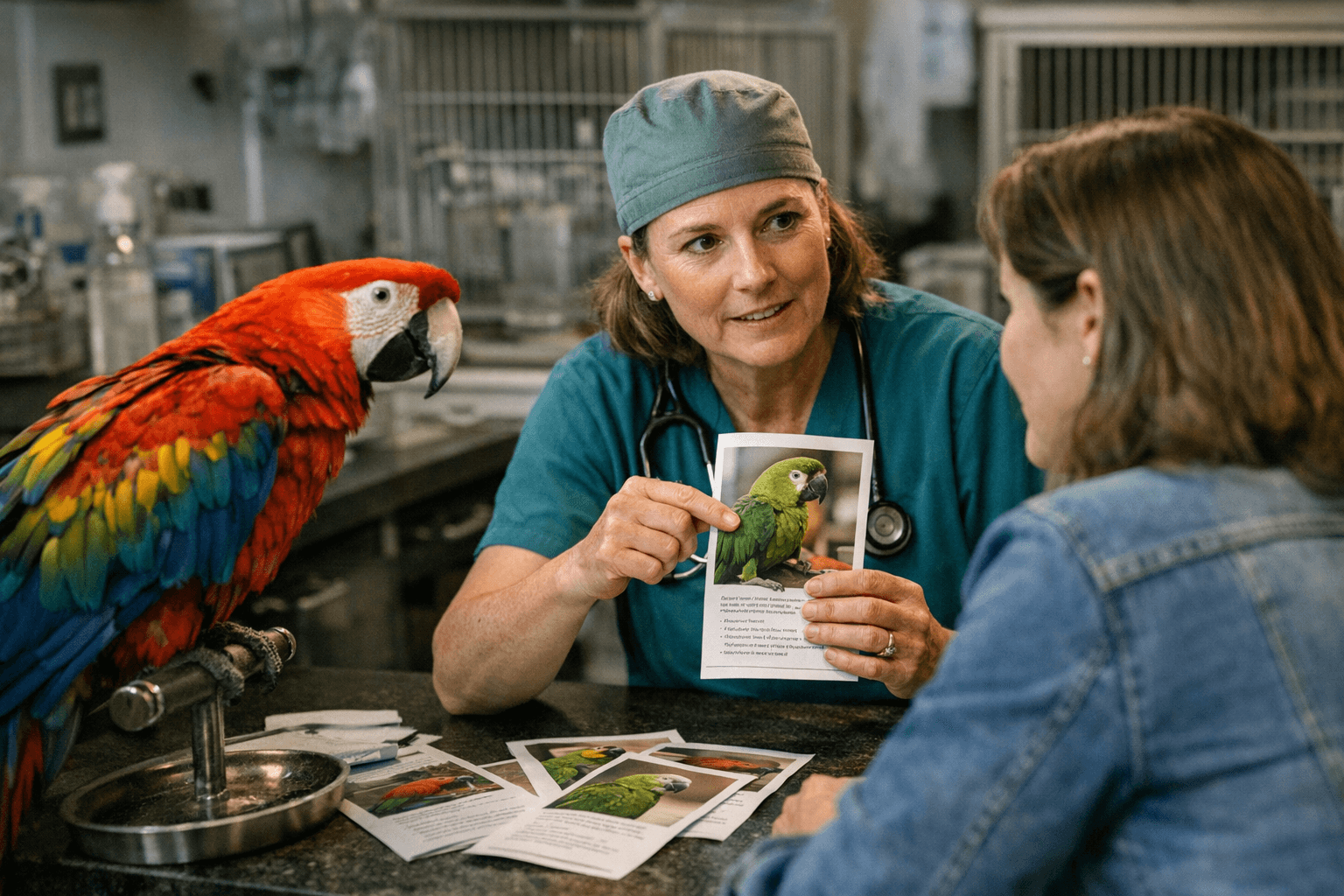
The Association of Avian Veterinarians (AAV) maintains a downloadable, veterinarian-authored Bird Owner Resource Brochure Series that compiles practical care topics for parrots and other companion birds. The materials cover everything from basic husbandry and nutrition to behavior, emergency care, zoonotic risks and species-specific topics, making expert-backed advice more accessible for bird owners and caregivers.
Titles explicitly named across reposts of AAV content include Avian Chlamydiosis and Psittacosis; Veterinary Care for Your Pet Bird; Basic Care for Companion Birds; Behavior: Normal and Abnormal; Digital Scales; Feather Loss; Feeding Birds; Injury Prevention and Emergency Care; Managing Chronic Egg-laying in Your Pet Bird; Signs of Illness in Companion Birds; Ultraviolet Lighting for Companion Birds; When Should I Take My Bird to a Veterinarian?; Transitioning Pet Parrots Away from a Seed Diet; and Weaning Baby Parrots. Additional items appearing on clinic reposts include Caring for Backyard Chickens, Zoonotic Diseases in Backyard Poultry, Caring for Ducks, and Foraging for Parrots. Clinic lists vary slightly, so the union of titles across sources provides the broadest view of topics available.
The brochures include hands-on guidance. On training, AAV states: "When done properly, training can be a very rewarding experience for both owners and their birds. Many of our companion birds are extremely intelligent and training is a chance for them to exercise their minds as well as their bodies. The AAV strongly recommends reward-based training methods over forced or punishment-based training methods; forcing birds to do things and punishing birds for undesired behaviors are harmful to the human-bird bond and will cause fear and aggression in our companion birds." Foraging and enrichment guidance offers stepwise examples of increasing difficulty, such as covering a food dish with a small piece of paper so the bird must move it to reach food: "Try covering the bird’s food dish with an easily moveable barrier (e.g. a small piece of paper). All the bird has to do is pick it up, or flap a wing, to move it out of the way. Once the bird is successful with moving the paper or getting the food around it, you can try adding another piece of paper to the food dish so" (excerpt truncated).
The AAV also supports avian access to veterinary care; its site offers a Find-a-Vet tool to locate avian veterinarians worldwide. Clinics reposting AAV content encourage owners to ask their veterinarian for printed copies of AAV client education brochures. The materials are described as downloadable and some are available in languages beyond English: "Available in multiple languages. All others are available in English only at this time." Readers are urged to "Scan to view these handouts and more on AAV’s Bird Owner Resources page!"
AAV’s organizational details appear with a copyright and mailing address: © 2019 Association of Avian Veterinarians 1802 Antioch Church Road, Watkinsville, GA 30677. Follow-up actions are straightforward: ask your veterinarian for printed handouts, use AAV’s Find-a-Vet tool to locate an avian practitioner, and review brochures on training, foraging enrichment, emergency care and zoonotic disease before trying new protocols. These vet-authored handouts put practical, clinic-vetted advice in the hands of bird owners and make it easier to keep parrots healthy, mentally stimulated and safe.
Know something we missed? Have a correction or additional information?
Submit a Tip