Astronaut Mike Fincke's Mystery Medical Event Triggered First ISS Evacuation
Mike Fincke lost the ability to speak 250 miles above Earth. After the first ISS medical evacuation in 65 years of spaceflight, doctors still cannot say why.
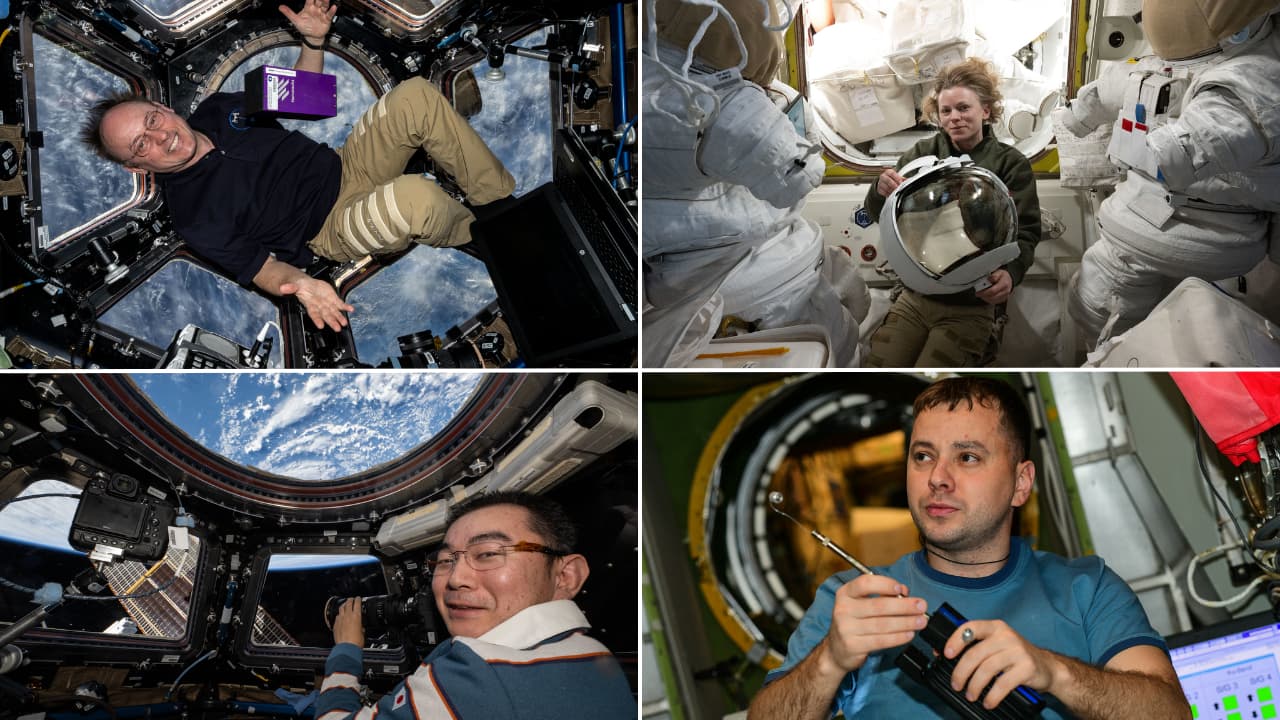
One moment Mike Fincke was a crew member aboard the International Space Station. The next, he could not speak.
The 58-year-old NASA astronaut said the event struck on January 7, five and a half months into the Crew-11 mission, while the ISS traveled at 17,500 miles per hour some 250 miles above Earth. His crewmates saw he was distressed and acted immediately. "It was all hands on deck within just a matter of seconds," Fincke said, describing how his teammates requested help from flight surgeons back in Houston. Within eight days, all four crew members were in the Pacific Ocean.
What exactly caused the episode remains unresolved. Doctors ruled out choking and a heart attack, but after a gauntlet of tests since returning to Earth, no singular cause has been identified. "I've been very lucky to be super healthy," Fincke told the Associated Press. "So this was very surprising for everyone."
In a statement published by NASA, Fincke broke the agency's silence about which astronaut had fallen ill. NASA had declined to disclose that information, citing medical privacy, before Fincke identified himself and described the incident plainly: "On Jan. 7, while aboard the International Space Station, I experienced a medical event that required immediate attention from my incredible teammates." He said he is "doing very well" and is still undergoing "post-flight reconditioning."
The evacuation that followed was the first in 65 years of human spaceflight. Fincke, along with NASA astronaut Zena Cardman, Japanese astronaut Kimiya Yui and Russian cosmonaut Oleg Platonov, boarded their SpaceX Crew Dragon and splashed down in the Pacific Ocean on January 15. They were immediately transported by helicopter to Scripps Memorial Hospital La Jolla, near San Diego. It was a dramatic conclusion to a mission that had launched in August with a planned duration of at least six months, now cut short by roughly one month.
The early warning had been subtle. A scheduled spacewalk by Fincke and Cardman was called off at the last minute; hours later, NASA revealed a crew member had become ill. Officials described the situation as stable, but decided to cut the mission short so Fincke could access advanced diagnostics and treatment unavailable in orbit.
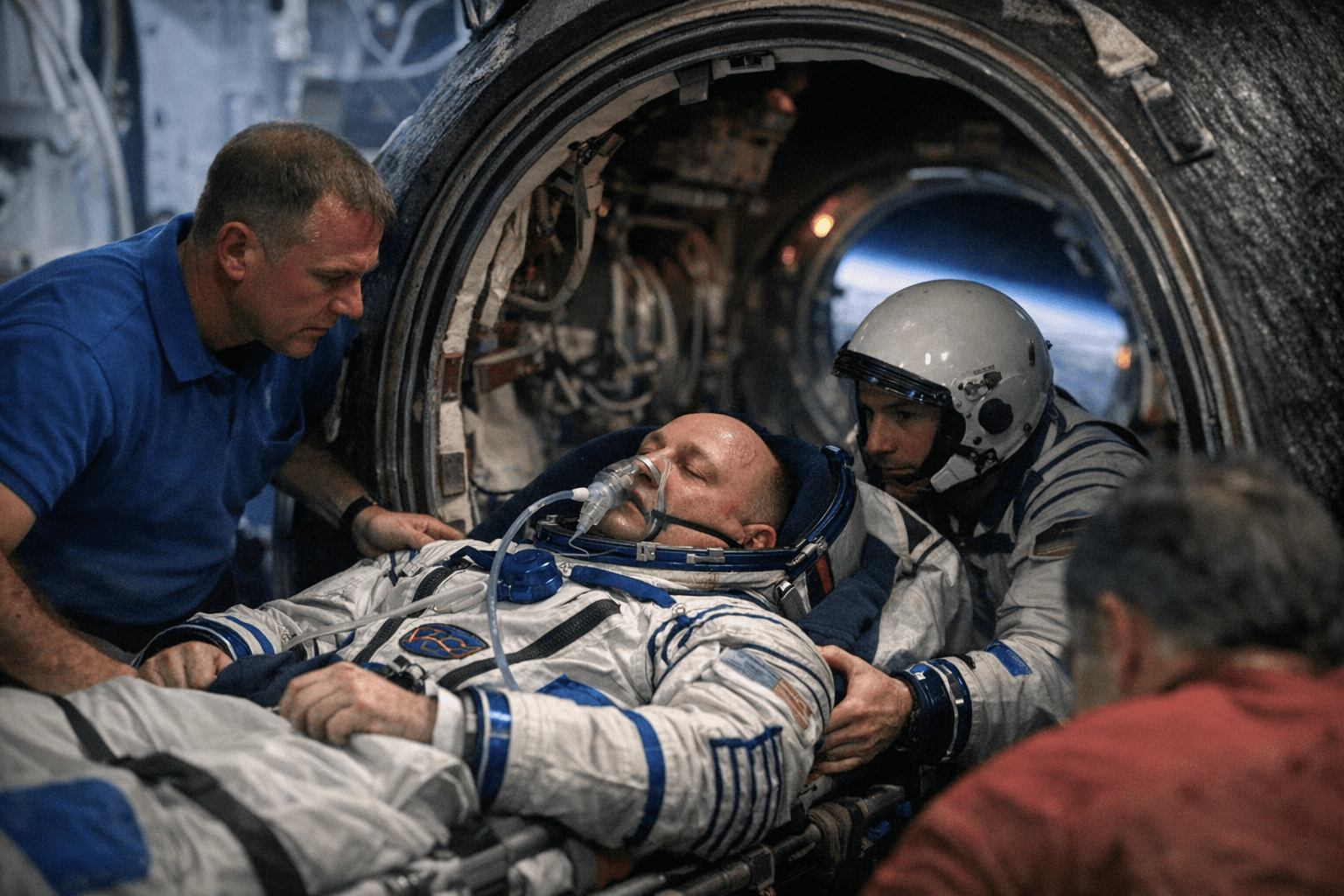
That limitation is central to understanding why NASA acted as it did. The ISS carries some medical equipment and astronauts receive training for minor medical issues, but no physician is on board. Completing 16 orbits of Earth each day at 250 miles of altitude, the station offers no path to a hospital that does not require deorbiting an entire spacecraft and days of travel. The decision to bring all four crew members home suggests the agency judged an eight-day return safer than attempting to diagnose Fincke in space, and raises harder questions about what would happen if a crew member suffered a more catastrophic emergency.
The evacuation left the ISS with a skeleton crew of three: NASA astronaut Chris Williams and cosmonauts Kud-Sverchkov and Sergei Mikaev. NASA paused spacewalks and trimmed scientific research until a replacement crew arrived and a subsequent SpaceX mission restored the station to full capacity.
Researchers consider one possibility particularly intriguing: the event may be connected to Fincke's prolonged exposure to microgravity over five and a half months. Scientists have documented spaceflight effects ranging from bone density loss to deteriorating vision, but how an inability to speak would fit into that body of research remains unclear. Fincke has accumulated 549 total days in space across his career and told the AP he still hopes to return.
NASA has not publicly detailed the full scope of testing Fincke underwent at Scripps, nor what conditions beyond choking and heart attack were ruled out. The agency's limited disclosures, justified on medical privacy grounds, leave a troubling gap for an institution whose long-duration exploration planning depends on understanding exactly what incapacitated one of its most experienced astronauts on January 7. With missions to the Moon and Mars on the horizon, the gap between what can go wrong in deep space and what medicine can currently diagnose or treat remotely has never looked wider.
This article was produced by Prism’s automated news system from verified source data, official records, and press releases, then run through automated quality and moderation checks before publishing. The system is built and supervised by the people who set the standards it runs under. Read our full AI policy.
Did this article answer your question?

