Astronauts Lose Track of Earth Days During Transit to the Moon
Aboard the Orion spacecraft on day four of the Artemis II lunar mission, the crew admitted they had lost track of what day it is back on Earth.
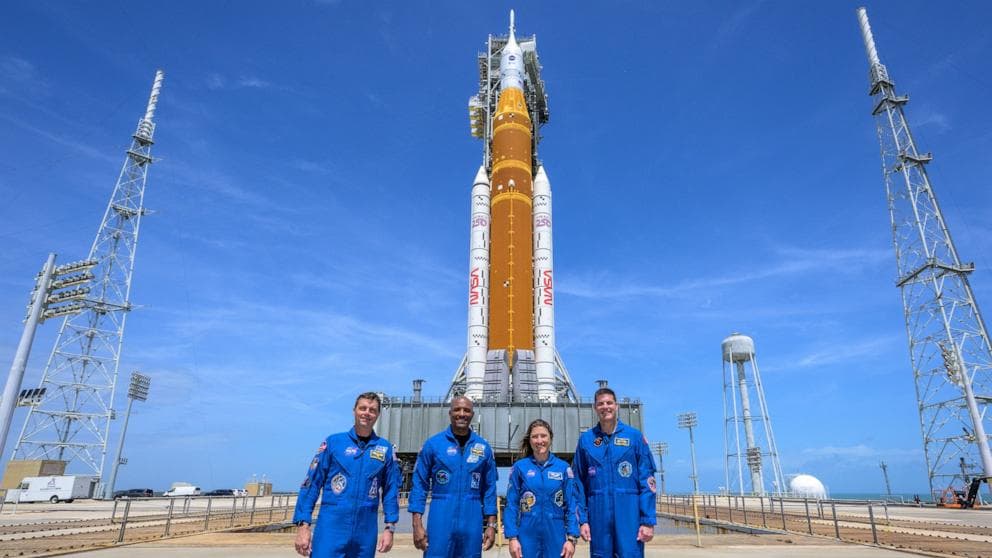
Four days into humanity's first crewed journey beyond low Earth orbit since 1972, the Artemis II astronauts confessed to something that will resonate with anyone who has ever lost themselves in extraordinary circumstance: they had lost track of which day it is back on Earth.
Commander Reid Wiseman, Pilot Victor Glover, and Mission Specialists Christina Koch and Jeremy Hansen are currently crossing the void between Earth and the Moon aboard NASA's Orion spacecraft, with the lunar sphere of influence expected to envelop them on April 5. The admission came as the crew pressed deeper into transit, with the Moon's gravity set to exert more force on the spacecraft than Earth's for the first time since the mission's April 1 liftoff from Kennedy Space Center's Launch Pad 39B.
The disorientation is perhaps unsurprising. The crew launched at 6:35 p.m. EDT on Wednesday, spent their first day running systems checks in high Earth orbit, then fired Orion's main engine for five minutes and 50 seconds on the evening of April 2, completing the translunar injection burn that broke them free of Earth's orbit entirely. Since then, each flight day has been governed by NASA mission timelines rather than the rhythms of sunrise and sunset that anchor most people to the calendar.
Koch and Wiseman were photographed on Saturday peering out of Orion's cabin windows, Earth visible behind them at a growing remove. The crew has spent the transit period exercising, practicing medical response procedures, and testing the spacecraft's emergency communications system in deep space.

The mission, the first crewed test flight under NASA's Artemis program, will take Wiseman, Glover, Koch, and Hansen on a 685,000-mile loop around the Moon before returning them to Earth. The lunar flyby is scheduled for April 6, when Orion will pass as close as 8,000 kilometers from the Moon's surface before beginning the long arc back. Splashdown in the Pacific Ocean is planned for April 10.
Hansen, a Canadian Space Agency astronaut and the lone spaceflight rookie on the crew, became the first Canadian to travel beyond low Earth orbit when the translunar injection burn completed. For all four, the mission represents the farthest any humans have traveled from Earth in more than half a century. With the Moon's gravity beginning to claim their spacecraft on Sunday, the question of what day it is back home will, for now, remain someone else's concern.
This article was produced by Prism’s automated news system from verified source data, official records, and press releases, then run through automated quality and moderation checks before publishing. The system is built and supervised by the people who set the standards it runs under. Read our full AI policy.
Did this article answer your question?

