Asus ROG Falcata offers Hall-effect split convenience but stumbles on price, software
Asus's ROG Falcata is a split 75% gaming keyboard with Hall-effect adjustable actuation and an 8,000 Hz-capable wireless spec, but awkward hybrid wiring, fragmented software, and a $420 MSRP make it a niche buy.
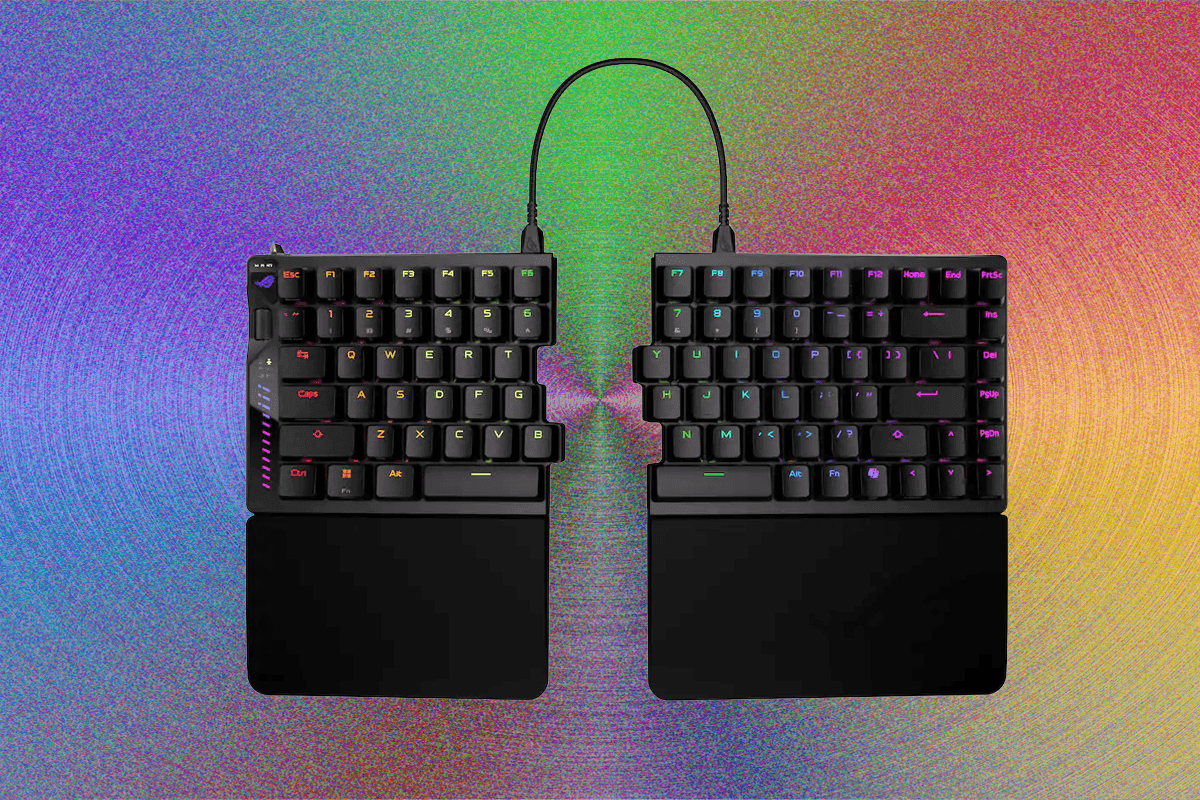
The ROG Falcata arrives as a curious blend of engineering ambition and compromise. On paper it checks many boxes power users and desk minimalists care about: Hall-effect adjustable actuation for contactless switches, Rapid Trigger features for low-latency input, an 8,000 Hz-capable polling spec for wireless, tenting and angle adjustments, two wrist rests, and a programmable wheel that gives you an extra layer of control without sacrificing the compact 75% footprint.
Hands-on feel is where the Falcata really shines. Stabilizers are excellent and the sound tuning lands a satisfying, polished profile that will appeal to people who obsess over stabs and acoustics. The split layout and the adjustable tenting make long typing sessions more comfortable and free up desk real estate in a way single-piece boards cannot. For work-from-home gamers who want a tidy setup and strong typing feel, those features will be the biggest draw.
But the design includes several odd choices that will matter to buyers. The keyboard is a hybrid: only the left half operates wirelessly while the right half remains wired. That split arrangement reduces cable clutter for one side of the desk but complicates portability and clean wireless setups. Cable routing and the ergonomics of a permanently tethered half are real considerations for anyone who moves their keyboard between rooms or wants a truly cable-free experience.
Software fragmentation compounds those hardware quirks. Asus is rolling out a new web-based Gear Link utility that is still in beta while legacy Armoury Crate support is uneven. That patchwork means key remaps, macros, lighting, and actuation tuning may require juggling tools or waiting for firmware and software updates. For a $420 MSRP board that is often discounted, the expectation of seamless software control is reasonable; the reality right now is inconsistent.

When you add the price to the equation, the Falcata looks like a specialist product. The combination of Hall-effect tuning and a tight split 75% layout is compelling for a subset of buyers - think ergonomic-minded streamers and WFH gamers who value desk space - but not a clear must-have for most. If you chase novel switch tech or crave a programmable wheel in a compact split, the Falcata offers something different. If software polish, pure wireless freedom, or outright value are top priorities, waiting for price drops and more mature firmware would be prudent.
For now this is a split decision: clever hardware and a superb typing feel meet awkward engineering trade-offs and software growing pains. Watch for discounts and software updates before pulling the trigger, or budget the cost as part of a niche build that prioritizes actuation flexibility and desk real estate over plug-and-play simplicity.
Know something we missed? Have a correction or additional information?
Submit a Tip