At least 15 migrants found dead after boat capsizes off Libya coast
Bodies, including a girl, washed up near Tobruk after a boat carrying about 61 people capsized, underscoring how deadly the central Mediterranean route remains.
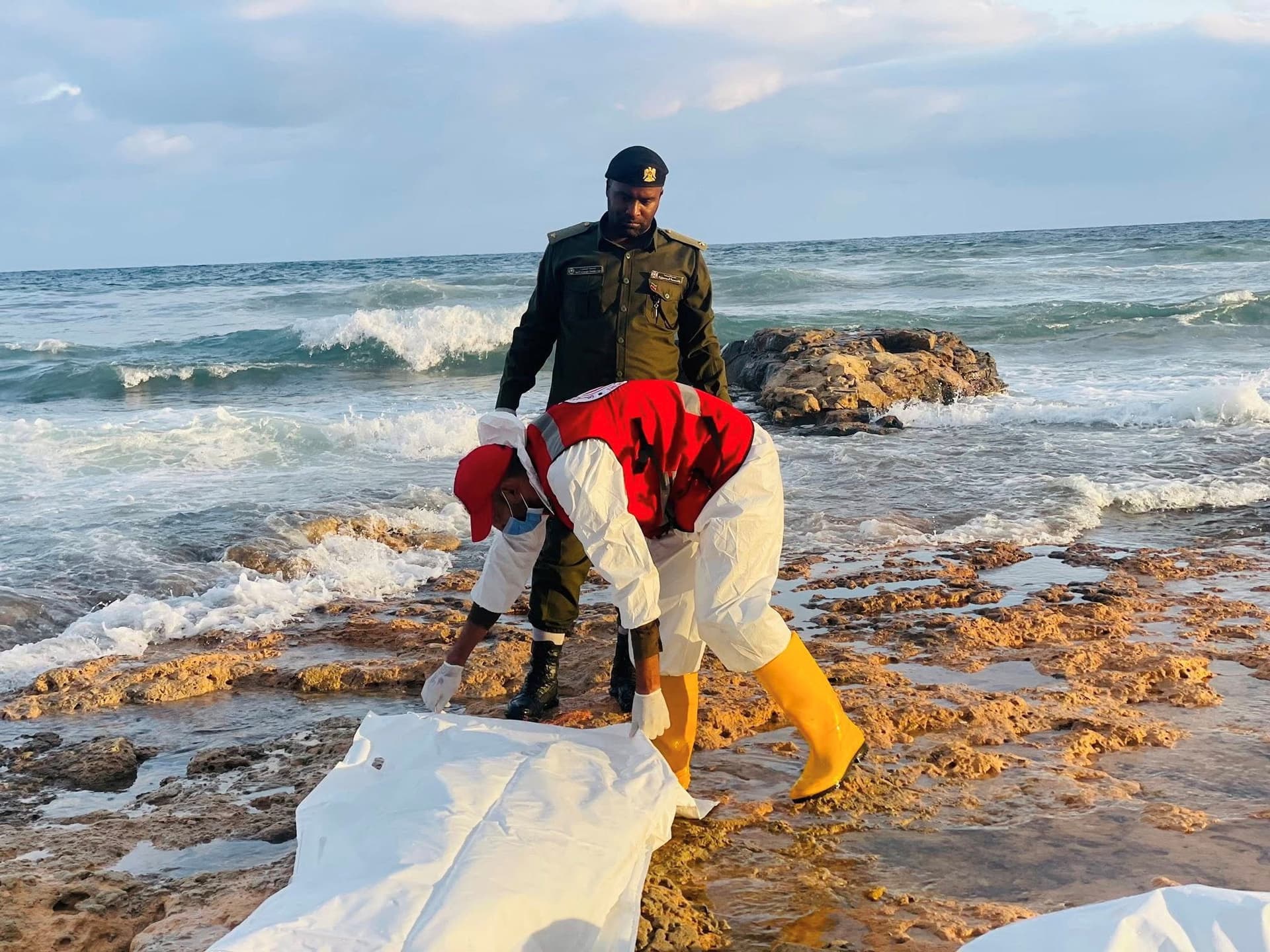
At least 15 migrant bodies, including that of a girl, washed ashore along Libya’s eastern Mediterranean coast after a boat was believed to have capsized, adding another grim toll to the central Mediterranean route. Security, navy and medical sources said the vessel had been carrying about 61 people based on the accounts of 10 survivors, while teams recovered remains from several points near Tobruk, close to the Egyptian border.
The bodies were badly decomposed, two security officials said, raising fears that more victims could still be found in the water and along the rocky shoreline. Images from the Tobruk Red Crescent showed volunteers in protective hazmat suits pulling bodies from the coast and placing them in white plastic bags, a stark sign of how long the dead may have spent at sea before recovery.
The recovery near Tobruk was not an isolated episode. The Emergency Medicine and Support Center in Khumas treated 13 migrants after a separate boat capsized off the coast, pointing to multiple shipwrecks in the same stretch of water and reinforcing how quickly journeys can turn fatal once boats leave Libya’s shores.
Libya remains a major transit point for people fleeing conflict and poverty, but it is also a destination for migrants drawn by work in the country’s oil-dependent economy. Since Muammar Qaddafi was overthrown in 2011, the country has fragmented, leaving maritime routes exposed to smuggling networks, weak coastal protection and chaotic crossings that continue to claim lives.

The International Organization for Migration’s Missing Migrants Project says the Mediterranean has recorded 35,002 deaths since 2014, and that figure is only a minimum because many deaths go unrecorded. The latest incident in its Mediterranean data was entered on 16 June 2026. The agency also said the Central Mediterranean route had already logged 1,046 deaths and disappearances since the start of 2025, including 527 off Libya’s coast.
The scale of the crisis has accelerated in 2026. On 7 April, IOM said Mediterranean deaths were nearing 1,000 for the year and that about 765 people had died in the Central Mediterranean alone, more than 460 above the same period in 2025, an increase of over 150 percent. In a maritime update published on 9 May, IOM said 6,070 migrants had been intercepted and returned to Libya so far in 2026, and reiterated that Libya is not a safe port for migrants.
The latest deaths came after another deadly wreck in February, when a rubber boat carrying 55 people capsized north of Zuwara, leaving 53 migrants, including two babies, dead or missing. IOM said only two Nigerian women survived that disaster. Its January-February 2026 report estimated that 936,134 migrants were present in Libya, a reminder that the country remains both a waypoint and a trap on one of the world’s deadliest migration corridors.
This article was produced by Prism’s automated news system from verified source data, official records, and press releases, then run through automated quality and moderation checks before publishing. The system is built and supervised by the people who set the standards it runs under. Read our full AI policy.
Did this article answer your question?