At least 250 feared dead or missing after boat capsizes in Andaman Sea
More than 250 people are feared dead or missing after a trawler from Teknaf capsized en route to Malaysia, with only nine survivors found.
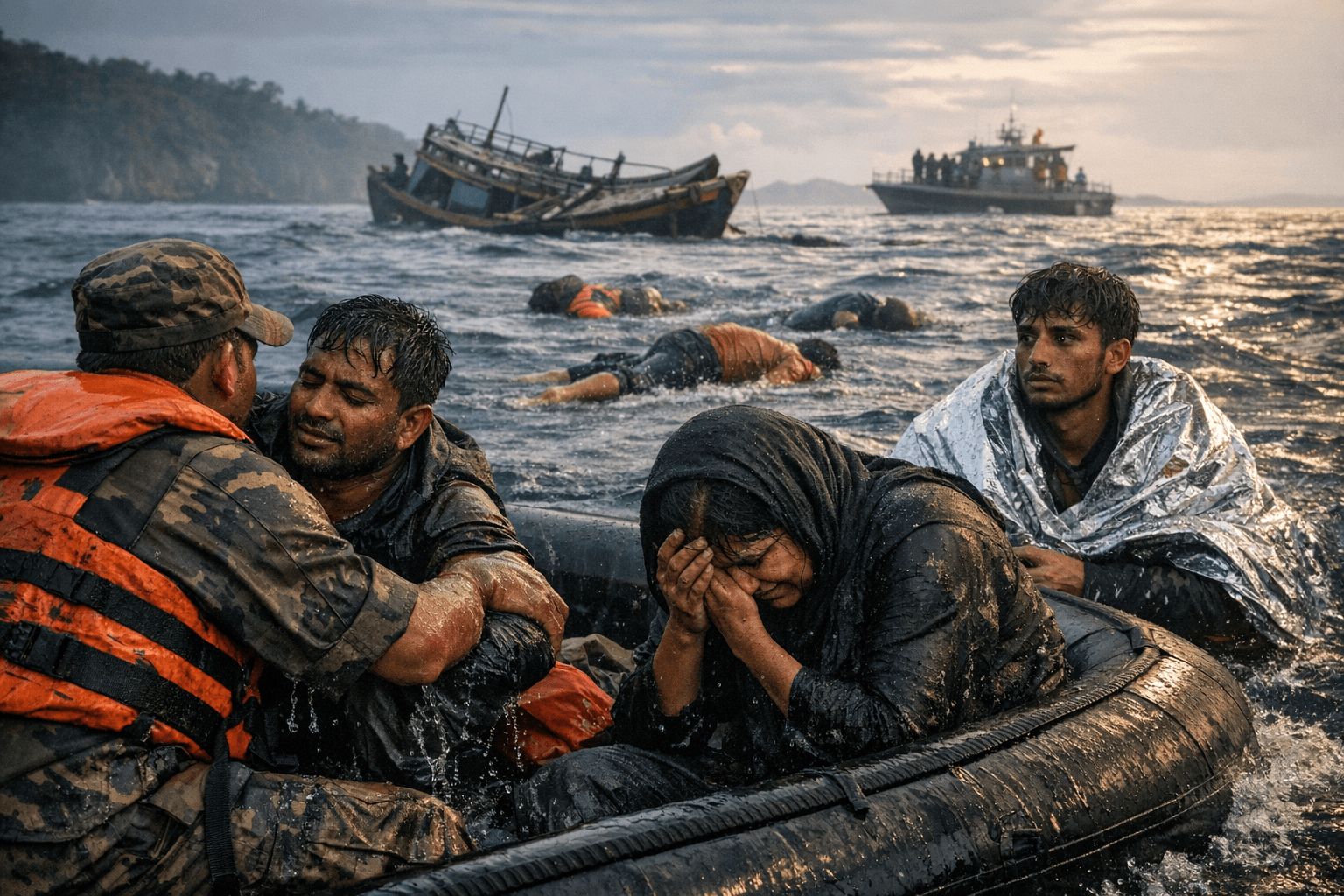
A journey that began in Teknaf ended in the Andaman Sea with more than 250 people feared dead or missing, exposing once again how the same illegal route keeps pulling Rohingya refugees and Bangladeshi migrants into a predictable catastrophe. The trawler was headed toward Malaysia when it reportedly sank on April 9 in heavy winds, rough seas and overcrowding, leaving just nine survivors, including three Rohingya and six Bangladeshis.
The Bangladesh Coast Guard said the survivors were rescued that day after the Bangladesh-flagged vessel M.T. Meghna Pride found them floating at sea. One AP and ABC account said the boat may have carried about 280 people when it left Bangladesh on April 4, and that the rescue happened near the Andaman Islands after crew members spotted people drifting on drums and logs. The scale of the missing suggests the vessel was carrying far more passengers than the first rescue tally revealed.
For Rohingya families in Cox’s Bazar and migrants from Bangladesh’s coast, the disaster fits a grim pattern. The International Organization for Migration and UNHCR said limited access to education and employment in refugee camps helps push people toward dangerous sea journeys, while trafficking networks sell false promises of work in Malaysia. One rescued Rohingya man said he was burned by spilled oil and that some passengers died in the boat’s holding area before it capsized, a stark illustration of how quickly these voyages turn lethal.
The episode also laid bare the gaps in regional accountability. The waters between Bangladesh, Myanmar, Thailand and Malaysia are crowded, but tracing migrant boats remains difficult and coordinated search efforts are often unclear once a distress case emerges. With information still limited about when the vessel sank and whether a broader search was underway, the disaster became another mass-disappearance event as much as a rescue operation.
The IOM said the tragedy reflected the “grave risks” of these journeys and urged stronger search-and-rescue efforts and more humanitarian funding for Rohingya refugees and host communities. It said more than 6,500 Rohingya refugees embarked on dangerous maritime journeys from Bangladesh and Myanmar in 2025, with over 890 deaths, and that deaths and disappearances in the Andaman Sea and Bay of Bengal rose from 598 in 2024 to 860 in 2025, an increase of more than 40 percent. In the absence of safe pathways, the route remains open, traffickers remain in business, and the death toll keeps climbing.
This article was produced by Prism’s automated news system from verified source data, official records, and press releases, then run through automated quality and moderation checks before publishing. The system is built and supervised by the people who set the standards it runs under. Read our full AI policy.
Did this article answer your question?


