At the Justice Department, the President's Revenge Agenda Outweighs Any Single Leader
Trump's firing of Pam Bondi reveals that no attorney general can survive by being merely loyal — only by delivering revenge fast enough.
The Impossible Job at the Top of DOJ
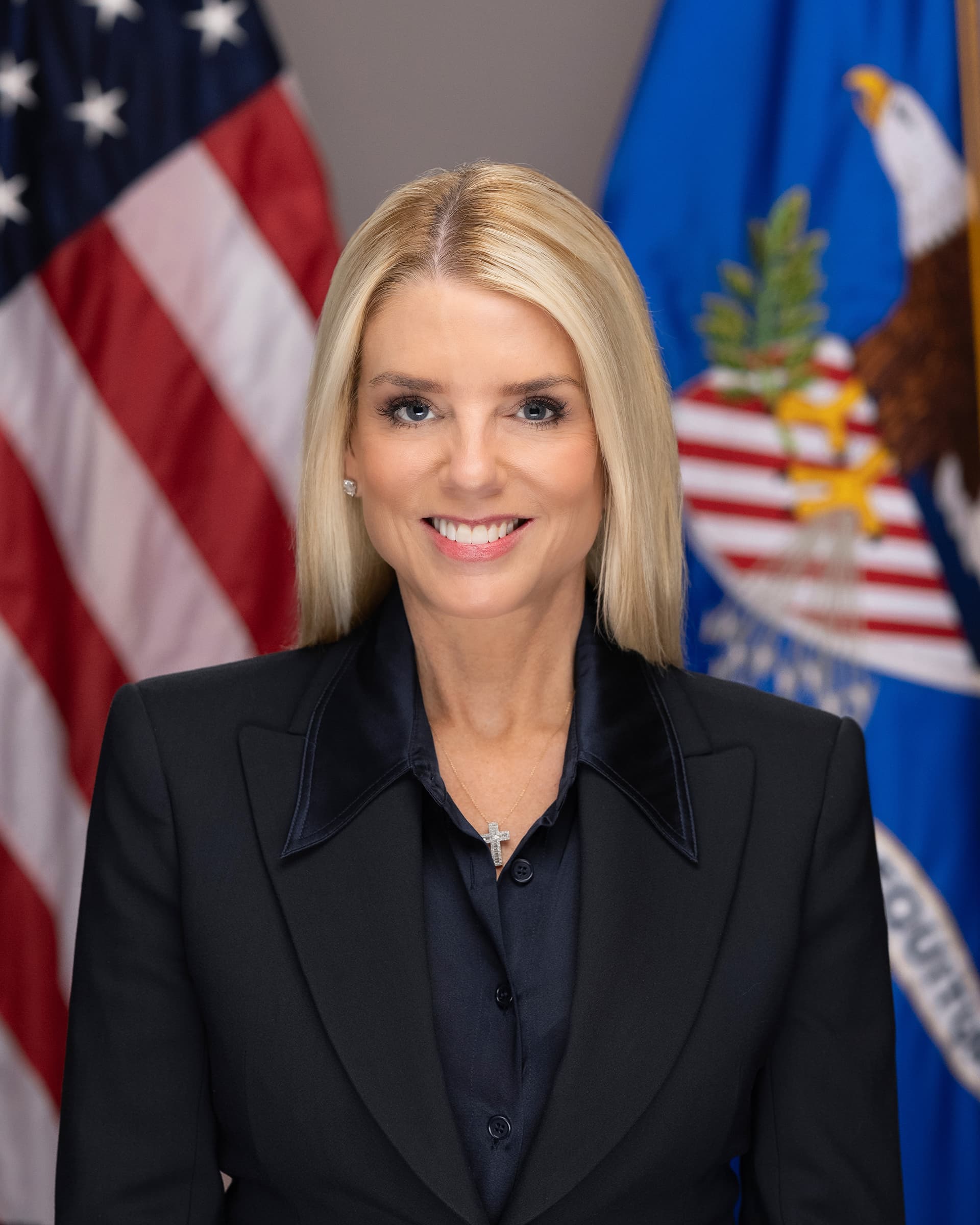
When Pam Bondi was sworn in as the 87th Attorney General of the United States, she entered one of the most consequential jobs in American government carrying an explicit understanding of what was being asked of her. President Donald Trump had made no secret of his desire to transform the Justice Department into an instrument of retribution against political enemies. Bondi, a former Florida attorney general who secured the post after former Rep. Matt Gaetz withdrew from consideration amid controversy, pledged on day one that she would not play politics with federal law enforcement. That pledge did not survive the first month.
What followed was a tenure defined not by any legal philosophy or institutional vision, but by the relentless gravitational pull of a president whose appetite for revenge has proven to be insatiable — and faster than any attorney general can satisfy. On April 2, 2026, Trump fired Bondi, ending her time at the department with a Truth Social post that read, "We love Pam, and she will be transitioning to a much needed and important new job in the private sector, to be announced at a date in the near future." The warm language masked what sources familiar with the matter confirmed was a firing, not a mutual departure.
How the Agenda Overwhelmed the Institution
From the moment Bondi assumed office, the Justice Department's independence as an institution gave way to the president's personal and political agenda. Bondi quickly launched investigations into Trump's perceived foes, drawing immediate criticism that the nation's premier law enforcement agency had been converted into a tool of political revenge. The turmoil was institutional as well as personnel-driven: in January 2025, the department fired more than a dozen officials who had worked on former Special Counsel Jack Smith's criminal investigations of Trump, including career prosecutors Molly Gaston, J.P. Cooney, Anne McNamara, and Mary Dohrmann — all terminated not for any professional misconduct, but for the cases they had been assigned.
Former U.S. Attorney Joyce Vance was direct in her assessment at the time: "Firing prosecutors because of cases they were assigned to work on is just unacceptable." The purge did not stop with prosecutors. FBI agents who had worked on Smith's investigation into Trump's efforts to overturn the 2020 election were also dismissed. Three of them — Jamie Garman, Blaire Toleman, and Michelle Ball — filed a federal lawsuit in Washington, D.C., alleging their terminations were unconstitutional acts of political retaliation. The retaliatory logic was not subtle: serve on a case that touched the president, lose your job.
The Limits of Obsequiousness
Despite carrying out these purges and bending the department's traditional prosecutorial independence to accommodate the president's wishes, Bondi still fell short. Trump grew increasingly frustrated with what sources described as her limited success in advancing his agenda at the pace he demanded. He had grown "more and more frustrated" with her in the days leading up to her dismissal, with insiders noting that while he liked her personally, he did not believe she was executing.
The scene of her dismissal was almost cinematic in its bluntness. According to reporting by The Wall Street Journal, Bondi rode with Trump in the presidential limousine on the way to the Supreme Court for oral arguments in the birthright citizenship case. Trump told her during the ride: "I think it's time." When Bondi asked whether she might stay on through the summer, he declined. The department she had shaped over more than a year — one characterized by critics as suffering its deepest institutional degradation in its 155-year history — was no longer hers to run.

One former Justice Department official, Stacey Young, who founded the group Justice Connection, offered a pointed summary of what Bondi's successor had already been doing at the department's number two position: Todd Blanche, she said, "has never stopped seeing himself as Donald Trump's personal lawyer," adding that "time and again he has shown that his guiding star is fealty to the president, not upholding the rule of law."
The Next Name on the Chart
With Bondi gone, Deputy Attorney General Todd Blanche stepped up as acting attorney general. His path to that position is itself a study in how the Trump orbit rewards loyalty. A former federal prosecutor turned defense attorney, Blanche had become one of Trump's most prominent personal lawyers during the president's criminal trials. Trump then nominated him to serve as deputy attorney general, the department's second-ranking official. In that role, Blanche appeared frequently on podcasts and at conferences defending politically charged DOJ investigations and the administration's handling of the Epstein files. Federal judges twice appointed interim U.S. attorneys to fill vacant posts, only to have Blanche intervene and place the administration's preferred candidates.
The search for a permanent replacement quickly centered on Lee Zeldin, the current head of the Environmental Protection Agency, whose name surfaced in early reporting as Trump's likely choice to formally lead the department.
A Pattern, Not an Aberration
Bondi's ouster is not an isolated episode. It rhymes with Trump's 2018 firing of Jeff Sessions, who was dismissed after recusing himself from the Russia investigation — a decision Trump viewed as an unforgivable act of independence. The recurring pattern is one in which attorneys general begin their tenures by accommodating the president's demands, discover that accommodation has no ceiling, and eventually fall short of satisfying it.
Bondi was one of just a handful of women to have served as attorney general, following Janet Reno under President Clinton and Loretta Lynch under President Obama. But her historical distinction did not insulate her from the same dynamic that has consumed her predecessors in the Trump era. A senior administration official, surveying the broader wave of firings that week, told reporters simply: "He's very angry, and he's going to be moving people."
The name on the Justice Department's organizational chart will change again. The underlying pressure driving every decision inside that building will not.
This article was produced by Prism’s automated news system from verified source data, official records, and press releases, then run through automated quality and moderation checks before publishing. The system is built and supervised by the people who set the standards it runs under. Read our full AI policy.
Did this article answer your question?

