Atlanta residents complain of Waymo traffic jams on dead-end street
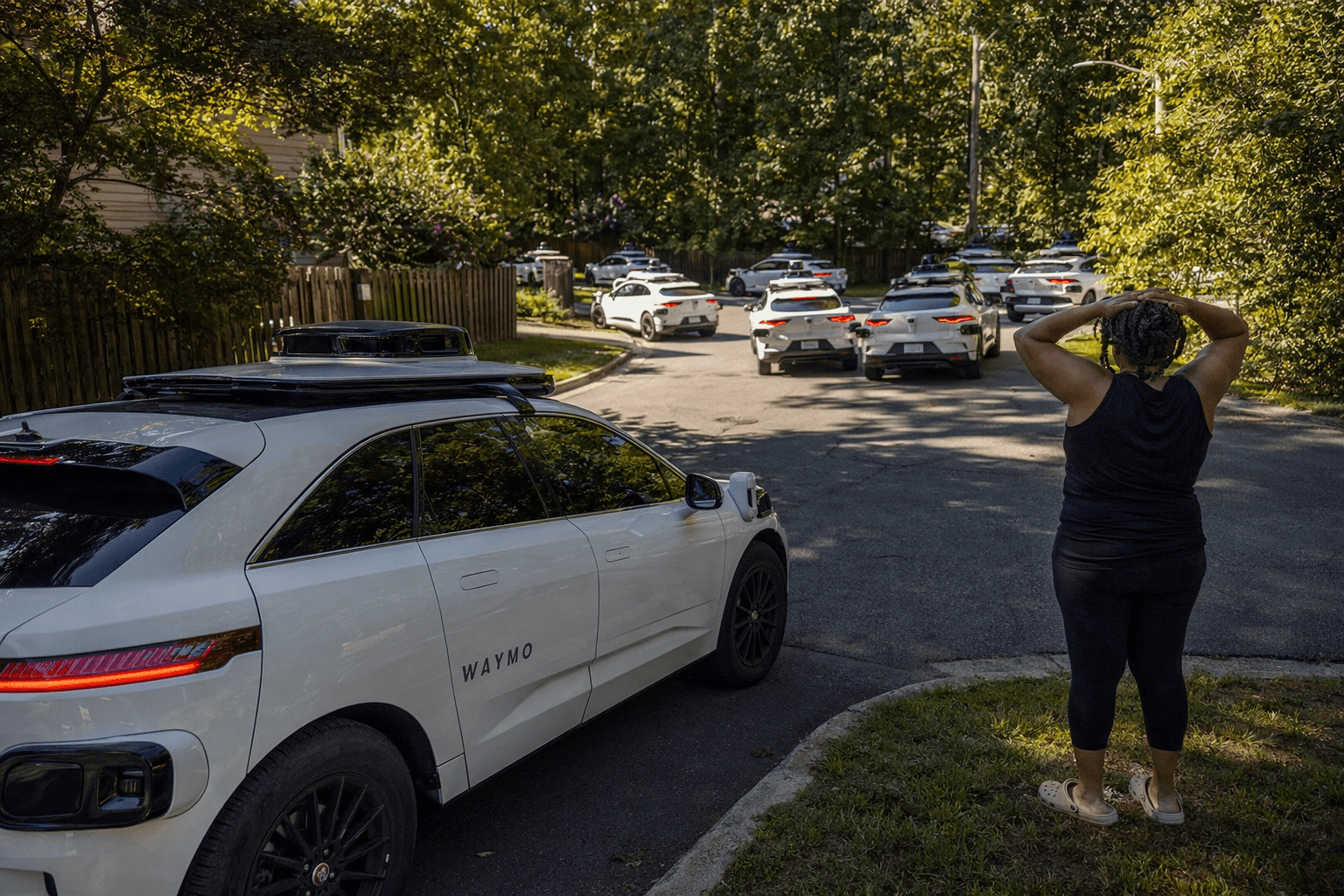
Empty Waymo SUVs kept looping a northwest Atlanta cul-de-sac, with one neighbor counting about 50 vehicles in an hour and others trying to block the road.
Empty Waymo SUVs kept circling Battleview Drive in northwest Atlanta, turning a quiet dead-end street into a stream of robotaxis that residents said had been disrupting the cul-de-sac for weeks. One neighbor estimated about 50 vehicles passed through in a single hour, a pace that left people wondering how a commercial autonomous fleet could misread an ordinary neighborhood road.
Residents said the activity was most noticeable in the early morning hours, sometimes between 6 a.m. and 7 a.m., when the empty cars repeatedly looped through the street and tried to turn around. In an effort to stop the traffic, neighbors put up a children’s street sign to block the road, but several Waymos reportedly got stuck trying to maneuver out of the cul-de-sac. One resident said, “It’s almost every little cul-de-sac in our area.”
The scene landed with particular force because Waymo and Uber already operate a commercial robotaxi service in Atlanta. The service launched on June 24, 2025 and matches riders with fully autonomous Jaguar I-PACE SUVs through the Uber app in a limited 65-square-mile area that includes Downtown Atlanta, Buckhead and Capitol View. The Atlanta vehicles do not yet travel on highways or to the airport, a reminder that the system is still bounded by strict geographic and roadway limits even as it expands in public view.
Waymo said it uses a fleet partner to manage vehicle positioning in Atlanta and said it had already worked with that partner to address the routing behavior and prevent similar incidents. The company has long highlighted its safety record, saying its vehicles have logged more than 100 million fully autonomous miles and that Waymo serves more than 250,000 trips weekly nationwide. But the Battleview Drive episode underscored a different measure of readiness: not mileage totals, but whether driverless cars can move through the messy, narrow, human-scale streets where residents live, park, walk and expect some control over their public space.
That tension sits at the center of the growing debate over autonomous vehicles. The technology may function within a mapped service area, but repeated circulation on a dead-end street raises questions about accountability, neighborhood disruption and how much human intervention still sits behind a system marketed as driverless. For Battleview Drive, the issue was not abstract innovation. It was a traffic jam on a quiet street where nobody expected one.
This article was produced by Prism’s automated news system from verified source data, official records, and press releases, then run through automated quality and moderation checks before publishing. The system is built and supervised by the people who set the standards it runs under. Read our full AI policy.
Did this article answer your question?