Atmospheric River Pounds Southern California, Floods, Mud Flows Persist
A powerful atmospheric river struck Southern California beginning Dec. 24, producing torrential rain, widespread flash flooding, and mud and debris flows that emergency officials say are life threatening. The storm is testing evacuation plans, post fire slope protections, and regional emergency response as warnings remain in effect through Christmas Day.
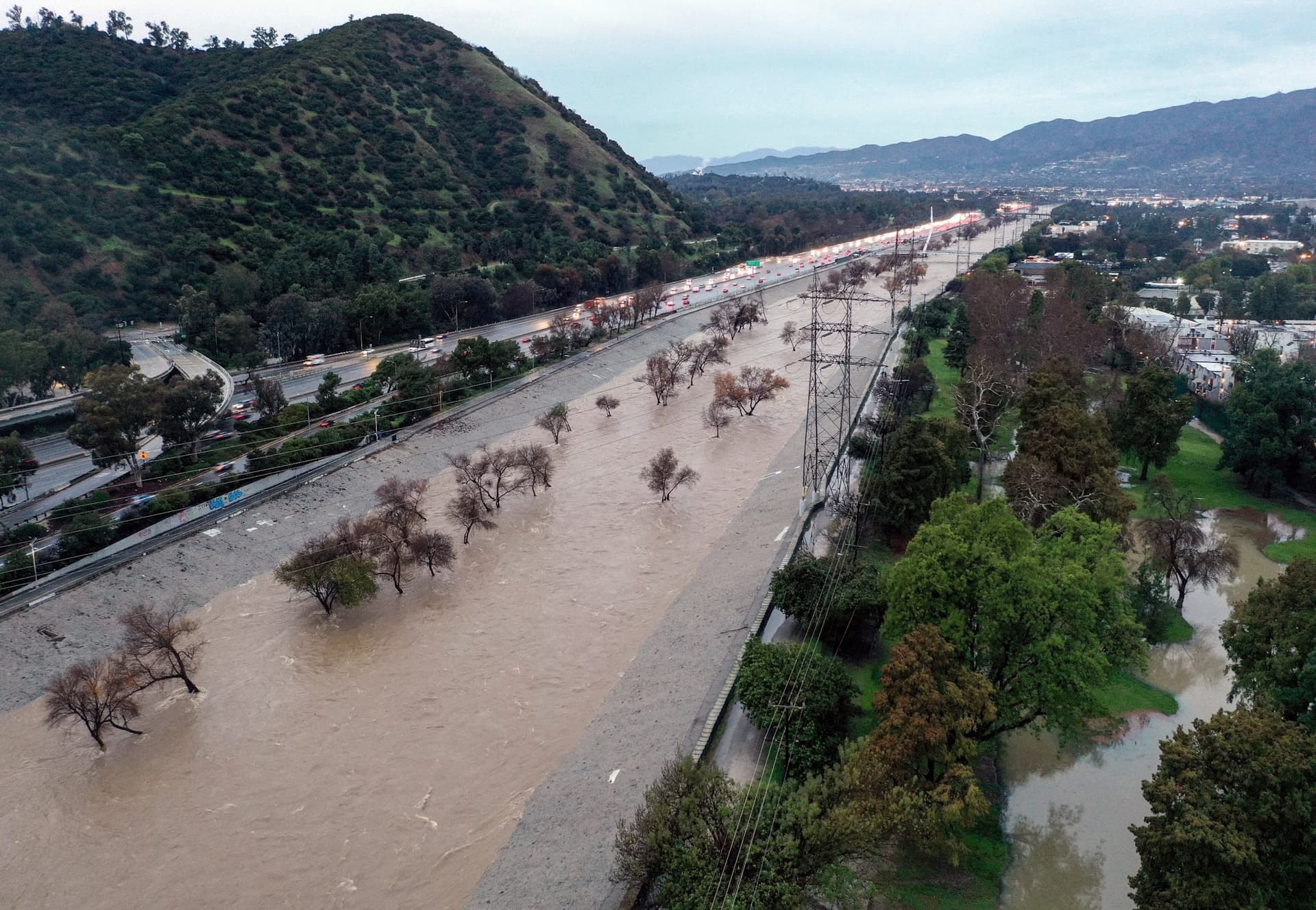
A potent atmospheric river moved into Southern California on Dec. 24 and continues to produce torrential rains and dangerous flooding across the Los Angeles basin and surrounding counties on Christmas Day. The National Weather Service described the system as a "strong atmospheric river" and issued flash flooding warnings across much of Los Angeles County, while its messaging designated a "rare High Risk of Excessive Rainfall" in effect through Christmas Day. Forecasters warned of "life threatening" conditions and urged residents to follow evacuation orders and avoid travel unless fleeing flood zones.
The most intense bands produced rainfall rates estimated at roughly 0.5 to 1.0 inches per hour, with forecasters projecting additional totals on Christmas Day of up to a half inch for parts of Los Angeles and as much as 2.5 inches in sections of Ventura and Santa Barbara counties. Urban areas and canyon communities were placed on heightened alert because heavy rains falling on slopes scarred by recent wildfires can trigger rapid erosion and debris flows. Officials singled out foothill and canyon neighborhoods in the Transverse Ranges including the San Bernardino, San Gabriel and Sierra Madre mountains as particularly vulnerable.
Emergency crews have carried out multiple water rescues and removed stranded drivers from floodwaters since the storms began. Road closures are widespread and crews worked to clear flooded and debris strewn sections of the 134 Freeway in Burbank. Los Angeles County officials deployed teams to conduct door to door outreach to roughly 380 at risk households to order evacuations, while other jurisdictions issued shelter in place instructions where evacuation was not feasible. Local advisories repeatedly urged motorists not to attempt travel in flooded areas.
The atmospheric river follows a weekend of catastrophic flooding in parts of Northern California where heavy rains and flash flooding produced at least one fatality. In Redding a 74 year old man died after becoming trapped in his pickup truck on a flooded roadway, prompting Shasta County Sheriff Michael L. Johnson to declare a state of emergency to mobilize resources for hazard mitigation and search and rescue efforts.
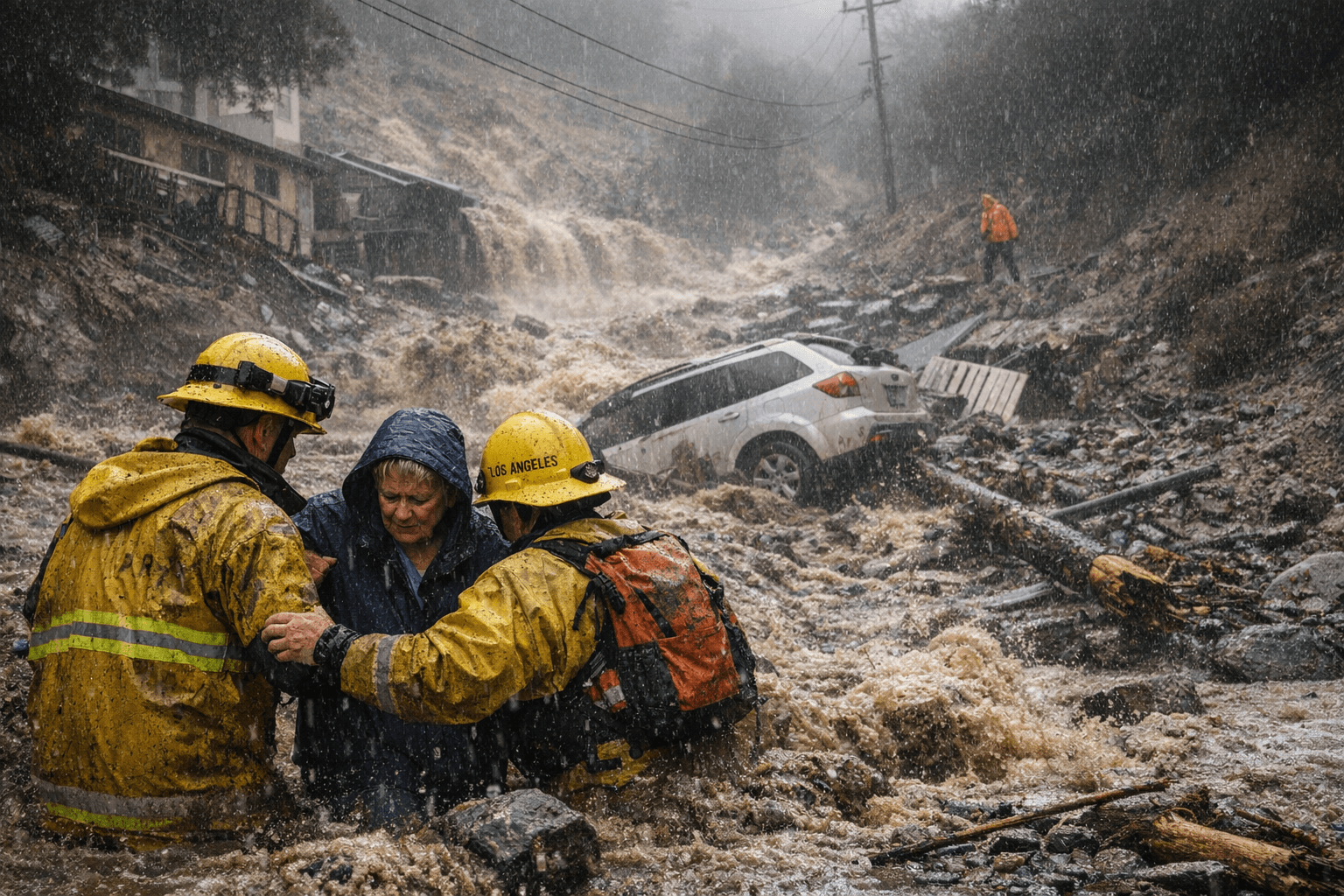
The storm is exposing long running vulnerabilities in regional hazard management. Burn scarred slopes lack the vegetation that slows runoff and anchors soil, increasing the likelihood of destructive debris flows that can overwhelm roads, utilities and homes. The scale of door to door evacuations and multi agency rescues underscores gaps in public shelter capacity and the logistical strain faced by county emergency operations centers during prolonged events. Local authorities face immediate decisions about where to stage resources, how to prioritize road clearance, and how to communicate changing risk to displaced residents and holiday travelers.
As forecasts extend the threat into Thursday and in some projections into Friday, officials say strict adherence to evacuation orders and travel advisories is the best immediate way to reduce harm. The storm will also likely prompt renewed attention to land management, post fire mitigation and infrastructure investments that shape how communities withstand increasingly intense atmospheric river events.
This article was produced by Prism’s automated news system from verified source data, official records, and press releases, then run through automated quality and moderation checks before publishing. The system is built and supervised by the people who set the standards it runs under. Read our full AI policy.
Did this article answer your question?

